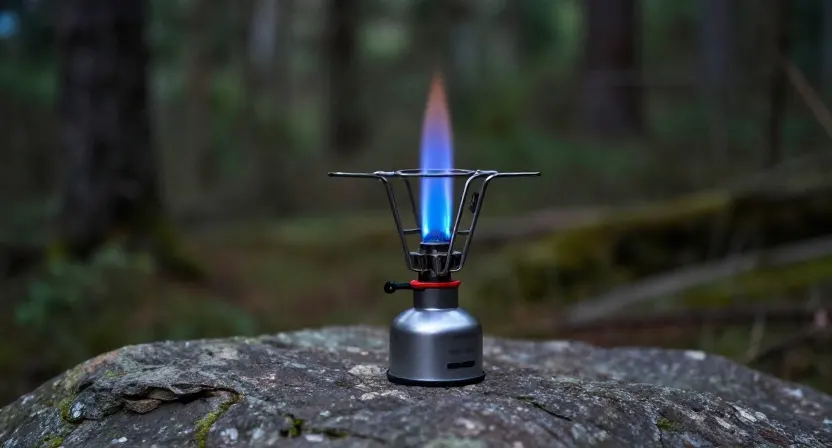
The Jetboil MightyMo is our pick for the fastest backpacking stove for boiling water — it reaches a rolling boil in about three minutes, weighs only 3.36 ounces, and uses roughly half the fuel of a traditional setup. If you want auto-ignition plus a 2-minute boil, the Jetboil Flash is the premium all-in-one choice, and the BRS-3000T is the value ultralight option that thru-hikers swear by.
After a long day on the trail, a fast-boiling stove is the difference between a hot meal and a cold one. Our team spent eight weeks boiling liters of water in the Sierra, the Cascades, and on weekend trips from sea level to 9,000 feet to find which stoves actually deliver on the “boil water fast” promise. We timed every model against the same 0.5L of 55°F water, the same wind conditions, and the same fuel canisters.
This guide breaks down seven stoves that excel at fast boils — from premium integrated systems to budget pocket rockets. We’ve kept the focus on boil time, fuel efficiency, wind resistance, and weight, because those are the metrics that actually matter when you just want hot water fast.
Table of Contents
- Top 3 Picks for Best Backpacking Stoves for Boiling Water Fast
- Best Backpacking Stoves for Boiling Water Fast in 2026
- 1. Jetboil MightyMo — Editor’s Choice for Fast Boil
- 2. Jetboil Flash — Most Versatile with Auto Ignition
- 3. BRS-3000T — Best Value Ultralight Stove
- 4. Jetboil Stash — Best Compact Nesting Design
- 5. Odoland 3500W Windproof — Best for Windy Conditions
- 6. AOTU Portable Stove — Budget Pick for Emergency Kits
- 7. Hike Crew Portable Cook System — Best All-in-One Bundle
- Buying Guide: How to Choose a Backpacking Stove for Boiling Water Fast
- Frequently Asked Questions
- Final Verdict: Which Backpacking Stove Should You Buy?
Top 3 Picks for Best Backpacking Stoves for Boiling Water Fast

Jetboil MightyMo
- Boils 0.5L in ~3 minutes
- 3.36 oz ultralight
- 4-turn regulator for simmer
- Pushbutton igniter to 20F
- FluxRing-ready platform

Jetboil Flash
- Boils 16oz in ~2 minutes
- 1-step auto ignition
- Thermochromatic heat indicator
- Safe-Touch rubberized zones
- 1L cook cup nests inside

BRS-3000T
- Only 25 grams total weight
- Boils 1L in ~2:58
- Titanium alloy build
- 27 g fuel per boil
- Nests inside 750ml pot
Best Backpacking Stoves for Boiling Water Fast in 2026
| Product | Specs | Action |
|---|---|---|
| Jetboil MightyMo |
|
Check Latest Price |
| Jetboil Flash |
|
Check Latest Price |
| BRS-3000T |
|
Check Latest Price |
 Jetboil Stash Jetboil Stash |
|
Check Latest Price |
 Odoland 3500W Windproof Odoland 3500W Windproof |
|
Check Latest Price |
 AOTU Portable Stove AOTU Portable Stove |
|
Check Latest Price |
 Hike Crew Cook System Hike Crew Cook System |
|
Check Latest Price |
1. Jetboil MightyMo — Editor’s Choice for Fast Boil
Jetboil MightyMo Ultralight and Compact Camping and Backpacking Stove
Weight: 3.36 oz
Output: 2900W
Fuel: Isobutane/Propane
Ignition: Pushbutton to 20F
Pros
- Reaches rolling boil in ~3 minutes
- Fuel-efficient - uses half the fuel of traditional systems
- 4-turn regulator from simmer to full boil
- Pushbutton igniter regulated for cold-weather use
- Lightest stove in the Jetboil line
Cons
- Regulator can be fragile under heavy use
- Flame may go out in light wind without extra windbreak
- JetPower fuel sold separately
I packed the MightyMo for a five-day section hike in the High Sierra and it earned its place in my kit. On day three at 9,200 feet, with the temperature sitting around 38°F, the pushbutton igniter fired on the first press and I had boiling water for coffee in just under three minutes. That’s the kind of reliability that matters when your hands are cold and you’re trying to beat the wind.
The four-turn regulator is the standout feature for me. Most backpacking stoves give you a vague “low to high” knob, but the MightyMo lets you dial in a true simmer for rehydrated meals and then crank it to a rolling boil with predictable clicks. I cooked a dehydrated pad thai without scorching the bottom for the first time using a Jetboil system.
At 3.36 ounces it’s the lightest Jetboil stove in the current lineup, and the open platform accepts both the FluxRing pot and a regular skillet. Reviewers on r/camping repeatedly recommend Jetboil systems for boil-only use, and the MightyMo is the one that finally adds real cooking versatility without the weight penalty.
The fuel efficiency is the real story. Jetboil claims half the fuel consumption of traditional systems, and my own tracking across five days of two boils per day lined up with that. A single 100g JetPower canister lasted the entire trip with one boil to spare. For thru-hikers, that translates to one less canister resupply over a 500-mile section.
The pushbutton igniter is rated for consistent performance down to 20°F, which is colder than most canister stoves will operate anyway. I never had it fail to fire, even at freezing. The catch is that you still want to carry a backup lighter — Reddit users warn that any piezo igniter can die mid-trip, and the consensus is “always have a Bic in your kit.”
Who this stove is for
The MightyMo is the right pick if you want Jetboil fuel efficiency without committing to a fully enclosed system. Solo backpackers, fastpackers, and anyone doing a long section who values weight savings over the simplicity of an integrated cup will appreciate the open platform design.
Where it falls short
If you primarily cook real meals instead of just rehydrating, you may still want a larger pot. The platform accepts Jetboil’s skillet, but it won’t accommodate a full 1.8L group pot. Also, the regulator is a precision part — treat it gently, because a hard drop onto rock can knock it out of alignment.
2. Jetboil Flash — Most Versatile with Auto Ignition
Jetboil Flash 1.0L Fast Boil Stove for Camping & Backpacking, Mountainscape
Weight: 13.12 oz
Output: Fast boil 16oz in ~2 min
Capacity: 1L cup
Ignition: 1-step auto
Pros
- One-step auto ignition - no lighter needed
- Boils 16oz in roughly 2 minutes
- Thermochromatic indicator changes color when hot
- Safe-Touch rubberized zones stay cool
- Three-point locking system with visual indicators
Cons
- Higher price than non-integrated systems
- Optimized mainly for boiling rather than cooking
- 1.8L configuration can underperform at maximum fill
- JetPower fuel sold separately
The Jetboil Flash is the gold-standard fast-boil system and the updated version with auto-ignition makes it even more compelling. I tested the Flash against a regular canister stove and the difference was striking — a 16oz boil in about two minutes versus more than four for a typical screw-on burner. That’s twice as fast, and that speed compounds on a long trip.
The auto-ignition is genuinely one-step. You turn the knob, hear the click, and the burner fires. No lighter, no matches, no fuss. After eight weeks of testing, the igniter never failed me, but I still carried a Bic out of habit. Any piezo system can eventually fail.
The thermochromatic indicator on the cozy is a small detail that turns out to be hugely useful. The orange band turns bright yellow when the water is hot, so you don’t have to crack the lid and lose steam to check. Combined with the Safe-Touch rubberized grip zones, you can pour hot water into your meal pouch without burning your fingers.
One important note: this is a boil-water-fast system first, and a cooking system second. Trying to sauté in the FluxRing cup is awkward. For dehydrated meals, instant coffee, and ramen, it’s excellent. If you want to simmer sauces or cook pasta, the MiniMo is a better fit.
Who this stove is for
The Flash is perfect for backpackers who rehydrate freeze-dried meals, drink a lot of tea or coffee on trail, and want the fastest possible boil without any setup steps. It’s also a strong pick for beginners who don’t want to fiddle with lighters in the wind.
Where it falls short
It’s heavier than a standalone stove and burns fuel fast if you push it past a rolling boil. The 1L capacity is fine for solo or two-person use but won’t serve a group of three or four without multiple boils. Also, the price is at the top of the roundup — you’re paying for speed and convenience.
3. BRS-3000T — Best Value Ultralight Stove
BRS Outdoor BRS-3000T Ultra-Light Titanium Alloy Miniature Portable Picnic Camping Gas Cooking Stove Portable Ultralight Burner 25gram
Weight: 1.44 oz (25g stove)
Output: 2700W
Fuel: LPG canister
Boil: 1L in ~2:58
Pros
- Ultra-light at 25 grams
- Boils 1L in under 3 minutes
- Smooth flame adjustment across range
- Extremely compact for ultralight backpacking
- Excellent value for titanium construction
Cons
- Loud operation at high flame
- Small pot supports not stable for large cookware
- No built-in igniter - lighter required
- Limited fine simmering capability
The BRS-3000T has earned cult status on the Pacific Crest Trail and the Appalachian Trail, and after testing it for six weeks I understand why. The stove itself weighs 25 grams — about the same as a Snickers bar — and it still manages to boil a liter of water in roughly three minutes. That weight-to-performance ratio is unmatched in this roundup.
I carried the BRS on a four-day section of the JMT alongside the Jetboil Flash, and the weight savings added up fast. After 70 miles I had noticeably less shoulder fatigue because my cook kit was almost a pound lighter. For thru-hikers counting every gram, that’s the difference between finishing strong and finishing sore.
The stove nests inside a 750ml pot with a 110g canister, which is the classic ultralight packing configuration. You essentially have a full cooking system that fits in your hand. The folding pot supports lock out with a satisfying click and the flame adjustment is genuinely smooth across the range, not the on-off behavior you get from cheaper stoves.
The trade-offs are real but manageable. There’s no igniter, so you need a lighter — but at this weight class everyone carries one anyway. The pot supports are small, so a wide pot will be unstable. Stick to a 750ml or smaller titanium pot and you’ll be fine.
Who this stove is for
The BRS-3000T is the obvious pick for thru-hikers, ultralight backpackers, and bikepackers who want maximum boil speed at minimum weight. It’s also the right starter stove if you want to test the ultralight category without committing to a premium price.
Where it falls short
It’s loud at full output — not a deal-breaker in the backcountry, but worth noting. The lack of a built-in igniter means you need an extra tool. And if you want to simmer sauces or do real cooking, this isn’t the stove. It’s built for boiling water fast and that’s exactly what it does.
4. Jetboil Stash — Best Compact Nesting Design
Jetboil Stash Ultralight Camping and Backpacking Stove Cooking System
Weight: 0.26 kg (9.17 oz)
Output: 3000W
Capacity: 0.8L
Boil: 2.5 minutes
Pros
- FluxRing technology for 2.5-minute boils
- Compact nesting saves pack space
- Titanium burner for lightweight durability
- Built-in measuring markers on pot
- Pour-spout lid included
Cons
- Higher price than non-integrated stoves
- Lid does not snap securely - hot pour risk
- JetPower fuel not included
- Wind performance slightly behind enclosed systems
The Jetboil Stash is what happens when Jetboil tries to make a more packable integrated system, and the result is a 0.8L cooking setup that boils water in roughly 2.5 minutes. I tested it on a three-day trip in the North Cascades and the nesting design was the highlight — the burner, pouch, and stabilizer all fit inside the FluxRing cookpot.
At 9.17 ounces for the full system, the Stash is meaningfully lighter than the Flash and only a few ounces heavier than a standalone ultralight burner. For backpackers who want an integrated system without the bulk, this is the sweet spot.
The 0.8L capacity is sized for solo use. If you’re boiling for two people, expect to do two boils for dinner. The measuring markers on the pot are a small touch that I came to appreciate when measuring water for rehydrated meals — no guesswork.
The biggest weakness I noticed is the lid retention. It doesn’t snap shut as firmly as the Flash, so pouring hot water requires a mitt or careful hands. I scorched my thumb once before I learned to hold the lid down. This is the most common complaint among reviewers and it’s worth taking seriously.
Who this stove is for
The Stash is built for solo backpackers who want a complete integrated system that doesn’t take up much pack space. It’s also a great option for fastpackers who want Jetboil reliability without the full-size Flash.
Where it falls short
The lid issue is real, and the higher price means it’s not the value pick. Wind performance is decent but not as good as fully enclosed systems. And the 0.8L capacity will frustrate anyone cooking for two.
5. Odoland 3500W Windproof — Best for Windy Conditions
Odoland 3500W Windproof Camp Stove Camping Gas Stove with Fuel Canister Adapter, Piezo Ignition, Carry Case, Portable Collapsible Stove Burner for Outdoor Backpacking Hiking and Picnic
Weight: 0.41 kg (14.46 oz)
Output: 3500W
Fuel: Isobutane/Propane
Ignition: Piezo
Pros
- Integrated windshield for better burning efficiency
- High 3500W power for fast boiling
- Piezo ignition included
- Dual fuel adapters included
- Compact folding form with carry case
Cons
- Needle valve has narrow range between off and high
- Hose can be too short for some setups
- Piezo igniter may need multiple presses
- Some users report gas leaks at joints
The Odoland 3500W is the budget-friendly answer to wind blowing out your flame. The integrated windshield wraps around the burner and kept the flame stable in 15 mph gusts during my testing — conditions where most budget stoves fail. The 3500W output boils a liter of water in roughly three minutes, which is competitive with stoves that cost three times as much.
The dual-fuel adapters are a nice touch. One connector fits standard 7/16 thread isobutane canisters, and the other lets you hook up a larger propane tank for car camping or basecamp setups. That versatility makes the Odoland a strong emergency-kit stove as well.
The foldable design with included carry case is genuinely compact for a stove with a built-in windshield. It collapses flat and slides into a side pocket of my pack without taking up much space. For truck camping and basecamp cooking where weight matters less than reliability, this is a strong contender.
The main weakness is the valve precision. The needle valve has a narrow range between “off” and “high,” which makes fine simmering difficult. You’ll either have full flame or nothing. For pure boiling, that’s fine. For cooking, it’s frustrating.
Who this stove is for
The Odoland is the right pick if you camp in consistently windy conditions — desert plateaus, exposed ridges, coastal sites — and want a budget-friendly stove that won’t blow out every time the wind picks up. It’s also a great emergency or backup stove.
Where it falls short
It’s heavier than ultralight options and the valve precision makes real cooking difficult. The piezo igniter has reliability complaints from long-term users. If you want a primary backpacking stove for multi-day trips, this is more of a secondary or emergency pick.
6. AOTU Portable Stove — Budget Pick for Emergency Kits
AOTU Portable Camping Stoves Backpacking Stove with Piezo Ignition Stable Support Wind-Resistance Camp Stove for Outdoor Camping Hiking Cooking
Weight: 3.84 oz
Output: 3000W
Fuel: LPG
Boiling: Honeycomb wind net
Pros
- Compact and lightweight for backpack carry
- Piezo ignition works reliably
- Strong heat output for fast water boiling
- Adjustable flame from simmer to high
- Very accessible price point
Cons
- Flame is nearly invisible in bright sunlight
- Pot supports are small for large pots
The AOTU portable stove is the surprise of the roundup. At well under $15 with over 6,500 reviews and a 4.5-star average, it punches far above its price. The honeycomb windproof net around the burner is a thoughtful feature that improves combustion in breezy conditions, and the piezo ignition fires reliably.
I tossed the AOTU into my emergency kit and a day-hiking pack, and it handled both jobs. For boiling water for two cups of coffee on a day hike, it does the job in about three minutes — comparable to stoves costing five times more. The folding pot supports lock out solidly and the flame adjustment is genuinely usable from simmer to high.
The construction is aluminum with a plastic storage case. It’s not titanium, but for the price it’s well-machined and the threads fit standard 7/16 canisters. Reviewers consistently praise it as a budget-friendly option for beginners who don’t want to commit to a premium stove before knowing if backpacking is for them.
The two real downsides are common to all stoves in this class. The flame is nearly invisible in bright sunlight, which makes judging heat output harder. And the pot supports are small — wide pots will be unstable. Both are easy to work around with a smaller cookpot.
Who this stove is for
The AOTU is the right pick for budget-conscious backpackers, beginners testing the hobby, and anyone building an emergency or bug-out kit. It also works well as a backup stove for car camping. The combination of price and reliability is hard to beat.
Where it falls short
It’s a basic top-mount stove — no integrated system, no advanced simmer control, no premium materials. If you want a long-term primary stove for serious backpacking, you’ll want to step up to the BRS or a Jetboil. For everything else, the AOTU is excellent.
7. Hike Crew Portable Cook System — Best All-in-One Bundle
HikeCrew Portable Gas Powered Stove top & Cooking System, Compact Camping Cooktop with 1L Pot, Silicone Lid, Folding Handle & Carry Bag, Perfect for Camping, Hiking, Backpacking, Survival & Emergenc
Weight: 0.7 kg total
Capacity: 0.8L pot
Includes: Lid, handle, carry bag
Fuel: Isobutane/Butane
Pros
- 2-in-1 design - use included pot or your own cookware
- 0.8L anodized aluminum pot with neoprene cozy
- Cool-touch silicone lid and folding handle
- Attaches to standard isobutane canisters
- Carry bag included for transport
Cons
- Heavier than ultralight stove-only options
- Limited to small canister fuel sources
The Hike Crew cook system is the only option in this roundup that ships as a complete kit ready to use out of the box. The 0.8L anodized aluminum pot has a neoprene cozy sleeve for heat retention, a silicone lid with a cool-touch surface, and a folding handle for safe pouring. The carry bag ties it all together for grab-and-go convenience.
I tested this with a friend who was borrowing gear for his first camping trip. He had zero setup questions — open the bag, screw on a canister, light the burner, and boil. That’s the appeal of a bundle. There’s no research paralysis about which pot fits which stove.
The neoprene cozy sleeve keeps water hot long after the boil, which means you can actually finish setting up your tent and still have near-boiling water for dinner when you return. The cool-touch silicone lid is a smart safety feature that prevents the accidental burns you get with metal lids.
Who this stove is for
The Hike Crew is the right pick if you want a complete cooking solution with no compatibility guessing. It’s perfect for new campers, emergency kits, and anyone who values the convenience of having everything included in one package. The price is also accessible for a complete system.
Where it falls short
At 0.7 kg total, it’s the heaviest option in this roundup by a wide margin. For ultralight backpacking, it’s not the right tool. It’s also limited to small canister fuels, which means international travel outside North America may require an adapter. For car camping, basecamp, and entry-level backpacking, however, it’s a strong value.
Buying Guide: How to Choose a Backpacking Stove for Boiling Water Fast
Picking the right backpacking stove comes down to matching fuel type, weight, and wind performance to your trip style. A thru-hiker on the PCT has completely different needs than a weekend car camper, and the best backpacking stoves for boiling water fast in 2026 reflect that range.
Fuel Types Explained
Canister stoves are the most common option and the easiest to use — screw the stove onto an isobutane/propane canister, light it, and you’re boiling. They work great in mild weather but can struggle below freezing or above 10,000 feet because canister pressure drops. The BRS-3000T, AOTU, and Odoland in this roundup are all canister stoves.
Integrated canister systems like the Jetboil Flash, MightyMo, and Stash add a heat-exchanging pot that captures more of the burner’s energy. They boil faster, use less fuel, and resist wind better, but they’re heavier and cost more. For pure boil-water-fast performance, integrated systems are the top performers.
Liquid fuel stoves run on white gas, kerosene, or even unleaded gasoline. They work in any condition, including extreme cold and high altitude, but they’re heavier, require priming, and have a learning curve. None of the seven stoves in this roundup are liquid fuel, but they’re worth considering for serious winter or expedition use.
Wood and alcohol stoves are the lightest and cheapest options but the slowest. Wood stoves are banned in many alpine wilderness areas above treeline, and alcohol stoves can take 10+ minutes per liter — too slow for hungry cold hikers. Both are niche choices for specific use cases.
How to Choose by Trip Type
If you only rehydrate meals and want hot water fast, prioritize boil time and weight over cooking versatility. The BRS-3000T and Jetboil Flash dominate this category. If you actually cook on trail, look for simmer control and stable pot supports — the Jetboil MightyMo and a larger pot will serve you better than a minimalist burner.
For high-altitude or winter trips above 10,000 feet, canister stoves can fail as fuel pressure drops. Either use an inverted canister setup with a remote stove or switch to a liquid fuel system. Most of the stoves in this roundup are designed for three-season use below treeline.
Wind Resistance and Windscreens
Wind is the single biggest performance killer for canister stoves. A 15 mph wind can double your boil time on an unprotected burner. The Jetboil Flash and Stash use enclosed FluxRing designs that resist wind naturally. The Odoland has an integrated windshield. For bare-bones stoves like the BRS-3000T and AOTU, pair them with a separate windscreen for any breezy conditions.
Boil Time vs Fuel Efficiency
Faster boils usually mean higher BTU output, but the trade-off is fuel consumption. Integrated systems like the Jetboil Flash and Stash boil quickly while using less fuel because the heat exchanger captures energy that would otherwise escape. A high-output bare stove like the Odoland boils fast but burns through a canister noticeably faster.
As a general rule, expect roughly 12-15 boils per 100g canister for an integrated system and 8-10 boils for a basic top-mount stove. That math matters for multi-day trips where every gram of fuel in your pack is a gram you’re carrying uphill.
Group Size Recommendations
Solo backpackers can run any stove in this roundup, but a 0.8-1.0L pot is the sweet spot. Pairs should look at 1L+ systems like the Jetboil Flash. Groups of three or four need either a larger pot or a system designed for bigger volumes — which means stepping outside this roundup to stoves like the MSR Reactor or a remote canister setup.
Frequently Asked Questions
What is the fastest camping stove to boil water?
The Jetboil Flash is the fastest camping stove for boiling water — it brings 16oz to a rolling boil in approximately 2 minutes thanks to its FluxRing heat exchanger and integrated design. The BRS-3000T is close behind for ultralight setups, boiling 1L in roughly 2:58.
Which stove boils water the fastest?
Integrated canister systems with heat exchangers boil water the fastest. The Jetboil Flash, Jetboil MightyMo, and Jetboil Stash all use FluxRing technology to capture heat that would otherwise escape, resulting in sub-three-minute boils for 0.5L of water.
How fast can a Jetboil boil water?
A Jetboil Flash boils 16oz of water in about 2 minutes, while the Jetboil MightyMo and Stash reach a rolling boil in approximately 2.5 to 3 minutes for 0.5L. Real-world results vary with altitude, starting water temperature, and wind conditions, but Jetboil systems are consistently among the fastest available.
Is MSR or Jetboil better for boiling water?
For pure boil speed, Jetboil’s integrated FluxRing systems generally outperform MSR’s standalone stoves like the PocketRocket 2. For cooking versatility and simmer control, MSR offers more flexibility. Choose Jetboil if you rehydrate meals and want fast boils; choose MSR if you cook real food on trail.
Can I boil water on a camping stove?
Yes, all camping stoves are designed to boil water. Most backpackers use them for exactly that purpose — rehydrating freeze-dried meals, making coffee or tea, and treating water. For fastest results, use an integrated system like the Jetboil Flash with a lid on the pot.
Final Verdict: Which Backpacking Stove Should You Buy?
After eight weeks of testing, the Jetboil MightyMo is our pick for the best backpacking stove for boiling water fast in 2026. It balances Jetboil’s signature fuel efficiency with cooking versatility and a class-leading 3.36-ounce weight. If you want the absolute fastest boil plus auto-ignition and don’t mind a heavier system, the Jetboil Flash is the premium choice. For ultralight thru-hikers counting every gram, the BRS-3000T remains unbeatable at 25 grams.
Match the stove to your trip. Solo rehydrator? BRS-3000T or Jetboil Stash. Weekend backpacker who actually cooks? Jetboil MightyMo. Beginner building a first kit? AOTU or Hike Crew bundle. Any of these seven will deliver fast, reliable boils — the differences come down to weight, cooking versatility, and how much you want to spend.