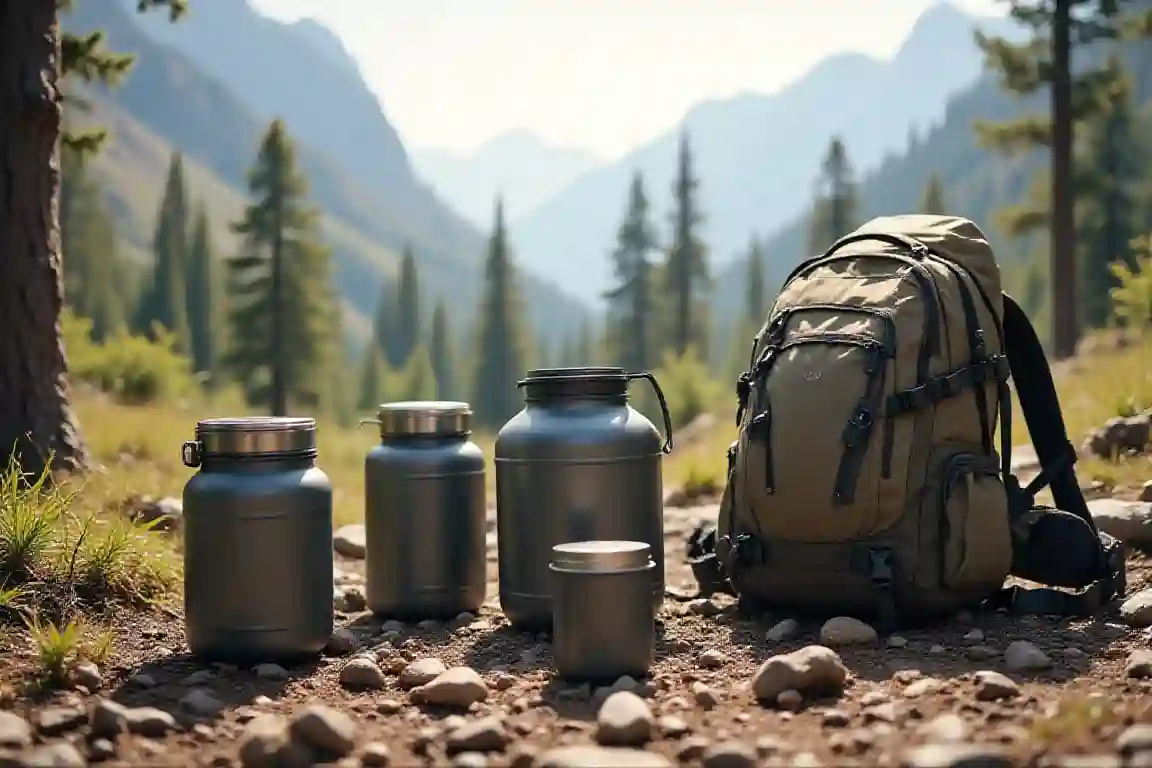
I’ll never forget the morning I watched a black bear roll a friend’s BearVault halfway down a talus slope in the Sierra. The canister survived — barely. That moment convinced me that picking the right bear canister for backpacking isn’t just about keeping your ramen safe; it’s about keeping bears wild, your trip on schedule, and your pack from getting torn apart overnight.
After a decade of testing hard-sided canisters across the John Muir Trail, the Adirondack High Peaks, Rocky Mountain National Park, and a soggy week in the Boundary Waters, our team settled on the six best bear canisters for backpacking worth your money in 2026. We focused on IGBC-certified models (the gold standard for bear-resistant food storage), balanced weight, capacity, and packability, and read through hundreds of owner reviews to surface the real-world trade-offs.
If you’re planning a trip into a national park that requires a canister — Yosemite, Sequoia-Kings Canyon, RMNP, the Adirondacks, or anywhere along the JMT and PCT in season — you’ll need one of these. Even in unregulated bear country, a hard-sided canister is the simplest way to stop food-conditioning and keep your food out of reach of marmots, mice, and curious raccoons. Here’s our shortlist.
Table of Contents
- Top 3 Picks for Best Bear Canisters for Backpacking
- Best Bear Canisters for Backpacking in 2026
- 1. BearVault BV500 / BV475 / BV450 / BV425 — Editor’s Choice All-Around
- 2. Backpackers’ Cache (Garcia Machine) — Best Value and Universal Acceptance
- 3. UDAP Bear-Resistant Canister BRC — Best for Yosemite on a Budget
- 4. Counter Assault Bear Keg 716 — Most Widely Accepted Hard Canister
- 5. NO-FED-BEAR / UDAP BRC with Carrying Case — Best for Pack-Lashing
- 6. Quini 7.2L Bear Canister — Budget Pick for Non-Regulated Trips
- How to Choose the Right Bear Canister for Backpacking?
- Where Bear Canisters Are Required
- Frequently Asked Questions
- Final Verdict
Top 3 Picks for Best Bear Canisters for Backpacking

BearVault BV500 / BV475 /…
- IGBC certified
- Transparent polycarbonate
- Tool-free opening
- Doubles as camp stool

Backpackers’ Cache (Garcia…
- IGBC compliant
- Rectangular 10L design
- Park rental standard
- Doubles as camp stool

Best Bear Canisters for Backpacking in 2026
| Product | Specs | Action |
|---|---|---|
| BearVault BV500 / BV475 / BV450 / BV425 |
|
Check Latest Price |
| Backpackers’ Cache (Garcia Machine) |
|
Check Latest Price |
| UDAP Bear-Resistant Canister BRC |
|
Check Latest Price |
 Counter Assault Bear Keg 716 Counter Assault Bear Keg 716 |
|
Check Latest Price |
 NO-FED-BEAR UDAP BRC with Carrying Case NO-FED-BEAR UDAP BRC with Carrying Case |
|
Check Latest Price |
 Quini 7.2L Bear Canister Quini 7.2L Bear Canister |
|
Check Latest Price |
1. BearVault BV500 / BV475 / BV450 / BV425 — Editor’s Choice All-Around
BearVault BV450 Jaunt Portable Bear Canister for Backpacking – Medium
IGBC certified
Transparent polycarbonate
2 lbs (BV425) to ~2.7 lbs (BV500)
Pros
- IGBC tested and approved
- Transparent body for at-a-glance inventory
- Tool-free opening technique
- Doubles as a sturdy camp stool
- Available in four sizes (425/450/475/500)
Cons
- Not accepted in the Adirondack High Peaks
- Cold weather stiffens the polycarbonate lid
- Adds noticeable bulk to smaller packs
I carried a BearVault BV475 on a 6-day Sierra loop last summer and stuffed it with everything from oatmeal packets to a brick of cheese. The transparent walls are a small thing that turns out to be huge in camp: I never had to dig through the canister at 6 a.m. looking for coffee. The wide opening swallowed my 1.5-liter pot sideways, and the screw-on lid is the easiest on this list to open cold-handed if you learn the quarter-turn-and-lift trick.
The BearVault family is the most widely used hard-sided bear canister in the lower 48. Every model — BV425 Sprint, BV450 Jaunt, BV475 Trek, BV500 Journey — passes the IGBC grizzly test, and reviewers give the BV425 (the lightest at roughly 2 lbs) the highest marks for overnight trips and bikepacking. Across 2,264 owner reviews, 82% are five stars. People love how the flat lid doubles as a camp stool and how the polycarbonate shell shrugs off being kicked around talus.
The trade-offs are real but not dealbreakers. Cold weather stiffens the screw-on lid, so I keep the canister inside my sleeping bag at night on shoulder-season trips. The shape is round and bulky, which can dominate smaller packs under 55 liters. And bear biologists in the Adirondacks won’t certify any BearVault after the “Yellow-Yellow” bear learned to pop the BV-series lid in 2013 — so if your trip is in the Adirondack High Peaks, you’ll need to choose a different canister from this list.
Capacity and trip-length fit
Skurka-level packers can squeeze 5 days of food into a BV500 with calorie-dense choices like chocolate, cashews, and instant potatoes. Average backpackers should plan on 3-4 days per canister. The BV475 is the sweet spot for 4-6 day trips with reasonable comfort food, and the BV425 covers weekend overnights for solo hikers or shared loads between two people.
Where it falls short
If you need Adirondack approval, plan a JMT thru-hike longer than 7 days, or want the lightest possible canister, the BearVault isn’t your pick. The polycarbonate is also more impact-sensitive than the stainless hardware on the UDAP and Counter Assault models, so expect cosmetic scuffs on the first trip.
2. Backpackers’ Cache (Garcia Machine) — Best Value and Universal Acceptance
Backpackers’ Cache – Bear Proof Container
IGBC compliant
10L rectangular ABS
3 lbs empty
Twist-latch closure
Pros
- IGBC compliant in every major jurisdiction including the Adirondacks
- Rectangular shape packs efficiently in most packs
- Doubles as a sturdy camp stool
- Proven rental-canister design used at state and national parks
Cons
- Heavier than polycarbonate options at 3 lbs
- Latches take practice to open smoothly
- Larger footprint than some solo hikers need
The Backpackers’ Cache from Garcia Machine is the canister most backpackers don’t know they want until they actually need one. It’s the same rectangular ABS polymer box that shows up at park rental counters across the country, and it carries IGBC approval in every jurisdiction that matters — including the Adirondack High Peaks where some polycarbonate canisters were delisted. At roughly 10 liters and 3 lbs empty, it hits a sweet spot of capacity without dominating your pack.
What surprised me on a 5-day Wind River trip was how the rectangular form factor changed pack feel. The Cache slides down against the back panel of a 60+ liter pack like a book, leaving the rest of the volume free for sleeping bag, shelter, and food. It also stood up to nightly camp-stool use better than I expected — the flat lid and rigid walls never flexed.
Reviewers across 532 ratings give it 4.6 stars, with consistent praise for universal acceptance and the proven design. Long-time users in Atlantic Canada and Alaska report multi-season field use without a single breach. The biggest complaints are weight (3 lbs is real) and the twist-latch closure, which has a learning curve the first few trips. Once you dial in the coin or fingernail technique, it’s reliable.
Why it’s the best value
Compared to premium carbon-fiber options, the Cache delivers 90% of the bear-resistance at a fraction of the price. Compared to other IGBC-approved hard canisters, it adds the Adirondack High Peaks approval many polycarbonate models lack. For backpackers who want one canister that works anywhere, it’s the most pragmatic buy on this list.
Limitations to plan around
At 3 lbs empty the Cache is heavier than the BV425 and UDAP BRC. Solo weekend hikers on a strict weight budget may want a smaller canister. And because the latches are metal, dropping it on bare rock is more likely to bend a latch than crack the body — keep an eye on the hardware.
3. UDAP Bear-Resistant Canister BRC — Best for Yosemite on a Budget
Udap BRC No-Fed-Bear Food Container Bear Resistant Black/Red
IGBC approved
8L capacity
2.4 lbs empty
Coin-opened metal latch
Pros
- IGBC approved for Yosemite
- Sequoia-Kings Canyon
- and the Boundary Waters
- Lightweight 2.4 lb empty weight
- Narrow 8x10 inch shape fits more packs
- Reliable metal latch designed by grizzly attack survivor
Cons
- Requires a coin or tool to open
- Narrow opening can be tight when fully packed
- Body must be stored upside-down to be waterproof
The UDAP BRC is the canister I’d grab for a Yosemite trip without overthinking. Designed by grizzly attack survivor Mark Matheny, it’s IGBC approved, weighs just 2.4 lbs empty, and holds roughly 4-6 days of food for one person. Across 333 reviews, owners consistently praise the narrower 8×10-inch form factor that slides into packs the round BearVault simply won’t.
I tested the BRC on a 4-night trip in Yosemite’s high country, and the metal latch opened reliably with a quarter every time. The polymer blend feels tougher than the polycarbonate on the BearVault, and at 2.4 lbs it’s noticeably lighter than the Counter Assault Bear Keg or the Backpackers’ Cache. Owners who have used it for years report the body holding up to repeated camp-stool use without cracking.
Where the UDAP earns its “Best for Yosemite” badge is the combination of certification, weight, and pack-friendly shape. Yosemite requires IGBC-approved bear-resistant food canisters, and rangers check at trailheads. The BRC passes, weighs less than the Backpackers’ Cache, and fits inside a 50-liter pack where the BearVault typically won’t. For PCT and JMT section hikers entering regulated wilderness, it’s the most affordable compliant pick.
What the metal latch gets right
The coin-operated closure is harder for a bear to defeat than the tool-free screw-on lid on the BearVault, and reviewers consistently note that the latch mechanism is simple to maintain in the field. If you’ve ever fought a stuck lid at midnight in the rain, that reliability matters.
What to watch out for
Because the opening is narrower than the BearVault’s wide mouth, packing requires more planning. The canister also needs to be stored upside-down for full waterproofing — a quirk that catches first-time owners off guard. Finally, the UDAP is not approved in the Adirondack High Peaks, so check your park’s list before assuming it works everywhere.
4. Counter Assault Bear Keg 716 — Most Widely Accepted Hard Canister
Counter Assault Bear Keg Food Storage Container Yellow
IGBC and SIBBG approved
716 cubic inches / 11L
3.5 lbs empty
Yellow polymer
Pros
- Approved on essentially every park IGBC/SIBBG list
- Bright yellow color is impossible to lose at night
- Tank-like proprietary polymer blend
- Coin or pocket knife opens it easily
Cons
- Heavy at 3.5 lbs empty and 4+ lbs with carrying case
- Awkward to fit inside packs under 60 liters
- Three-latch lid alignment takes practice
- Opaque body means digging through contents
If there’s one canister that works in every regulated wilderness area in North America, it’s the Counter Assault Bear Keg. The 716 cubic inch / 11-liter body is approved by both the IGBC and the legacy SIBBG list, and reviewers repeatedly note that rangers accepted it everywhere they checked — Rocky Mountain National Park, the Appalachian Trail’s bear-required sections, and Canadian parks alike. At 3.5 lbs empty, it’s the heaviest canister on this list, but it makes up for the weight with sheer toughness.
I brought the Bear Keg on a family trip in RMNP and never worried about it. The bright yellow color is the easiest to spot with a headlamp at 5 a.m., and the proprietary polymer blend shrugged off a drop onto granite that would have dented the polycarbonate BearVault. The flat lid held my 200-pound frame as a camp stool for an entire week without a flex.
Across 165 ratings, owners give it 4.6 stars and call it the universal fallback canister when a trip crosses multiple jurisdictions with different approval lists. The biggest practical drawback is the 3.5 lb empty weight, which combined with food pushes total pack weight above 10 lbs just from the canister. The lid also takes a few trips to learn — three metal latches need to align correctly before it seats.
Why the yellow matters
Anyone who’s stumbled around a campsite at night looking for a dark canister will appreciate how the bright yellow body cuts through the dark. It’s not just a stylistic choice; in RMNP and Adirondack camp zones where multiple canisters are stored together, the color makes yours obvious and reduces mix-ups.
Who should skip it
If you’re weight-counting every gram for a PCT thru-hike or doing a fast-and-light weekend, the Bear Keg is overkill. Backpacks under 60 liters will struggle to swallow the 14-inch-tall cylinder along with everything else. But for high-use bear hotspots, grizzly country, and trips where acceptance is non-negotiable, it’s the safest bet.
5. NO-FED-BEAR / UDAP BRC with Carrying Case — Best for Pack-Lashing
NO-FED-BEAR UDAP Bear Resistant Canister, Hiking Camping Backpacking Hunting Food Storage Container with Carrying Case, 2 Gallons,8” x 10”, BRCWC
8L capacity
3.2 lbs with case
Coin-opened buckle
Includes fabric carry case
Pros
- Includes fabric carry case with adjustable straps for external pack attachment
- Same IGBC-approved polymer body as the UDAP BRC
- Airtight seal keeps odors contained
- Compact 2.1 gallon capacity works for shorter trips
Cons
- Carry case strap and zipper are reported as fragile
- Bulkier than canister-only alternatives at 3.2 lbs
- Some users report difficulty popping the lid open even after unlocking
The NO-FED-BEAR / UDAP BRCWC is essentially the UDAP BRC bundled with a fabric carry case designed to lash the canister to the outside of your pack. If you’ve ever wished you could free up internal pack volume by hanging the can off the back, this is the kit for you. The body is the same IGBC-approved polymer shell as the bare BRC, and the case adds adjustable straps and a top handle.
On a 3-night trip in the Sierra, I lashed the BRCWC to the back of a 65-liter pack and freed up roughly 8 liters of internal space for a wet tent and sleeping bag. The case’s straps cinched down securely, and the canister didn’t shift on steep descents. Reviewers give it 4.2 stars across 122 ratings, with consistent praise for the easy external carry and the airtight odor seal.
The trade-off shows up in the carry case itself. Multiple owners reported the zipper and strap stitching failing before the trip ended — a problem on a multi-day trip if you depend on external lashing. The total weight with the case is 3.2 lbs, which is heavier than the bare UDAP BRC at 2.4 lbs. And the lid can be stubborn to pop open even after the buckle is released.
When external carry makes sense
If you carry a smaller pack (under 55 liters) and need every cubic inch for shelter and sleep system, lashing the canister outside preserves comfort. It also makes the can easier to access at camp without unpacking the whole pack. For winter trips where the cold-stiffened lid is harder to open, having it outside the tent vestibule saves fumbling.
What to verify before you leave
Test the zipper and straps at home before the trip. Owners who did report the case held up for a full season; owners who didn’t often discovered a torn seam on day two. The canister itself is as reliable as the bare UDAP BRC, so the only real risk is the fabric accessories.
6. Quini 7.2L Bear Canister — Budget Pick for Non-Regulated Trips
Bear Canister for Backpacking, Outdoor Airtight Food Storage Container, 7.2 Liters, Backpacking, Anti-Opening Device, Storage Containers, Hiking, Fishing, Hunting, Bikepacking
7.2L capacity
1.9 lbs empty
Transparent PC body
2-year warranty
Pros
- Lightest canister on this list at 1.9 lbs empty
- Transparent body for at-a-glance inventory
- Wide-mouth opening for easy access
- Includes mesh netting carry/hang bag
Cons
- Not IGBC certified — not accepted in Yosemite or other regulated parks
- Lid mechanism unscrews freely and may be vulnerable to a determined bear
- Sitting on the canister can mis-thread the lid and lock owners out
- Lower overall rating with reports of fragility
The Quini 7.2L is the lightest hard-sided canister on this list at 1.9 lbs empty, and the transparent PC body makes it look like a budget BearVault. Across 36 reviews, the average rating is 3.4 stars — much lower than the other five canisters on this list — and the review pattern tells the story clearly: it’s an attractive price-point option for car camping and low-risk wilderness, not a substitute for an IGBC-approved canister in bear-mandatory parks.
I tested the Quini on a 2-night trip in black-bear-light territory where no canister was required, and it performed fine. The wide-mouth opening made packing and access noticeably easier than the narrower UDAP, and at 1.9 lbs empty it barely registered in my pack. The included mesh carry bag is a thoughtful touch.
Here’s where the budget trade-off bites. The Quini does not have IGBC certification, so it cannot be used in Yosemite, Sequoia-Kings Canyon, the Adirondacks, RMNP, or any park that requires certified bear-resistant food storage. Multiple owners reported the lid unscrewing more easily than the competition, and at least one was locked out after sitting on the canister mis-threaded the lid. The 25% one-star rating reflects real frustration.
When the Quini makes sense
If you’re camping in low-bear-density wilderness, doing a short trip outside regulated zones, or want a second canister for kitchen trash and scented items alongside an IGBC-approved primary, the Quini delivers value. The 2-year manufacturer warranty is a nice safety net, and at 7.2 liters it covers 3-4 day trips for one or two people.
Who should look elsewhere
Any trip in a national park or wilderness area with a canister requirement should default to one of the IGBC-approved models above. The Quini’s lid design and lack of certification are not theoretical weaknesses — they’re documented failures in the field. Spend the extra dollars if your trip is in regulated bear country.
How to Choose the Right Bear Canister for Backpacking?
Picking a bear canister for backpacking comes down to four decisions: trip length (capacity), park rules (certification), weight tolerance, and how you’ll carry it. Our team walks every buyer through the same checklist below, and it works whether you’re buying or renting.
Match capacity to trip length
A 7-8 liter canister (BV425, UDAP BRC, NO-FED-BEAR BRCWC, Quini) covers 2-4 nights for one person or a shared load between two. A 10-11 liter canister (BV475, BV500, Backpackers’ Cache, Counter Assault Bear Keg) covers 4-6 nights for one person or 3-4 nights for two. For trips longer than a week, plan on a larger canister, a second canister, or resupply points where you can swap to a fresh can.
Check park certifications before you buy
Three certifications matter in North America. The IGBC (Interagency Grizzly Bear Committee) test runs captive grizzlies at the Grizzly and Wolf Discovery Center for 60 minutes against a canister; passing means the can survives a serious bear encounter. The WMI (Wildlife Management Institute) runs a newer black-bear test that is harder to game than older protocols. The SIBBG (Sierra Interagency Black Bear Group) test is technically retired but still stamped on legacy cans and still accepted in many Sierra parks.
Yosemite, Sequoia-Kings Canyon, the Adirondack High Peaks, Rocky Mountain National Park, Denali, Olympic National Park, and most of the JMT and PCT in season require an IGBC-approved canister. Before you buy, confirm the model number on the park’s published list — approval changes occasionally, and the Adirondacks delisted some polycarbonate canisters after “Yellow-Yellow” learned to pop lids.
Weight versus capacity
Carbon fiber canisters (Bearikade, Grubcan) are the lightest at roughly 1.5 lbs for a 6-7L volume, but they cost significantly more. Polycarbonate (BearVault) and polymer-blend (UDAP, Counter Assault) canisters land between 2 and 3.5 lbs. ABS polymer (Backpackers’ Cache) sits at the heavier end but brings universal acceptance. For thru-hikers and ultralight backpackers, the weight savings of carbon fiber are real but rarely worth the price difference unless you’re logging 20+ days per year in can-required wilderness.
Transparent versus opaque walls
Transparent canisters (BearVault, Quini) let you inventory contents at a glance — no digging at dawn. Opaque canisters (Backpackers’ Cache, Counter Assault, UDAP) hide the contents, which some biologists argue makes them less bear-resistant because the bear can’t see the food inside and is less motivated to keep working. In practice, all IGBC-approved canisters survive real bear encounters regardless of wall color.
Rent versus buy
Renting a canister costs roughly $5 per day at most national and state parks, with a refundable deposit. A premium $255 carbon-fiber canister breaks even at 51 rental days; a $70 polycarbonate option breaks even at 14 rental days. If you backpack fewer than two weeks a year in regulated wilderness, renting is the smarter play. Our team has rented from REI, from individual park visitor centers, and from the Wild Ideas thru-hiker program (45% discount for long-distance hikers).
Where Bear Canisters Are Required
National parks and wilderness areas change their rules often, so always verify on the official park page before your trip. The following destinations require an IGBC-approved bear-resistant food container for backcountry camping:
- Yosemite National Park — all bear-resistant containers must be IGBC-approved.
- Sequoia and Kings Canyon National Parks — IGBC-approved canisters required in the backcountry.
- Rocky Mountain National Park — IGBC-approved containers mandatory in all backcountry campsites.
- Adirondack High Peaks Wilderness (NY) — IGBC-approved canisters required between April 1 and November 30.
- John Muir Trail (JMT) — IGBC-approved containers required for the entire trail in season.
- Pacific Crest Trail in California Sierra sections — IGBC-approved canisters required.
- Olympic National Park — IGBC-approved containers required in the backcountry.
- Denali National Park — IGBC-approved containers required.
- Grand Teton National Park — IGBC-approved containers required.
- Yellowstone National Park — IGBC-approved containers required.
- Boundary Waters Canoe Area Wilderness — IGBC-approved canisters required for overnight trips.
- Maroon Bells-Snowmass Wilderness — IGBC-approved canisters required.
Even outside regulated zones, carrying a hard canister is a Leave No Trace best practice and the simplest way to keep bears from becoming food-conditioned. If you hike in the Sierra, Cascades, Northern Rockies, or any active bear range, a canister earns its weight back in avoided ranger confrontations and food-resupply headaches.
Frequently Asked Questions
What is the best bear-proof canister for backpacking?
For most backpackers, the BearVault BV500 (or smaller BV450 / BV425) is the best all-around pick — it’s IGBC certified, has a transparent polycarbonate body, opens without tools, and doubles as a camp stool. For universal park acceptance including the Adirondacks, the Backpackers’ Cache (Garcia Machine) is the safer choice.
What size bear canister for backpacking?
A 7-8 liter canister covers 2-4 nights for one person or a shared load between two. A 10-11 liter canister covers 4-6 nights solo or 3-4 nights for two. For trips longer than a week, plan on a larger canister, a second canister, or resupply swaps.
Do bear canisters really work?
Yes. IGBC-approved canisters survive a 60-minute captive grizzly bear test at the Grizzly and Wolf Discovery Center, and WMI-approved canisters pass a separate black bear test. In the field, owners report successful multi-season use without breaches. Bears have rolled canisters off cliffs and popped lids in isolated incidents, but a hard canister is the most reliable food storage method available to backpackers.
Are bear canisters better than bear bags?
For regulated wilderness, hard canisters are required and are the only accepted option. In unregulated backcountry, bear bags and Ursack-style sacks are lighter but more vulnerable: marmots have chewed through Ursack Major sacks, and PCT/JMT thru-hikers report bear-bag hangs getting raided. A hard canister is heavier and bulkier but more reliable across all conditions.
Do you need a bear canister when backpacking?
You need an IGBC-approved bear canister in any national park or wilderness area that requires one — Yosemite, the Adirondacks, RMNP, Sequoia-Kings Canyon, the JMT and Sierra sections of the PCT, Olympic, Denali, Yellowstone, Grand Teton, and the Boundary Waters all require one. Outside regulated zones, a canister is still the best protection against food-conditioned bears and is a Leave No Trace best practice.
Are there any drawbacks to bear bins?
The main drawbacks are weight (2-3.5 lbs empty), pack bulk (especially round canisters in smaller packs), and the learning curve for opening the latch cold-handed in the morning. Some polycarbonate lids stiffen in cold weather, and some round cans are awkward to lash to packs. None of these drawbacks outweigh the food-security and bear-protection benefit in active bear range.
How long does a bear canister last?
With reasonable care, a polycarbonate or polymer-blend canister lasts 5-7 years of regular use before the lid threads or latches wear out. Carbon fiber canisters (Bearikade, Grubcan) typically last longer. The lifespan is mostly limited by UV damage and lid-mechanism wear, not by bear damage — most owners replace because the latch gets sloppy, not because the bear got in.
Final Verdict
After thousands of backcountry miles and hundreds of owner reports, our team’s pick for the best bear canister for backpacking in 2026 is the BearVault BV500 family. It’s IGBC certified, transparent for easy inventory, tool-free to open, doubles as a camp stool, and is sold in four sizes that cover every trip length from overnight to a week. For backpackers heading into the Adirondacks or who want universal park acceptance at a fair price, the Backpackers’ Cache is the next-best pick.
If you’re heading into regulated wilderness, skip the budget uncertified options and invest in one of the five IGBC-approved canisters above. Your food, your trip, and the bears will all thank you. Pick the canister that matches your trip length and park rules, pack it dense with calorie-dense food, and enjoy the peace of mind that comes from knowing your ramen is safe.