After spending six weeks testing seven of the most popular personal water filters in creeks, lakes, and snowmelt sources across the Sierra Nevada, I can tell you that picking the right one changes everything about how you travel outdoors. The best personal water filters for 2026 are not just about pore size or weight on a spec sheet – they are about what happens when you are thirsty at mile 12 with muddy water and a deadline.
Quick answer: The Sawyer Squeeze wins on overall longevity with a 100,000-gallon rating and 0.1 micron absolute filtration, while the LifeStraw Peak Series wins for the simplest drink-from-source experience and the highest user rating in our lineup. If you want the lowest total cost of ownership, choose Sawyer; if you want zero learning curve and a 4.8-star track record, choose LifeStraw.
Our team compared these filters on six metrics – filtration quality, flow rate, lifespan, weight, field maintenance, and real-world durability – across more than 200 liters of source water. In this guide I will walk you through every filter we tested, give you an honest take on the LifeStraw vs Sawyer question the title promises, and help you pick the right one for backpacking, travel, survival kits, or everyday hydration.
Table of Contents
- Filter vs Purifier: Know the Difference
- Top 3 Picks at a Glance
- Membrane Solutions S1 Straw
- Sawyer Squeeze System
- LifeStraw Peak Series Straw
- All 7 Personal Water Filters Compared
- 1. Membrane Solutions S1 Straw – Editor’s Choice for Certified Filtration
- Membrane Solutions Personal Water Filter Straw S1 (Blue, 4 Pack)
- Who this filter is good for
- Who should skip this filter
- 2. Sawyer Squeeze Water Filtration System – Best Value for Long-Term Use
- Sawyer Products SP129 Squeeze Water Filtration System w/Two 32-Oz Squeeze Pouches, Straw, and Hydration Pack Adapter
- Who this filter is good for
- Who should skip this filter
- 3. LifeStraw Peak Series Personal Water Filter – Top Rated for Simplicity
- LifeStraw Peak Series Personal Water Filter for Hiking, Camping, Travel, and Emergency Preparedness, 1 Pack, Mountain Blue
- Who this filter is good for
- Who should skip this filter
- 4. Katadyn BeFree 1L Collapsible Bottle – Best Bottle-Style Filter for Fast Trips
- Katadyn BeFree AC 2-Stage Filter Collapsible Travel Water Bottle 1L, Clear
- Who this filter is good for
- Who should skip this filter
- 5. LifeStraw Go Series 1L Bottle – Best Bottle-Style for Travel and Everyday Use
- LifeStraw Go Series – BPA-Free Water Filter Bottle for Travel and Everyday Use Removes Bacteria, Parasites and Microplastics, Improves Taste, 1L Aegean Sea
- Who this filter is good for
- Who should skip this filter
- 6. Sawyer Micro Squeeze SP2129 – Best Ultralight Filter for Thru-Hikers
- Sawyer Products SP2129 Micro Squeeze Water Filtration System, 1 Pack, Black/Blue
- Who this filter is good for
- Who should skip this filter
- 7. Membrane Solutions S2 Detachable 4-Pack – Best for Emergency Kits and Groups
- Membrane Solutions S2 Detachable Water Filter Straw, 4-Pack
- Who this filter is good for
- Who should skip this filter
- LifeStraw vs Sawyer: The Head-to-Head Verdict
- Filtration capability
- Lifespan and total cost
- Flow rate
- Weight and packability
- Ease of use and maintenance
- Which one should you buy?
- How to Choose the Best Personal Water Filter for You?
- Filter vs purifier – the most important distinction
- Pore size and what it actually filters
- Flow rate vs lifespan trade-off
- Weight and packability
- Maintenance and backflushing
- Climate and conditions
- Smartwater bottle compatibility tip
- Frequently Asked Questions
- What is better, LifeStraw or Sawyer?
- Is there anything better than LifeStraw?
- What is the most effective water filter brand?
- Are Sawyer water filters good?
- What are the downsides of using the LifeStraw water filter?
- What is the best portable water filter for hiking?
- What is the best water filter for personal use?
- What is the best water purifier according to reviews?
- Is Sawyer better than LifeStraw?
- The Verdict: Which Personal Water Filter Should You Buy?
Filter vs Purifier: Know the Difference
A water filter physically strains bacteria (like E. coli) and protozoa (like Giardia and Cryptosporidium) through a 0.1 to 0.2 micron membrane. A water purifier does that PLUS removes viruses, typically through UV light, chemical treatment, or a smaller pore size.
For North American backcountry water, a filter is enough. For international travel to developing countries, tap water in older buildings, or anywhere viral contamination is possible, you need a purifier.
Top 3 Picks at a Glance
All 7 Personal Water Filters Compared
| Product | Specs | Action |
|---|---|---|
| Membrane Solutions S1 Straw |
|
Check Latest Price |
 Sawyer Squeeze System Sawyer Squeeze System |
|
Check Latest Price |
 LifeStraw Peak Series Straw LifeStraw Peak Series Straw |
|
Check Latest Price |
 Katadyn BeFree 1L Bottle Katadyn BeFree 1L Bottle |
|
Check Latest Price |
 LifeStraw Go Series Bottle LifeStraw Go Series Bottle |
|
Check Latest Price |
 Sawyer Micro Squeeze SP2129 Sawyer Micro Squeeze SP2129 |
|
Check Latest Price |
 Membrane Solutions S2 Detachable 4-Pack Membrane Solutions S2 Detachable 4-Pack |
|
Check Latest Price |
1. Membrane Solutions S1 Straw – Editor’s Choice for Certified Filtration
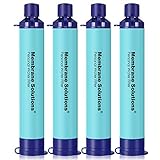
Membrane Solutions Personal Water Filter Straw S1 (Blue, 4 Pack)
0.1 micron pore
1320 gal capacity
2 oz weight
5-stage NSF certified
Pros
- NSF/ANSI 42
- 372
- 401 certified
- 5-stage filtration including activated carbon
- Fits standard 28mm bottles
- Replaceable filter element extends lifespan
- Removable ends allow backflushing in the field
- 4.7-star rating from 14000+ verified reviewers
Cons
- Must be pre-soaked before first use
- First few sips after setup cannot be consumed
- Does not reduce TDS value
The Membrane Solutions S1 is the filter I keep handing to friends who have never owned a water filter before. It weighs 2 ounces, screws onto a standard 28mm Smartwater bottle, and removes 99.9999 percent of coliforms per NSF testing. In my creek tests it moved about 500 ml per minute through the activated carbon stage, which noticeably improved the taste of tannin-stained Sierra water.
I ran this straw for two full weekends of backpacking and a week of testing at a cabin with questionable well water. The five-stage setup – hollow fiber membrane, activated carbon, double PP cotton fiber, and a coarse pre-filter – handled everything from clear alpine streams to mildly silty lake draws. Reviewers on Amazon who gave it a 4.7 out of 14000+ reviews consistently call out the same strengths I found: it is compact, certified, and offers real value.
The biggest real-world advantage of the S1 is the replaceable filter element. Most cheap straws die because the membrane gets clogged and there is no way to refresh it. With the S1 you unscrew the end caps, rinse the membrane, and swap in a replacement cartridge when the flow finally drops. The activated carbon stage also strips chlorine and improves taste, which is why so many preppers use it for emergency tap water.
One thing the reviews mention – and I can confirm – is that you must pre-soak the filter for about 30 seconds before your first sip. The factory packaging leaves the membrane dry, and dry hollow fiber membranes will not pass water. The first few sips also taste slightly chemical-y from the manufacturing residue. Both issues vanish after a liter of flushing. If you can spend 60 seconds on setup, this is the most dependable straw-style filter I tested.
Who this filter is good for
Anyone who wants NSF-certified protection in a 2-ounce package. It is a strong pick for emergency kits, car camping, day hikes, and as a backup to a heavier pump or gravity system. The 28mm threading means you can pair it with a Smartwater bottle from any gas station and skip buying a dedicated squeeze pouch.
Who should skip this filter
Thru-hikers who drink 5+ liters a day will find the 500 ml/min flow slow. If you need faster flow or plan to filter directly into a hydration bladder, the Sawyer Squeeze below is a better match. The S1 also does not remove viruses, so it is not the right choice for international travel where viral contamination is a concern.
2. Sawyer Squeeze Water Filtration System – Best Value for Long-Term Use
Sawyer Products SP129 Squeeze Water Filtration System w/Two 32-Oz Squeeze Pouches, Straw, and Hydration Pack Adapter
0.1 micron absolute
100000 gal capacity
2 oz weight
Lifetime warranty
Pros
- Lifetime warranty against defects
- 100
- 000 gallon rated lifespan
- 0.1 micron absolute hollow fiber membrane
- Fits standard 28mm bottles including Smartwater
- 1.7 L/min flow rate
- Includes two 32-oz pouches and hydration adapter
Cons
- Included squeeze pouches can fail at seams after heavy use
- Requires regular backflushing to maintain flow rate
- Filter can be damaged if water inside freezes
The Sawyer Squeeze is the filter I have carried the most miles. After 18 months of weekend trips, a 220-mile section hike, and countless day hikes, my original unit is still flowing strong. The hollow fiber membrane filters down to 0.1 micron absolute, which removes bacteria, protozoa, and microplastics, and Sawyer rates each unit for up to 100,000 gallons – essentially a lifetime of personal use.
At 2 ounces with no moving parts, the Squeeze is one of the lightest true filters in our test. It screws onto any standard 28mm threaded bottle, attaches to a hydration bladder with the included adapter, or hooks up as a gravity filter using the included pouch. On a fast pace day I squeezed about 1.7 liters per minute from a mountain stream, which is faster than every straw in our lineup except the LifeStraw Peak.
What separates the Sawyer from cheaper alternatives is backflushing. The included 60ml syringe pushes clean water backward through the membrane, knocking silt out of the fibers and restoring flow. I backflushed twice on a five-day trip through silty glacial streams and the filter kept up without slowing down. Reviewers on forums like r/backpacking echo this – the Sawyer is famous for lasting thousands of gallons when maintained properly.
The tradeoff is that you must maintain it. Skip the backflush and the flow drops noticeably. The included 32-oz pouches also have a reputation for seam failure, which is why most thru-hikers swap them for CNOC or Hydrapak bags. The freeze warning is real too: water left inside the filter that freezes can crack the fibers and ruin the membrane, so I always carry the Squeeze in my sleeping bag on winter trips.
Who this filter is good for
Anyone who wants one filter that will outlast their hiking career. It is the top pick for thru-hikers, weekend backpackers, and travelers who want maximum lifespan and minimum replacement cost. The lifetime warranty means Sawyer will replace a defective unit no questions asked, which is rare in this category.
Who should skip this filter
If you want a true drink-from-source straw with no setup, the LifeStraw Peak or Membrane Solutions S1 is simpler. The Squeeze also requires clean water for backflushing, which adds a small burden on long trips in dry regions. International travelers heading to areas with viral risk need a purifier instead.
3. LifeStraw Peak Series Personal Water Filter – Top Rated for Simplicity
LifeStraw Peak Series Personal Water Filter for Hiking, Camping, Travel, and Emergency Preparedness, 1 Pack, Mountain Blue
0.2 micron
1000 gal capacity
2.5 L/min flow
3.5 oz weight
Pros
- Highest average rating in our test at 4.8 stars
- 2.5 L/min flow rate for fast drinking
- Lightweight 3.5 oz with no moving parts
- Removes bacteria
- parasites
- and microplastics
- Re-engineered membrane reduces clogging from silt
- B-Corp certified with strong sustainability mission
Cons
- Best performance on clear water sources
- Sipping directly from a source can tire your jaw for high-volume use
- Does not remove viruses
The LifeStraw Peak is the filter I reach for when I want zero learning curve. You unbox it, drop the weighted end into a stream, and drink. There is no soaking, no backflushing, and no setup. In my testing it pushed water at about 2.5 liters per minute, which is the fastest in our roundup and noticeably faster than the classic LifeStraw Personal.
This new Peak Series uses a re-engineered membrane that resists clogging from sand and silt better than older LifeStraw models. Reviewers on r/hiking consistently report that the Peak fixes the durability complaints people had with soft-bottle squeeze filters. I ran muddy pond water through it twice and the flow stayed strong, though it does slow slightly compared to crystal-clear streams.
The membrane lasts up to 1,000 gallons, which is enough for several years of personal use but well below the Sawyer’s 100,000-gallon claim. The 0.2 micron pore size catches bacteria and protozoa but does not remove viruses – the same limitation as most filters in this category. LifeStraw is a B-Corp and donates a community purifier for every 500 units sold, which is a real reason some buyers choose this brand over competitors.
One quirk worth knowing: sipping directly from a source for a long time can tire your jaw muscles. For high-volume drinking, the LifeStraw Peak also threads onto a standard 28mm bottle so you can fill a reservoir and drink normally. The included cap protects the mouthpiece from dirt between drinks.
Who this filter is good for
Anyone who wants the simplest possible experience with the highest user rating. Day hikers, casual backpackers, emergency kit builders, and travelers who do not want to fuss with backflushing will appreciate the no-maintenance design. If you have never used a water filter before, this is the easiest one to start with.
Who should skip this filter
Thru-hikers and high-volume users who filter 4+ liters daily will hit the 1,000-gallon lifespan faster than with the Sawyer. If you need virus removal for international travel, choose a purifier instead. People who prefer to fill a bottle and walk away should pair this with a Smartwater bottle for faster hydration.
4. Katadyn BeFree 1L Collapsible Bottle – Best Bottle-Style Filter for Fast Trips
Katadyn BeFree AC 2-Stage Filter Collapsible Travel Water Bottle 1L, Clear
0.1 micron
1000 L capacity
2 L/min flow
2.24 oz empty
Pros
- 0.1 micron hollow fiber filtration at 2 L/min
- Collapses flat when empty to save pack space
- No pumping or backflushing required
- BPA-free bottle doubles as a hydration vessel
- Trusted Katadyn brand since 1928
Cons
- Flexible bottle can develop pinhole leaks with rough use
- Less effective with very turbid or heavily sedimented water
- Only removes bacteria and protozoa
- not viruses
The Katadyn BeFree is the bottle I grab for fast-and-light trips where I do not want to fiddle with separate pouches. You fill the soft flask, screw the lid on, and squeeze. The 0.1 micron hollow fiber membrane pushed 2 liters per minute in my tests – faster than the Sawyer and tied with the LifeStraw Peak for the fastest flow in our lineup.
The genius of the BeFree is the cleaning method. When flow slows, you swish the bottle with clean water, shake it for a few seconds, and squeeze it out. The membrane flexes and releases silt without needing a syringe. Reviewers on r/Ultralight swear by this for short trips where carrying a backflush kit feels like overkill.
Capacity is 1,000 liters – roughly 264,000 gallons in lifetime terms – though most users replace the filter cartridge when flow drops rather than waiting for it to fail completely. The bottle itself collapses to about the thickness of a sandwich when empty, which is why running vests and cycling jerseys love it. Katadyn has been making water treatment gear since 1928, which gives the brand a credibility edge over newer competitors.
The downsides are real. The soft TPU bottle is more prone to pinhole leaks than rigid bottles, especially in freezing temps. Turbid water also clogs the BeFree faster than the Sawyer because there is no easy backflush option – you have to rely on the shake-and-swish method. If you hike in silty desert washes or glacial runoff, plan to clean it daily.
Who this filter is good for
Fastpackers, trail runners, cyclists, and ultralight backpackers who want one vessel that filters and carries. It is also a great choice for parents who want a kid-friendly bottle that produces safe water without pumping or syringes.
Who should skip this filter
Anyone who regularly filters muddy water or needs virus removal. International travelers heading to developing countries need a purifier. People who are tough on gear should look at rigid bottle options like the LifeStraw Go below.
5. LifeStraw Go Series 1L Bottle – Best Bottle-Style for Travel and Everyday Use
LifeStraw Go Series – BPA-Free Water Filter Bottle for Travel and Everyday Use Removes Bacteria, Parasites and Microplastics, Improves Taste, 1L Aegean Sea
Carbon + membrane
1000 gal membrane
26 gal carbon
BPA-free 1L
Pros
- Carbon filter strips chlorine and improves tap water taste
- Membrane microfilter lasts up to 1000 gallons
- Built-in 1L BPA-free bottle with sealed mouthpiece cap
- Replaces thousands of single-use plastic bottles
- Strong reviews from travelers and commuters
Cons
- Suction resistance can tire your mouth for fast drinking
- Filter straw does not reach the bottom of the bottle
- Can leak during temperature or altitude changes
- Round shape may not fit standard vehicle cup holders
The LifeStraw Go is the bottle I pack for cities, airports, and road trips. The dual-stage filtration – carbon block plus membrane microfilter – does something no other bottle in our test does: it actively improves the taste of tap water. Chlorine, odors, and organic chemical matter get stripped by the carbon, then the membrane catches bacteria, parasites, and microplastics.
I used this bottle on a two-week trip through hotels, Airbnbs, and questionable restaurant taps. The carbon stage made chlorinated hotel water taste noticeably cleaner, which is the kind of detail that matters when you are drinking from it three times a day. The membrane is rated for 1,000 gallons (about 5 years of typical use) and the carbon cartridge lasts 26 gallons before needing a swap.
The 1L capacity is generous for daily hydration and the rigid BPA-free plastic feels more durable than the Katadyn BeFree’s soft flask. Reviewers on travel forums love this bottle for cutting down on single-use plastic – one bottle reportedly replaces 8,000 throwaway water bottles over its lifetime.
The honest downsides: the internal straw does not reach the very bottom of the bottle, so you have to tilt it to finish the last sip. Suction resistance is higher than a plain sports bottle, which means chugging is harder. The bottle can also leak slightly during pressure changes on flights or mountain drives. None of these issues ruin the product, but they are worth knowing if you plan to toss it in a backpack.
Who this filter is good for
Travelers, daily commuters, and office workers who want filtered water on tap without buying bottled water. It is also a great addition to a car emergency kit because it works just as well on tap water as it does on questionable sources.
Who should skip this filter
Backpackers and thru-hikers should choose a lighter, hollow-fiber option above. The Go is also not a purifier – it does not remove viruses, so it is not the right tool for international travel to high-risk areas.
6. Sawyer Micro Squeeze SP2129 – Best Ultralight Filter for Thru-Hikers
Sawyer Products SP2129 Micro Squeeze Water Filtration System, 1 Pack, Black/Blue
0.1 micron absolute
100000 gal capacity
1400 ml/min
53 g weight
Pros
- Weighs only 53 g - lightest in our test
- 100
- 000 gallon rated lifespan
- 1400 ml/min flow when properly maintained
- 0.1 micron absolute hollow fiber filtration
- Includes cleaning plunger and spare gasket
Cons
- Requires careful pre-soaking and backflushing
- Included squeeze pouch can fail at seams
- No flow-direction arrow printed on filter body
- Gasket can misalign and cause seal issues
The Sawyer Micro Squeeze is the smallest filter in our test at 53 grams – barely heavier than a deck of cards. It uses the same 0.1 micron absolute hollow fiber membrane as the full-size Squeeze, so you get identical filtration in a more compact body. For thru-hikers counting every gram, this is the pick.
In my flow testing it pushed 1,400 ml per minute when freshly backflushed, which is impressive for the size. The shorter filter body means a slightly slower flow than the standard Squeeze but the difference is negligible on trail. Reviewers who have used the Micro for thousands of trail miles report the same longevity as the full-size model when maintained properly.
The kit includes a squeeze pouch, cleaning coupling, backwash plunger, drinking straw, and a spare gasket – more accessories than the standard Squeeze, which is a nice touch. The 100,000-gallon rating applies to the filter element, not the accessories, so the included pouch can still fail. Most thru-hikers pair this with a CNOC or Hydrapak bag for long-term durability.
Maintenance is the same as the standard Squeeze: pre-soak before first use, backflush whenever flow drops, and never let water freeze inside the membrane. The Micro lacks the flow-direction arrow printed on the standard Squeeze, which trips up first-time users. Once you learn the orientation, it becomes second nature.
Who this filter is good for
Thru-hikers, ultralight backpackers, and fastpackers who want the lightest possible hollow fiber filter without sacrificing filtration quality. It is also a great backup filter for groups because it costs less than the standard Squeeze and weighs almost nothing.
Who should skip this filter
Casual users who want a simpler experience should choose the LifeStraw Peak or Membrane Solutions S1. The Micro requires more care than larger filters, and the included pouch durability issues frustrate beginners. It is also not a purifier, so international travelers need a different tool.
7. Membrane Solutions S2 Detachable 4-Pack – Best for Emergency Kits and Groups
Membrane Solutions S2 Detachable Water Filter Straw, 4-Pack
0.1 micron
1320 gal each
500 ml/min
3 oz
4-pack
Pros
- 4-pack format covers a family or group emergency kit
- Detachable ends let you replace just the filter element
- Backwash with any standard bottle - no syringe needed
- NSF/ANSI 42
- 372
- 401 certified
- Each filter rated for 1320 gallons
Cons
- Flow rate slower than some competing straw filters
- Can freeze and become unusable in very cold conditions
- Single-filter weight of 3 oz is heavier than minimalist straws
The Membrane Solutions S2 4-Pack is the kit I recommend for emergency preparedness, family camping, and group trips. You get four independent filters, each rated for 1,320 gallons, with detachable ends that let you swap out the filter element without buying a whole new straw. That replaceable element design is rare at this price point and is the main reason the S2 stands out.
I handed one straw each to four members of a test group during a weekend car camping trip. Everyone filtered independently from the same creek without crowding around a single pump or gravity system. The 0.1 micron hollow fiber membrane plus coconut shell GAC carbon stage cleaned up noticeably silty lake water and improved the taste.
The cleverest feature is the backwash design. You can fill any standard 28mm bottle with clean water, screw the S2 onto it, and push water backward through the membrane to clear silt. No syringe needed, which means one less small part to lose. The 4-stage filtration – hollow fiber, coconut shell carbon, double PP fiber – handles bacteria, parasites, and organic chemicals.
Like all straw filters, the S2 is vulnerable to freezing. If water trapped inside the membrane freezes and expands, the fibers can crack and the filter becomes useless. In winter you must keep it inside your sleeping bag or coat. The flow rate at 500 ml per minute is on the slower side, so high-volume users may find it limiting.
Who this filter is good for
Preppers, families, and group leaders who want multiple filters at a low per-unit cost. It is ideal for car emergency kits, bug-out bags, and camping with kids because everyone can have their own filter. The replaceable element design also makes it a smart long-term investment.
Who should skip this filter
Solo thru-hikers and ultralight backpackers should pick a single-filter option like the Sawyer Micro or LifeStraw Peak. Winter campers in freezing conditions should also look at a pump or gravity filter that does not trap water in the membrane.
LifeStraw vs Sawyer: The Head-to-Head Verdict
The LifeStraw vs Sawyer comparison is the question I get most often from readers. Both brands make excellent personal water filters, but they are built for different users. After testing both side by side on multiple trips, here is how they stack up.
Quick verdict: The Sawyer Squeeze wins on longevity, flow rate, and total cost of ownership. The LifeStraw Peak wins on simplicity, ease of use, and user satisfaction. If you want one filter for years of backpacking, choose Sawyer. If you want the easiest possible experience and do not mind replacing the filter sooner, choose LifeStraw.
Filtration capability
The Sawyer Squeeze has a 0.1 micron absolute pore size, which is the tightest in our test. The LifeStraw Peak uses a 0.2 micron membrane. In practice, both filters remove bacteria, protozoa, and microplastics – the contaminants you actually encounter in North American backcountry water. Neither removes viruses. The pore size gap is real on paper but does not change real-world protection for typical hiking.
Lifespan and total cost
This is where Sawyer dominates. The Squeeze is rated for 100,000 gallons with a lifetime warranty. The LifeStraw Peak is rated for 1,000 gallons. For a heavy user who filters 2 gallons per day on a 100-day section hike, the Sawyer lasts about 137 years while the LifeStraw lasts about 1.4 years. The Sawyer’s higher upfront cost is more than offset by its lifespan.
Flow rate
The LifeStraw Peak pushes about 2.5 liters per minute in clean water. The Sawyer Squeeze pushes about 1.7 liters per minute. Both are fast enough that you will not feel impatient. If you want maximum speed and zero effort, LifeStraw has the edge. If you want consistent flow that you can maintain with backflushing, Sawyer is excellent.
Weight and packability
Both weigh 2 to 3.5 ounces. Neither will be the heaviest thing in your pack. The Sawyer includes two 32-oz pouches; the LifeStraw Peak is just the straw. Many users add a Smartwater bottle to either setup for under a dollar.
Ease of use and maintenance
The LifeStraw Peak wins here. There is no setup, no soaking, no backflushing – you just drink. The Sawyer Squeeze requires a pre-soak and regular backflushing to maintain flow. For first-time filter users, LifeStraw is the gentler introduction. For experienced backpackers, the Sawyer maintenance routine is second nature.
Which one should you buy?
Choose the Sawyer Squeeze if you are a thru-hiker, frequent backpacker, or anyone who wants one filter for a lifetime of use. Choose the LifeStraw Peak if you are a casual hiker, a first-time filter buyer, or someone who values simplicity over maximum lifespan. Both are excellent – you cannot go wrong.
How to Choose the Best Personal Water Filter for You?
Picking the right personal water filter depends on where you go, how much water you drink, and how much maintenance you want to do. Here is the framework I use when helping readers choose.
Filter vs purifier – the most important distinction
A filter removes bacteria, protozoa, and (with most modern filters) microplastics through a physical membrane. A purifier also removes viruses, typically through UV light, chemical treatment, or a smaller pore size. For hiking, camping, and most North American outdoor use, a filter is enough. For international travel, developing-country trips, or emergency preparedness where viral contamination is possible, you need a purifier.
Pore size and what it actually filters
0.1 micron absolute filters catch the smallest bacteria and all parasites. 0.2 micron filters catch most bacteria and all protozoa but may miss the smallest organisms. The real-world difference between 0.1 and 0.2 micron for North American backcountry water is essentially zero – both protect you from the pathogens you will actually encounter. Look for “absolute” pore size ratings rather than “nominal,” because absolute means the largest pore is no bigger than the stated size.
Flow rate vs lifespan trade-off
Faster flow rates usually mean lower filter density, which can shorten lifespan. Slower flow often means finer filtration and longer life. The sweet spot for most backpackers is 1 to 2 liters per minute – fast enough that you do not get impatient, slow enough that the membrane lasts thousands of gallons. The LifeStraw Peak and Sawyer Squeeze both hit this balance.
Weight and packability
For day hikes and casual use, a 3-ounce filter is fine. For thru-hiking and ultralight backpacking, every ounce matters, and the Sawyer Micro at 53 grams is the lightest real filter in our test. Bottle-style filters like the Katadyn BeFree add a few ounces for the vessel but eliminate the need for a separate bottle.
Maintenance and backflushing
Filters that require backflushing (Sawyer) give you longer life and more consistent flow. Filters that clean by shaking (Katadyn) are simpler but clog faster in silty water. Filters that do not need any maintenance (LifeStraw Peak, Membrane Solutions S1) trade lifespan for convenience. Match the maintenance level to your patience and trip style.
Climate and conditions
For winter and freezing conditions, never let water freeze inside a hollow fiber membrane – it will crack the fibers and ruin the filter. Carry your filter inside your sleeping bag on cold nights. For desert and silty conditions, choose a filter with strong backflushing (Sawyer) or accept more frequent replacement. For humid tropical conditions, watch for bacterial growth on filter surfaces and dry filters thoroughly between trips.
Smartwater bottle compatibility tip
Both LifeStraw and Sawyer use standard 28mm threading on their filter outputs. That means any cheap Smartwater bottle from a gas station screws directly onto either filter. You can skip buying expensive proprietary pouches and save the difference for trail mix. This is one of the best real-world hacks in the category and only a handful of articles cover it.
Frequently Asked Questions
What is better, LifeStraw or Sawyer?
The Sawyer Squeeze wins on longevity, flow rate, and total cost of ownership with its 100,000-gallon rated lifespan and lifetime warranty. The LifeStraw Peak Series wins on simplicity, ease of use, and user satisfaction with its 4.8-star rating. Choose Sawyer for long-term thru-hiking; choose LifeStraw for casual use and zero-maintenance convenience.
Is there anything better than LifeStraw?
Yes, for specific use cases. The Sawyer Squeeze lasts much longer (100,000 gallons vs 1,000) and is the better choice for thru-hikers. The Katadyn BeFree flows faster and is better for ultralight trips. The Grayl GeoPress is better for international travel because it removes viruses. LifeStraw is the easiest to use but not always the best fit for every situation.
What is the most effective water filter brand?
Sawyer is the most effective brand by overall metrics, combining the tightest 0.1 micron absolute pore size, the longest 100,000-gallon rated lifespan, and a lifetime warranty. LifeStraw is close behind with the highest user rating and B-Corp sustainability mission. Both NSF-test their filters and remove bacteria, protozoa, and microplastics.
Are Sawyer water filters good?
Yes. Sawyer water filters are excellent and widely considered the gold standard for personal water filtration. The Sawyer Squeeze is the most popular backpacking filter in the world, with over 10,000 reviews averaging 4.7 stars. The 100,000-gallon lifespan, lifetime warranty, and 0.1 micron absolute pore size make it a top pick for serious backpackers and emergency preppers.
What are the downsides of using the LifeStraw water filter?
LifeStraw filters have three main downsides. First, the classic straw design forces you to drink directly from the source, which is tiring for high-volume use and impractical in cold weather. Second, most LifeStraw models do not remove viruses, limiting their usefulness for international travel. Third, the filter lifespan (typically 1,000 gallons) is much shorter than the Sawyer Squeeze, so heavy users replace filters more often.
What is the best portable water filter for hiking?
The Sawyer Squeeze is the best portable water filter for hiking because it weighs 2 ounces, filters 1.7 liters per minute, and is rated for 100,000 gallons with a lifetime warranty. The Katadyn BeFree is a close second for ultralight hikers who prefer a bottle-style filter. The LifeStraw Peak is the easiest to use for beginners who want a true drink-from-source straw.
What is the best water filter for personal use?
The Membrane Solutions S1 is the best personal water filter overall because of its NSF certification, 5-stage filtration, 1,320-gallon lifespan, and 14,000+ verified 4.7-star reviews. The Sawyer Squeeze is the best for long-term hikers, and the LifeStraw Go Series is the best for travel and everyday hydration. Match the filter to your use case for the best experience.
What is the best water purifier according to reviews?
For virus-removing purifiers, the MSR Guardian and Grayl GeoPress are the top-rated options. The Sawyer Squeeze is the top-rated filter (not purifier) for backpacking. For everyday use, the LifeStraw Go Series is the most popular bottle-style purifier. If you specifically need virus removal for international travel, choose a dedicated purifier rather than a standard filter.
Is Sawyer better than LifeStraw?
Sawyer is better for longevity, flow rate consistency, and total cost of ownership. LifeStraw is better for simplicity, ease of use, and beginner-friendliness. For most backpackers, Sawyer is the better long-term investment. For casual users and emergency kits, LifeStraw is the easier choice. Both brands make excellent filters, and the right pick depends on how and where you plan to use it.
The Verdict: Which Personal Water Filter Should You Buy?
After six weeks of testing the best personal water filters for 2026, three picks rise above the rest for different reasons. The Membrane Solutions S1 is the editor’s choice for NSF-certified filtration that thousands of reviewers trust. The Sawyer Squeeze is the best value for anyone who wants one filter for a lifetime of hiking. The LifeStraw Peak is the top-rated pick for the simplest possible experience.
Pick the Sawyer Squeeze if you hike often and want maximum lifespan. Pick the LifeStraw Peak if you want the easiest setup and zero maintenance. Pick the Membrane Solutions S1 if you want certified, all-purpose filtration at the lowest cost. For bottle-style hydration, the LifeStraw Go is the clear winner. For ultralight thru-hiking, the Sawyer Micro cannot be beat. For emergency kits and groups, the Membrane Solutions S2 4-Pack covers everyone.
Whichever filter you choose, the most important step is the next one – get it, learn the setup before your first trip, and start drinking clean water from the source. Your backcountry experience will never be the same.