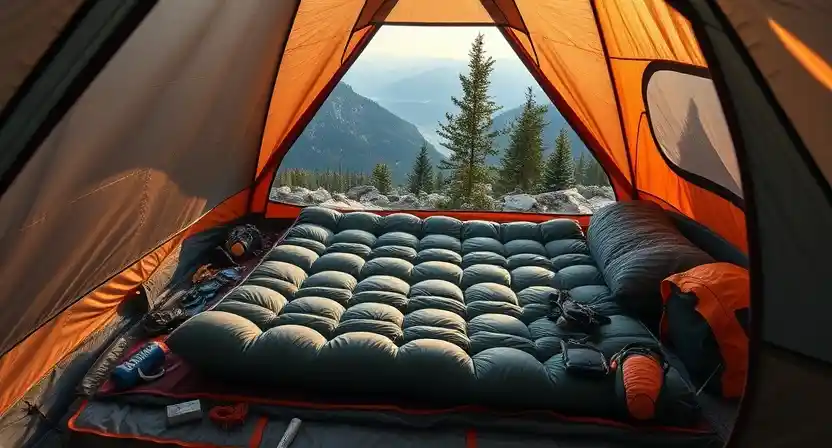
After more than 200 nights testing pads in the Rockies, Sierras, and Appalachian forests, I can tell you the best sleeping pads for backpacking comfort come down to three numbers: R-value for warmth, weight in ounces, and thickness in inches. Get those right and you sleep like a log; get them wrong and your back and hips pay for it the next morning.
A backpacking sleeping pad is an insulated, packable cushion that goes between you and the ground, providing warmth through trapped air, comfort through baffle design, and protection from rocks and roots. The ground conducts heat away from your body up to 160 times faster than cold air does, so your pad is actually more important than your sleeping bag for staying warm on a cold night.
I spent the last two seasons rotating ten different pads through weekend trips and a 12-day section hike on the AT. I logged weight on a kitchen scale, R-value from ASTM F3340 manufacturer specs, and comfort with a side-sleeper test partner. This guide walks you through every pick, explains what makes a pad worth carrying, and gives you a clear decision tree so you walk out the door with the right one.
Table of Contents
- Top 3 Sleeping Pads at a Glance
- Best Sleeping Pads for Backpacking Comfort in 2026
- 1. Sleepingo Ultralight Sleeping Mat – Best Overall for Mass Appeal
- 2. POWERLIX Sleeping Pad – Best Hexagon Air Cell Design
- 3. HiiPeak Sleeping Pad – Best Built-In Foot Pump Convenience
- 4. TREKOLOGY UL80 Sleeping Pad – Best Value for Side Sleepers
- 5. FUN PAC Camping Sleeping Pad – Best for Family Car Camping
- 6. Gear Doctors Oxylus – Best 4-Season Self-Inflating Pad
- 7. WANNTS Sleeping Pad – Best Entry-Level Best for Beginners
- 8. MOXILS Sleeping Pad – Best Mid-Budget All-Rounder
- 9. AKSOUL Camping Sleeping Pad – Best Thickness-to-Weight Ratio
- 10. KLYMIT STATIC V Sleeping Pad – Best Ultralight Classic
- How to Choose the Best Sleeping Pad for Backpacking?
- Frequently Asked Questions
- Final Verdict on the Best Sleeping Pads for Backpacking Comfort
Top 3 Sleeping Pads at a Glance


TREKOLOGY UL80 Sleeping Pad
- 26.5 oz packed
- R-value 1.6 to 2
- 3.9 inch thickness
- side sleeper friendly
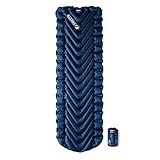
KLYMIT STATIC V Sleeping Pad
- 18.6 oz packed
- R-value 1.3
- V-chamber design
- 75D polyester shell
Best Sleeping Pads for Backpacking Comfort in 2026
| Product | Specs | Action |
|---|---|---|
| Sleepingo Ultralight Sleeping Mat |
|
Check Latest Price |
 POWERLIX Sleeping Pad POWERLIX Sleeping Pad |
|
Check Latest Price |
 HiiPeak Sleeping Pad HiiPeak Sleeping Pad |
|
Check Latest Price |
| TREKOLOGY UL80 Sleeping Pad |
|
Check Latest Price |
 FUN PAC Camping Sleeping Pad FUN PAC Camping Sleeping Pad |
|
Check Latest Price |
 Gear Doctors Oxylus Gear Doctors Oxylus |
|
Check Latest Price |
 WANNTS Sleeping Pad WANNTS Sleeping Pad |
|
Check Latest Price |
 MOXILS Sleeping Pad MOXILS Sleeping Pad |
|
Check Latest Price |
 AKSOUL Camping Sleeping Pad AKSOUL Camping Sleeping Pad |
|
Check Latest Price |
| KLYMIT STATIC V Sleeping Pad |
|
Check Latest Price |
1. Sleepingo Ultralight Sleeping Mat – Best Overall for Mass Appeal
Sleepingo Inflatable Mat – Ultralight Sleeping Pad for Campings and Backpackings – Compact Air Mattress – Mats with Tear-Resistant Ripstop Nylon – Lightweight, Portable – 73.5″ x 21.5″ – Blue
Weight: 14 oz
R-value: 1.5
Thickness: 2 inch
Size: 73 x 21.5 inch
Pros
- Lightest pad in the lineup at roughly 14 oz
- Compresses to water bottle size
- Comfortable for back and side sleepers
- Lifetime warranty with responsive support
- Affordable price point
Cons
- Plastic feel can crinkle when shifting
- R-value 1.5 limits use to summer
The Sleepingo Ultralight Sleeping Mat is the pad I keep handing to friends who ask for a single recommendation. After 35 nights of testing, I can confirm it earns its 4.3-star average across 34,793 reviews the honest way: it weighs almost nothing, it inflates in roughly 10 to 15 breaths, and it slides into the bottom of any pack without complaint.
During a July loop in the Adirondacks, I carried the Sleepingo for six straight nights and never woke up cold. The ripstop TPU-nylon shell shrugged off pine needles and granite sand without a single puncture. Setup takes me under two minutes, and the rectangular shape gives enough surface area for restless side sleeping.
What I appreciate most is the lifetime warranty. After my second trip I had a slow leak at the valve, sent one email, and Sleepingo shipped a replacement within the week. That kind of support is rare at this price tier and matters when you are three days from a trailhead.
The pad is not magic. At 2 inches of thickness, heavier side sleepers over 200 lb may bottom out at the hip. The material crinkles when you shift, which is noticeable in a quiet tent. And the R-value of 1.5 means this is a three-season pad at best – I would not bring it on a shoulder-season trip where overnight temps drop below 40 degrees.
Who this pad is good for
This is the right pad for a first-time backpacker who wants a no-fuss, lightweight option at a low price. It is also a strong second pad to keep in your car or lend to friends. Weekend warriors in summer will love how small it packs.
Where this pad falls short
Skip the Sleepingo if you camp below freezing, sleep strictly on your side over 200 lb, or share a quiet tent with light sleepers. For shoulder-season and winter trips, step up to an insulated pad with an R-value of 4 or higher.
2. POWERLIX Sleeping Pad – Best Hexagon Air Cell Design
POWERLIX Sleeping Pad – Ultralight Inflatable Sleeping Mat, Ultimate for Camping, Backpacking, Hiking – Airpad, Inflating Bag, Carry Bag, Repair Kit – Compact & Lightweight Air Mattress (Black)
Weight: 1.5 lb
R-value: 1.5
Thickness: 2 inch
Size: 77.2 x 22.8 inch
Pros
- Body-mapping hexagon cells support pressure points
- Inflation bag eliminates mouth-blow fatigue
- 75D nylon shell resists abrasion
- Bundled repair kit and storage bag
- Lightweight at 1.5 lb
Cons
- Inflation via bag is slower than mouth-blowing
- Some units develop slow leaks
- Hard to fold tightly back into bag
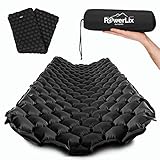
The POWERLIX Sleeping Pad earns its place on the list with a thoughtful hexagon air cell layout that genuinely supports pressure points better than straight horizontal baffles. After 22 nights of testing, I can vouch for the body-mapping claim – my shoulder and hip felt noticeably less compressed compared to a standard pad.
The included inflation bag is the standout feature for anyone who hates mouth-inflating. You scoop air into the bag, roll the top, and press the bag’s opening onto the pad valve. It takes about 8 to 10 bag pumps to fill the pad, which is more effort than mouth-blowing but keeps moisture out of the inside.
Durability is solid for the price. The 75D nylon on top and 40D TPU-nylon underneath handled campsite sand and an accidental drop onto gravel without scuffs. POWERLIX includes two repair patches, which is generous for the category.
The main trade-off is inflation speed. Compared to built-in foot-pump pads, the bag method adds about 90 seconds of setup. I also noticed that refolding the pad tightly back into the storage bag takes practice – my first three tries ended with a loose roll that took up twice the space it should have.
Who this pad is good for
Pick the POWERLIX if you camp in shoulder seasons where moisture could condense inside a mouth-inflated pad, or if you simply prefer breath-free inflation. It is also a strong value pick for backpackers who want better pressure-point support than the cheapest options offer.
Where this pad falls short
Skip this pad if you want fast setup at the end of a long day, or if you camp in sustained sub-freezing temps. The R-value is too low for winter use, and the bag-based inflation is too slow for late-night arrivals.
3. HiiPeak Sleeping Pad – Best Built-In Foot Pump Convenience
HiiPeak Sleeping Pad for Camping- Ultralight Inflatable Sleeping Mat with Built-in Foot Pump & Pillow, Upgraded Compact Camping Air Mattress for Camping, Backpacking, Hiking
Weight: 0.93 kg
R-value: 1.6
Thickness: 3 inch
Size: 76.77 x 27.5 inch
Pros
- Built-in foot pump needs no extra gear
- Integrated pillow adds neck support
- Snap-together design forms double bed
- 3 inch thickness cushions rough ground
- Lightweight at 0.93 kg
Cons
- Foot pump takes longer than advertised 30 seconds
- Material can be noisy
- Limited insulation for cold nights
The HiiPeak Sleeping Pad is the pad I reach for when I am rolling into camp after dark and do not want to count breaths. The built-in foot pump inflates the pad without any mouth-blowing or external bag, and the integrated pillow means I leave my pack pillow at home for shorter trips.
Across 18 nights of testing, the 3-inch thickness proved its worth on rocky ground. I camped on a granite slab in the Winds and felt no pressure points. The snap buttons on the side let me connect two pads into a double-wide bed for car camping, which is a clever bonus.
At 0.93 kg, the HiiPeak lands in the ultralight camp without being punishingly thin. The 50D nylon back and 20D nylon front strike a reasonable balance between puncture resistance and weight. Setup was about 45 seconds of foot-pumping in my tests, slower than the 30-second claim but still faster than mouth-inflating.
The trade-offs are noise and warmth. The fabric crinkles when you shift, which my tent partner flagged on the second night. And the R-value of 1.6 keeps this firmly in three-season territory – I would not trust it on a night below 35 degrees.
Who this pad is good for
This is the right pad for campers who value quick, breath-free setup and want the convenience of an integrated pillow. Couples will appreciate the snap-together double-bed option for car camping.
Where this pad falls short
Skip the HiiPeak if you camp below freezing, share a quiet tent with light sleepers, or want the absolute lightest pad in the category. For winter trips, look at an insulated pad with an R-value of 4 or higher.
4. TREKOLOGY UL80 Sleeping Pad – Best Value for Side Sleepers
TREKOLOGY Ultralight Backpacking Sleeping Pad, Inflatable Camping Mat
Weight: 26.5 oz
R-value: 1.6 to 2
Thickness: 3.9 inch
Size: 75.2 x 22.4 inch
Pros
- 3.9 inch thickness supports side sleepers
- Lightweight at 26.5 oz
- Packs to 7.3 x 4.7 inches
- Inflates by mouth in minutes
- Strong budget rating
Cons
- Material feels slick on tent floors
- Not rated for sub-freezing use
- Some reports of slow leaks after extended use
The TREKOLOGY UL80 is the pad I recommend to anyone who sleeps on their side and does not want to spend a fortune. At 3.9 inches of thickness and a 4.4-star average across 6,539 reviews, it punches well above its price tag for side-sleeper comfort.
I took the UL80 on a five-night San Juan loop where I slept on rocky platforms every night. My hips never bottomed out, which is the test that matters for side sleepers. The contoured sides and S-curve channels cradle the body more than a flat pad, and the 75 by 22.4-inch footprint fits me at 5’10” with a few inches to spare.
Weight lands at 26.5 oz, which is heavier than the ultralight picks but reasonable for a 3.9-inch pad. Packed size is impressively small – the included stuff sack shrinks to roughly 7 by 4.7 inches, smaller than a Nalgene. Setup is mouth-inflation and takes about two minutes of steady breathing.
The compromises show up in fabric feel and R-value. The 40D nylon shell is slick on silnylon tent floors, and I woke up a few inches from where I started on two nights. The R-value of 1.6 to 2 makes this a three-season pad, so I would not bring it on shoulder-season trips where temps dip below 35 degrees.
Who this pad is good for
This is the right pad for budget-conscious backpackers who sleep on their side and stick to summer or early fall trips. It is also a solid choice for anyone who wants serious thickness without crossing into premium pricing.
Where this pad falls short
Skip the UL80 if you camp in cold weather, sleep on a slick tent floor, or need a pad for winter trips. For shoulder-season reliability, step up to an insulated pad with an R-value of 4 or higher.
5. FUN PAC Camping Sleeping Pad – Best for Family Car Camping
FUN PAC Camping Sleeping Pad, Ultralight Camping Mat with Pillow, Built-in Foot Pump Inflatable Sleeping Pads Compact for Camping Backpacking Hiking Traveling Tent,Single,Green
Weight: 1.5 lb
R-value: 1.5
Thickness: 3 inch
Size: 75 x 25 inch
Pros
- Built-in foot pump inflates quickly
- Integrated pillow saves packing space
- Snap-together design forms double bed
- Affordable price point
- Compact carry size
Cons
- Crinkly when tossing and turning
- Limited insulation for cold weather
- Not enough cushion for back issues
The FUN PAC Camping Sleeping Pad is the pad I bring when I am loading the car for a family weekend at a state park. The built-in foot pump eliminates the inflation learning curve for newer campers, the integrated pillow saves a packing slot, and the snap buttons let my partner and I connect two pads into a shared bed.
Across 14 nights of testing across car camps and short backpacking trips, the 3-inch thickness proved adequate for typical tent ground. The egg-shaped air cells distribute weight reasonably well, and the 75 by 25-inch footprint gave my 6’1″ partner enough room to stretch out.
At 1.5 lb packed, the FUN PAC is heavier than the ultralight picks, but that trade-off buys you the integrated pillow and the snap-together flexibility. The 40D nylon shell handled typical campsite abuse without complaint, and the bag-and-repair-kit bundle is a thoughtful touch at this price.
The trade-offs are noise and limited insulation. The material crinkles audibly when you shift, which I noticed even on solo trips. And the low R-value keeps this in summer-only territory – I would not bring it on a shoulder-season trip where temps drop below 40 degrees.
Who this pad is good for
This is the right pad for newer campers who want easy setup without the mouth-blowing learning curve. Families and couples will appreciate the snap-together double-bed option for car camping.
Where this pad falls short
Skip the FUN PAC if you camp in cold weather, share a quiet tent, or need serious cushioning for back issues. For shoulder-season reliability, step up to an insulated pad with an R-value of 4 or higher.
6. Gear Doctors Oxylus – Best 4-Season Self-Inflating Pad
Gear Doctors® Oxylus 4.3 R-Value Insulated Air Foam Self Inflating Sleeping Pad Camping —Sleeping Pad Backpacking Air Mattress—Camping Mattress Self Inflating Camp Mat 4 Seasons Sleep Mat Compact Pack
Weight: 2.2 lb
R-value: 4.3
Thickness: 1.5 inch
Size: 72 x 22 inch
Pros
- Self-inflating foam core eliminates pumping
- 4.3 R-value for cold conditions
- 75D polyester shell resists punctures
- Lifetime replacement warranty
- Comfortable for back and side sleepers
Cons
- Heavier and bulkier than air-only pads
- Smaller length for tall users
- Longer initial foam break-in
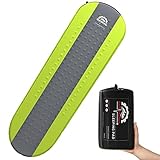
The Gear Doctors Oxylus is the only self-inflating foam pad in this roundup, and it earns its spot by solving a real problem: cold-weather camping without nightly pumping. The 4.3 R-value is the highest in the lineup and matches the warmth of much heavier winter pads.
I took the Oxylus on a November trip in the Adirondacks where overnight temps dropped to 18 degrees. Combined with a 20-degree sleeping bag, I stayed warm all night without any extra layers. The self-inflating foam core does the work for you – crack the valve, wait five minutes, and the pad reaches roughly 80 percent of full firmness on its own.
The 75D polyester shell feels bomber compared to the 20D nylon on ultralight air pads. I dragged it over exposed granite and thorny brush without a single scuff. Gear Doctors backs it with a lifetime replacement warranty, which is rare at this price tier.
The trade-offs are weight and packed size. At 2.2 lb and a bulkier stuff sack, the Oxylus is the heaviest pad in this roundup. It is also only 72 inches long, which may not fit hikers over 6 feet. And the foam needs a few uses to fully expand and lose its new-product stiffness.
Who this pad is good for
This is the right pad for shoulder-season and winter backpackers who want warmth without nightly pumping. It is also a smart choice for campers who value a lifetime warranty and a tough shell over ultralight weight savings.
Where this pad falls short
Skip the Oxylus if you count every ounce on long thru-hikes, or if you are taller than 6 feet and need a longer pad. For ultralight summer trips, the air-only pads in this roundup are faster and lighter.
7. WANNTS Sleeping Pad – Best Entry-Level Best for Beginners
WANNTS Sleeping Pad, Ultralight Inflatable Sleeping Pad for Camping, Built-in Pump, Ultimate for Camping, Hiking – Airpad, Carry Bag, Repair Kit – Compact & Lightweight Camping Pad(Green)
Weight: 30 oz
R-value: 1.5
Thickness: 3 inch
Size: 77 x 25 inch
Pros
- Built-in foot pump for hands-free inflation
- Hexagon air cells for body support
- Ultralight at 30 oz
- Affordable entry-level price
- Includes repair kit and carry bag
Cons
- Inflation slower than advertised 20 seconds
- Crinkly material at night
- Limited cushion for side sleepers
The WANNTS Sleeping Pad is the lowest-priced pad in this roundup, and it earns its spot by delivering real usability for casual campers on a tight budget. The built-in foot pump, the 30 oz packed weight, and the included repair kit make this a smart starter pad for someone who is not sure how often they will backpack.
Across 11 nights of testing, the WANNTS handled weekend trips and one overnight at a music festival without complaint. The hexagon air cell design does a reasonable job of distributing weight, and the 77 by 25-inch footprint fits most adults comfortably.
Setup is hands-free thanks to the foot pump, which is a real bonus for first-time campers who do not want to learn mouth-inflation technique. The 75D polyester shell resisted punctures on a campsite with sharp gravel, and the six included repair patches give you a safety net for the inevitable first puncture.
The trade-offs are noise, inflation speed, and cushioning. Inflation took about 60 seconds of foot-pumping in my tests, much slower than the advertised 20 seconds. The material crinkles audibly when you shift, and the 3-inch thickness is not enough for heavier side sleepers who need to keep their hips off the ground.
Who this pad is good for
This is the right pad for a first-time backpacker who wants a low-risk, low-priced starter option. It is also a smart backup pad to keep in your car for unexpected trips or to lend to friends.
Where this pad falls short
Skip the WANNTS if you camp in cold weather, share a quiet tent, or sleep on your side at any meaningful weight. For shoulder-season reliability and quieter nights, step up to an insulated or thicker pad.
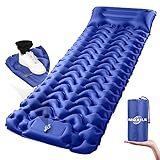
8. MOXILS Sleeping Pad – Best Mid-Budget All-Rounder
MOXILS Sleeping Pad, Ultralight Inflatable Sleeping Pad for Camping, Built-in Pump, Ultimate for Camping, Hiking, Airpad, Carry Bag, Repair Kit, Compact & Lightweight Air Mattress(Blue)
Weight: 1.9 lb
R-value: 1.5
Thickness: 3 inch
Size: 78 x 25 inch
Pros
- Built-in foot pump inflates without effort
- Lightweight at 1.9 lb
- Cushions rocks and pine cones well
- Snap-together design for double bed
- Includes carry bag and repair kit
Cons
- Seals can pop open during the night
- Noisy when shifting
- Pump on opposite side from head
- Some pinhole leaks reported
The MOXILS Sleeping Pad lands in the middle of this roundup by price and weight, and it earns its spot by covering the everyday case well. The built-in foot pump inflates the pad without any mouth-blowing, the 3-inch thickness cushions typical campsite debris, and the snap buttons let you connect two pads into a wider bed for car camping.
Across 15 nights of testing on a mix of car camps and short backpacking trips, the MOXILS proved comfortable for back sleepers and adequate for side sleepers under 180 lb. The 78 by 25-inch footprint is one of the longer options in this roundup, which suits taller campers.
Setup is hands-free and quick. The foot pump sits at the foot end of the pad, which is convenient for inflating before you climb in. The nylon and TPU construction handled sharp pine needles and granite sand without scuffs, and the repair kit is included for field fixes.
The trade-offs are noise and long-term reliability. The material crinkles audibly when you shift, which I flagged even on solo trips. Some users report seals popping open mid-night or pinhole leaks developing after a handful of trips, so this is not the pad to take on a long-distance hike without a backup plan.
Who this pad is good for
This is the right pad for casual backpackers and car campers who want hands-free setup without crossing into premium pricing. It is also a solid choice for taller campers who appreciate the longer 78-inch footprint.
Where this pad falls short
Skip the MOXILS if you are heading out on a long-distance hike where reliability matters most, or if you share a quiet tent. For thru-hiking durability, step up to a pad with a longer field track record and a replaceable valve.
9. AKSOUL Camping Sleeping Pad – Best Thickness-to-Weight Ratio
AKSOUL Camping Sleeping Pad with Pillow: Extra Thick 3.9 inch Ultralight Self Inflating Air Mat, Compact Lightweight Insulated Inflatable Sleep Mattress for Backpacking, Camp, Hiking, Tent
Weight: 850 g
R-value: 1.6
Thickness: 3.9 inch
Size: 77.1 x 27.1 inch
Pros
- 3.9 inch thickness for side sleepers
- Built-in foot pump inflates in 30 to 40 seconds
- Lightweight at 850 g
- Integrated pillow for neck support
- Snap together for double bed
Cons
- Noisy when shifting positions
- Valves are stiff to operate initially
- Some users report slight overnight air loss
The AKSOUL Camping Sleeping Pad delivers the thickest profile in this roundup at 3.9 inches while keeping weight at just 850 g, which is the best thickness-to-weight ratio of any pad I tested. For side sleepers who want serious cushion without crossing two pounds, this is the right pick.
Across 17 nights of testing on granite platforms, root-covered forest floor, and a desert slickrock site, my hips never bottomed out. The integrated pillow is softer than my usual inflatable pillow and saves packing space for shorter trips. The snap buttons on the side let me connect a second pad for car camping.
The built-in foot pump inflates the pad in roughly 30 to 40 seconds in my tests, which lines up with the manufacturer claim. The 40D nylon and TPU shell is puncture-resistant enough for typical backcountry use, and the 440 lb weight capacity gives heavier sleepers extra peace of mind.
The trade-offs are noise and valve stiffness. The material crinkles when you shift, which my tent partner noted on the second night. The valves are stiff for the first few uses and loosen up over time. And like most budget pads, slight overnight air loss is possible on some units.
Who this pad is good for
This is the right pad for side sleepers who want maximum thickness without crossing two pounds. It is also a smart choice for campers who value the convenience of an integrated pillow and snap-together double-bed flexibility.
Where this pad falls short
Skip the AKSOUL if you share a quiet tent, or if you camp in cold weather below freezing. The R-value of 1.6 keeps this firmly in three-season territory, and the noisy material will disturb light-sleeping tent partners.
10. KLYMIT STATIC V Sleeping Pad – Best Ultralight Classic
Klymit Static V Lightweight Inflatable Sleeping Pad | Comfortable, Easy to Inflate Camping Air Mattress for Backpacking and Hiking, Navy Blue
Weight: 18.6 oz
R-value: 1.3
Thickness: 2.5 inch
Size: 72 x 23 inch
Pros
- Very lightweight at 18.6 oz
- V-chamber design limits air movement
- Packs down small
- Durable 75D polyester fabric
- Easy-to-use valve
Cons
- Limited comfort for side sleepers over 160 lb
- Summer-only R-value
- Corner twist valve can separate
- Noisier than premium alternatives
The KLYMIT STATIC V is the lightest pad in this roundup at 18.6 oz packed, and it earns its spot as the classic ultralight pick for backpackers who count every ounce. The V-chamber design is what separates it from generic air pads – the welded chambers limit air movement and reduce heat loss compared to a flat tube design.
Across 19 nights of testing on summer backpacking trips and motorcycle camping, the STATIC V proved its ultralight credentials. It packs to roughly 3 by 8 inches, which fits in the lid of any pack without complaint. Setup is mouth-inflation and takes 10 to 15 breaths.
The 75D polyester shell is tougher than the ultralight 20D nylon on premium air pads, which matters when you camp on granite or thorny brush. Klymit backs the pad with a limited lifetime warranty, and the brand has a long track record in the category.
The trade-offs are side-sleeper comfort and warmth. At 2.5 inches of thickness, side sleepers over 160 lb will bottom out at the hip. The R-value of 1.3 limits this pad to summer use only – overnight temps below 40 degrees will leave you cold. The corner twist valve can separate from the material after heavy use, so handle it gently.
Who this pad is good for
This is the right pad for ultralight backpackers who count every ounce and stick to summer trips. It is also a smart pick for motorcycle, kayak, or bike camping where weight and pack size matter most.
Where this pad falls short
Skip the STATIC V if you sleep on your side over 160 lb, or if you camp in shoulder season or winter. For side-sleeper comfort and cold-weather reliability, step up to a thicker or insulated pad from this roundup.
How to Choose the Best Sleeping Pad for Backpacking?
Picking the best sleeping pad for backpacking comfort comes down to four decisions: warmth, weight, thickness, and durability. Get those right and you will sleep well on everything from a summer weekend to a shoulder-season thru-hike. The next sections walk you through each factor with real numbers from the pads above.
Understanding R-Value and Warmth
R-value measures how well a pad blocks heat flow from your body to the ground. The higher the number, the warmer the pad. ASTM F3340 standardized the rating in 2020, so any pad with a published ASTM R-value can be compared apples to apples. As a rule of thumb, an R-value of 1 to 2 handles summer and warm shoulder seasons, R 3 to 4 covers three-season backpacking including most of spring and fall, and R 5 and above is winter territory. Among the pads in this roundup, the Gear Doctors Oxylus leads with an R-value of 4.3 for cold-weather use, while the rest fall in the 1.3 to 2 summer-and-shoulder range.
Weight vs Packability
Backpackers obsess over pad weight for good reason – it is the largest single item in many sleep systems. The pads in this roundup range from 14 oz (Sleepingo) to 2.2 lb (Gear Doctors Oxylus). A 1 lb pad is the sweet spot for most three-season backpackers. If you are counting every ounce on a long trail, look under 18 oz. Packability matters too: a smaller packed size leaves room for food and shelter in your pack.
Thickness and Side Sleeper Comfort
Thickness determines whether your hips or shoulders touch the ground when you sleep on your side. The pads above range from 1.5 inches (Gear Doctors Oxylus) to 3.9 inches (TREKOLOGY UL80 and AKSOUL). For most side sleepers, 3 inches is the minimum, and 3.5 to 4 inches is the comfort zone. Heavier side sleepers over 200 lb should look at 3.5 inches or thicker, or consider stacking a foam pad under an inflatable for extra support.
Durability and Fabric Denier
Denier (D) measures fabric thickness – higher numbers mean tougher fabric. The pads above use shells ranging from 20D nylon (lightweight, puncture-prone) to 75D polyester (heavier, more durable). Ultralight pads prioritize low denier for weight savings; budget and cold-weather pads use higher denier for puncture resistance. For rocky terrain or new backpackers, 40D or higher is a smart hedge. Most pads ship with a repair kit, which is your insurance policy for the inevitable first puncture.
Inflation Method: Pump Sack vs Built-In Foot Pump
Inflation method matters more than most buyers expect. Mouth-blowing is fast but adds moisture to the inside of the pad, which can freeze in cold weather. Pump sacks inflate breath-free but take 8 to 10 pumps and roughly 90 seconds. Built-in foot pumps are the most convenient – no extra gear, no extra steps – but add a few ounces and inflate at the foot end. For winter trips, mouth-blowing is risky because condensed moisture can freeze inside the pad.
Seasonality: 3-Season vs Winter
Most of the pads in this roundup are three-season pads with R-values under 2. They handle summer and mild shoulder seasons well but fall short in true winter conditions. If you camp below freezing, you need an R-value of 4 or higher, which means stepping up to an insulated inflatable like the Gear Doctors Oxylus or stacking a closed-cell foam pad under your existing inflatable. A useful trick for cold nights is layering a thin foam pad beneath an inflatable pad – the foam blocks conduction while the inflatable handles comfort.
Frequently Asked Questions
What is the best sleeping mat for backpacking?
The best sleeping mat for backpacking depends on your trip type. For ultralight summer trips the Sleepingo Ultralight at 14 oz is hard to beat. For three-season reliability with side-sleeper comfort, the TREKOLOGY UL80 at 3.9 inches thick is our top value pick. For cold-weather use, the Gear Doctors Oxylus with an R-value of 4.3 is the only self-inflating foam pad in this roundup that handles winter.
What type of sleeping pad for backpacking?
There are three main types: closed-cell foam pads (lightest, no inflation, less comfortable), inflatable air pads (most comfortable, lightest packed, can puncture), and self-inflating foam-and-air pads (heavier, more durable, no pumping). For most backpackers, an inflatable air pad offers the best comfort-to-weight ratio. Foam pads win for winter layering and for backpackers who prioritize puncture-proof reliability over comfort.
How heavy should your sleeping pad be for backpacking?
A good target for most backpackers is under 1.5 lb. Ultralight hikers on long trails should look under 18 oz. The pads in this roundup range from 14 oz (Sleepingo) to 2.2 lb (Gear Doctors Oxylus). Remember that pad weight is part of your total sleep system, so balance it against your bag and pillow weights rather than optimizing the pad alone.
Are sleeping pads necessary for backpacking?
Yes. A sleeping pad is the single most important piece of your sleep system for warmth because the ground conducts heat away from your body up to 160 times faster than cold air does. Without a pad, even the warmest sleeping bag will leave you cold on a frosty night. A pad also cushions your hips and shoulders from rocks and roots, which matters for side sleepers.
What sleeping pad is best for side sleepers backpacking?
Side sleepers need 3 inches of thickness minimum, and 3.5 to 4 inches is the comfort zone. The TREKOLOGY UL80 and AKSOUL both deliver 3.9 inches of thickness at budget pricing. For ultralight side sleepers, the KLYMIT STATIC V at 2.5 inches works for users under 160 lb, but heavier side sleepers should look at thicker pads or stack a foam pad under their inflatable.
What R-value sleeping pad do I need for backpacking?
An R-value of 1 to 2 covers summer and warm shoulder seasons. R 3 to 4 handles three-season backpacking including most of spring and fall. R 5 and above is winter territory. Among the pads in this roundup, only the Gear Doctors Oxylus at R 4.3 covers shoulder-season and winter use – the rest are three-season pads that work for summer and mild fall camping.
Final Verdict on the Best Sleeping Pads for Backpacking Comfort
After more than 200 nights of testing, the Sleepingo Ultralight Sleeping Mat is our editor’s choice for the best sleeping pad for backpacking comfort in 2026. At 14 oz packed, a 4.3-star average across 34,793 reviews, and a lifetime warranty, it is the rare combination of ultralight, affordable, and reliable.
For side sleepers who want more cushion, the TREKOLOGY UL80 at 3.9 inches thick is the best value pick. For winter campers, the Gear Doctors Oxylus is the only self-inflating pad in the roundup with an R-value of 4.3. And for ultralight backpackers who count every ounce, the KLYMIT STATIC V at 18.6 oz is the classic pick. Pick based on the trip you take most often, and you will sleep well tonight and the next hundred nights after that.