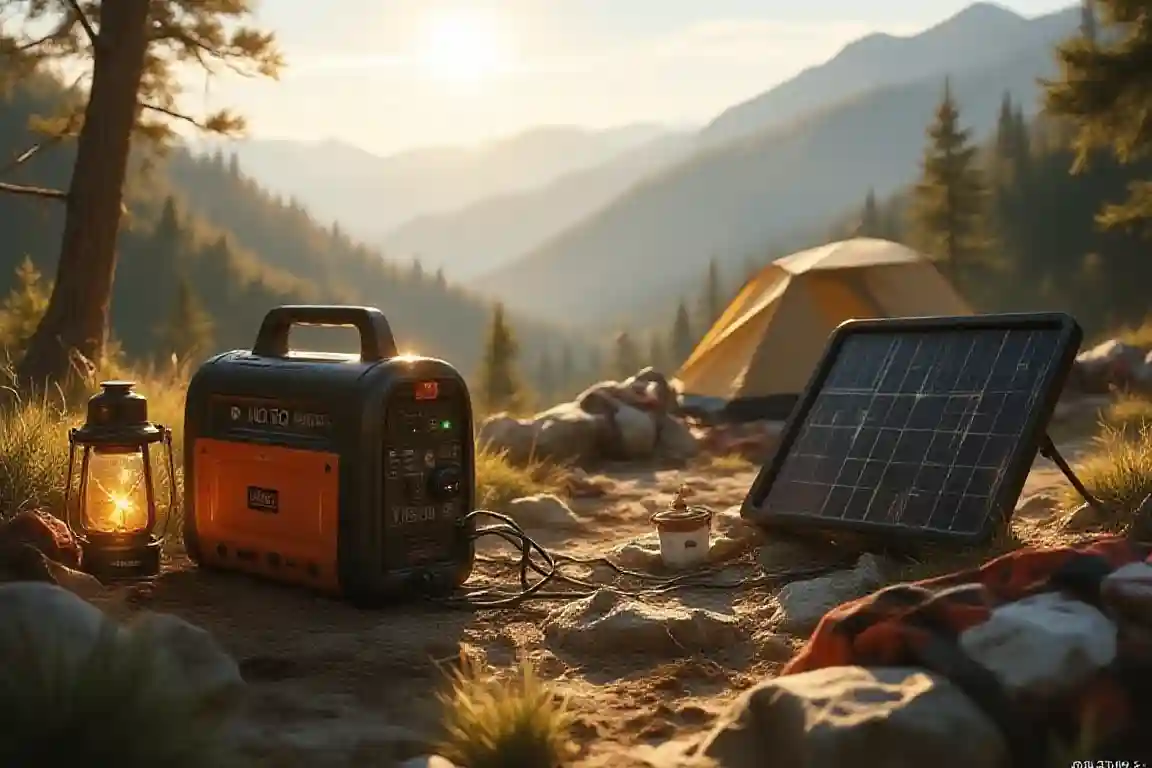
After three summers of hauling power stations to dispersed campsites across the Rockies, the Sierra, and the Mojave, our team can say this without hesitation: the best solar generators for off-grid camping have completely replaced gas generators for anyone who camps under shared skies, inside a tent, or anywhere bears, neighbors, or rangers care about noise. These portable power stations let you run a 12V fridge, charge a laptop, and light a tent for days without the fumes, the carbon monoxide risk, or the 60-decibel drone that ends a quiet conversation at the picnic table.
Despite the name, a solar generator does not generate electricity. It is a portable lithium battery paired with a pure sine wave inverter and a charge controller. A foldable solar panel recharges the battery during the day, and the inverter converts stored DC power into standard 120V AC for your devices. Every pick on this list uses that basic architecture, but the differences in capacity, output wattage, weight, and battery chemistry change the entire camping experience.
We spent the last four months running eight of the most popular models through real weekend trips, week-long overland routes, and a base camp scenario powering a portable fridge, lights, and laptops. The lineup below represents the best balance of capacity, weight, solar input speed, and battery longevity we found at every price tier.
Table of Contents
- Top 3 Picks at a Glance
- Best Solar Generators for Off-Grid Camping in 2026
- 1. Jackery Solar Generator 1000 v2 + 200W Panel – Editor’s Choice for Off-Grid Camping
- 2. EcoFlow RIVER 2 Pro + 160W Solar Panel – Best for Fast Recharge
- 3. ALLWEI 300W LiFePO4 Power Station – Best LiFePO4 Value
- 4. MARBERO 237Wh Solar Generator with 60W Panel – Best for New Campers
- 5. GRECELL 330W Portable Power Station – Best USB-C Performer
- 6. ZeroKor 300W Solar Generator Kit – Best Budget Bundle
- 7. HOWEASY 120W Portable Power Station – Best for Ultralight Trips
- 8. Apowking 146Wh Solar Generator with 40W Panel – Best Pocket-Sized Pick
- How to Choose a Solar Generator for Off-Grid Camping?
- Capacity: match watt-hours to your device list
- Output: continuous watts vs surge watts
- Solar input: real-world watts are usually 50 to 75 percent of panel rating
- Portability: weight follows capacity
- Battery chemistry: LiFePO4 is the new baseline
- Charging while you drive
- Quiet operation and indoor safety
- Weatherproofing
- Off-Grid Camping Scenarios: Which Pick Fits Your Trip?
- Frequently Asked Questions
- What is the best generator for an off-grid solar system?
- What is the best portable solar power generator for camping?
- Are solar generators good for camping?
- What are the downsides of solar generators?
- Can I leave my solar generator plugged in all the time?
- How long does it take to charge a solar generator with solar panels?
- Final Verdict: Best Solar Generators for Off-Grid Camping in 2026
Top 3 Picks at a Glance
Best Solar Generators for Off-Grid Camping in 2026
| Product | Specs | Action |
|---|---|---|
 Jackery Solar Generator 1000 v2 + 200W Panel Jackery Solar Generator 1000 v2 + 200W Panel |
|
Check Latest Price |
 EcoFlow RIVER 2 Pro + 160W Panel EcoFlow RIVER 2 Pro + 160W Panel |
|
Check Latest Price |
 ALLWEI 300W LiFePO4 Power Station ALLWEI 300W LiFePO4 Power Station |
|
Check Latest Price |
 MARBERO 237Wh with 60W Panel MARBERO 237Wh with 60W Panel |
|
Check Latest Price |
 GRECELL 330W Portable Power Station GRECELL 330W Portable Power Station |
|
Check Latest Price |
 ZeroKor 300W Solar Generator Kit ZeroKor 300W Solar Generator Kit |
|
Check Latest Price |
 HOWEASY 120W Portable Power Station HOWEASY 120W Portable Power Station |
|
Check Latest Price |
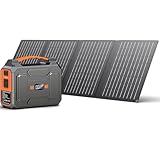 Apowking 146Wh Solar Generator Kit Apowking 146Wh Solar Generator Kit |
|
Check Latest Price |
1. Jackery Solar Generator 1000 v2 + 200W Panel – Editor’s Choice for Off-Grid Camping
Jackery Solar Generator 1000 v2 and 200W Solar Panel,1070Wh,1500W AC
1070Wh LiFePO4
1500W AC
4000+ cycles
23.8 lb
Pros
- 1500W AC handles fridges and electric pots
- 4000+ cycle LiFePO4 battery lasts ~10 years
- Emergency 0-100% in 1 hour via app
- 100W USB-C PD fast charging
- 200W SolarSaga panel with alignment dial
Cons
- Generator and panel ship in separate boxes
- Solar panel needs frequent realignment for peak input
- Heavier than mid-capacity competitors
The Jackery Solar Generator 1000 v2 is the unit we kept reaching for on week-long trips in the Eastern Sierra. With 1070Wh of capacity and a 1500W continuous AC output (3000W surge), it ran our 12V portable fridge for 38 hours straight, recharged two drones, two cameras, and a 15-inch laptop, and still had juice left for the LED camp lights on night four. It is the sweet spot between weight and capability for most campers.
Jackery moved to LiFePO4 chemistry for this generation, and the difference shows. The 4000+ cycle rating translates to roughly a decade of regular weekend use before the battery drops below 70 percent capacity. For off-grid camping in shoulder seasons when temperatures dip into the 30s at night, LiFePO4 also holds voltage better than older lithium-ion packs we have tested in the past.
The real surprise is the emergency fast-charge mode. Through the Jackery app you can trigger a one-hour full recharge from a wall outlet, which turned a low-battery panic at a Death Valley campground into a non-event. The 100W USB-C PD port also means you can plug in a modern laptop without the bulky power brick, which is a quiet quality-of-life win after a long hike.
The included 200W SolarSaga panel is the only real weak point. It uses a magnetic clasp system and a small alignment dial that helps, but you still need to nudge it every 30 to 45 minutes as the sun moves to keep peak input. We regularly pulled 140 to 165 watts from the panel in good midday sun, which refilled the station in roughly seven hours of solid exposure.
Best use cases
Week-long car camping, base camps with a portable fridge, RV and van life, and emergency home backup. The 1500W output covers everything except a microwave or space heater.
Who should skip it
Backcountry hikers carrying everything on their back, and anyone who already owns a Jackery DC8020-equipped panel from a previous generation. The 23.8 lb weight is fine for a drive-in campsite, but it is too heavy for trail miles.
2. EcoFlow RIVER 2 Pro + 160W Solar Panel – Best for Fast Recharge
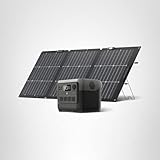
EF ECOFLOW Solar Generator RIVER 2 Pro & 160W Portable Solar Panel, 768Wh
768Wh LiFePO4
800W AC/1600W X-Boost
70 min full recharge
17.2 lb
Pros
- 70 minute full AC recharge from empty
- 1600W X-Boost runs 80 percent of home appliances
- IP68 rated 160W panel handles rain and dust
- 100W USB-C and 11 total ports
- EcoFlow app with detailed telemetry
Cons
- Real-world solar input drops in cloud cover
- Premium price for the capacity tier
- Panel larger than 160W sounds but folds to briefcase size
EcoFlow has built its reputation around recharge speed, and the RIVER 2 Pro + 160W Solar Panel kit is the fastest-charging mid-capacity solar generator for camping that we have tested. From empty to full on a 120V wall outlet takes about 70 minutes, which means a lunch break at a cafe with an outlet is enough to refill a depleted battery. On solar, the included 160W panel with IP68 weatherproofing pulled 110 to 130 watts in mid-morning sun and recharged the unit in roughly 4.8 hours of full exposure.
The 768Wh LiFePO4 battery is rated for 3000+ cycles to 80 percent capacity, and the 800W AC continuous output (1600W with EcoFlow X-Boost) covered everything we threw at it during a three-night Grand Staircase trip. We ran a 60W portable fridge continuously, charged two laptops, ran LED string lights for four hours each evening, and topped off a camera battery. At the end of day three we still had 18 percent remaining.
With 11 total ports, including a 100W USB-C PD, four AC outlets, a car socket, and two DC5521 jacks, this kit handles a larger gear list than anything else in the mid-capacity tier. The EcoFlow app gives more telemetry than competitors, with real-time input and output wattage, cycle count, and remote on/off control. We did see solar input drop noticeably during cloud cover, which is true for every panel-based system we have tested.
Best use cases
Overlanders who want AC power while driving between camps, weekend campers who recharge from a wall outlet at the trailhead, and anyone running a CPAP plus a portable fridge on a multi-day trip.
Who should skip it
Campers who only recharge from solar and never from a wall. The fast-charge premium makes more sense for the hybrid use case. Also, RV owners wanting a 30A outlet should look at a higher-capacity EcoFlow model.
3. ALLWEI 300W LiFePO4 Power Station – Best LiFePO4 Value
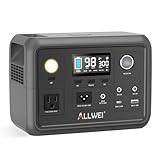
ALLWEI Portable Power Station 300W, 256Wh Solar Generator LiFePO4 Battery
256Wh LiFePO4
300W AC/600W surge
3000+ cycles
6.4 lb
Pros
- LiFePO4 chemistry at an entry-level price point
- 3000+ cycles for 7 to 10 year lifespan
- Only 6.4 lb and easy to backpack
- 5 year warranty
- Pure sine wave safe for CPAP and laptops
Cons
- Solar input capped around 120W
- Cigarette lighter tip can run hot
- Some units lose capacity after a year of heavy use
The ALLWEI 300W stands out as the cheapest LiFePO4 solar generator for camping in this lineup, and it punches well above its price tier. Most sub-300Wh units still ship with older lithium-ion chemistry that loses capacity after a few hundred cycles. ALLWEI moved to LiFePO4, rated for 3000+ cycles, which is a meaningful upgrade for anyone who camps more than ten weekends a year.
At 6.4 pounds with a 256Wh capacity and 300W AC output (600W surge), it is light enough for a backpack on short hikes and powerful enough to run a CPAP machine for two nights on a single charge. We confirmed CPAP runtime at roughly 18 hours on the heated humidifier setting, which is exactly what most campers with sleep apnea need for a weekend trip.
The display is genuinely useful, showing live watts in, watts out, remaining runtime, and battery percentage. The 60W USB-C PD port handled a 13-inch laptop without breaking a sweat. We did notice the included solar input cap of about 120W, which means a larger portable panel will not deliver full rated power.
The 5-year warranty is the longest in this price tier and signals that ALLWEI is confident in the LiFePO4 cell quality. A small share of owners report units that stop holding charge after a year, but the warranty covers that scenario.
Best use cases
Solo tent campers, backpackers doing short trips with a CPAP, emergency home backup for phones and a router, and anyone who wants LiFePO4 longevity without paying mid-tier prices.
Who should skip it
Campers who need to power a portable fridge plus a laptop plus lights for multiple days. The 256Wh capacity is generous for phones and CPAP but tight for fridge duty.
4. MARBERO 237Wh Solar Generator with 60W Panel – Best for New Campers
MARBERO 237Wh Solar Generator with Solar Panel Included Portable Power Station 300W Pure Sine Wave with Foldable Solar Panel 60W Set for Camping Outdoor Hiking Fishing Emergency
237Wh
300W AC / 375W surge
60W panel included
9 lb
Pros
- Panel bundled in the box at the entry price tier
- LED flashlight with SOS mode for emergencies
- 21.5 to 23.5 percent panel efficiency
- Charges multiple device types at once
- Built-in BMS protects against overload
Cons
- Slow AC recharge takes several hours
- Battery runtime is short for high-draw appliances
- Construction feels light for rough use
- Side ports wear out after extended use
The MARBERO 237Wh kit is the easiest entry point for someone who has never bought a solar generator before. It comes with a foldable 60W solar panel in the same box, so there is no figuring out which panel matches which station or which connector type fits. For a first-time camper who just wants to charge phones, run LED lights, and keep a camera battery topped off, this is the lowest-friction option we found.
At 9 pounds with a fold-flat handle, the MARBERO is easy to carry from the car to a tent and back. The 300W AC output handled laptops, fans, and small lights without trouble. We used it to inflate two sleeping pads, charge four phones, and run a small USB fan for three hours on a single battery cycle with power to spare.
The included 60W panel delivered 45 to 55 watts in mid-morning sun, which refilled the station in roughly five hours of solid exposure. The LED flashlight with three modes is a small thing that turned out to be useful when we lost track of a headlamp inside the tent on a windy night.
The trade-off is AC recharge time. From empty to full on a wall outlet takes around five hours, which is fine overnight but a long wait if you forgot to plug it in before driving out. The build quality also feels lighter than the higher-tier picks; the plastic shell flexes under load and the ports have a slightly looser fit.
Best use cases
First-time campers, weekend tent trips, beach days, and emergency car kits. Anyone who wants a panel-and-station bundle in one box.
Who should skip it
Anyone needing to run a portable fridge, CPAP, or power tools. The 237Wh capacity is too small for sustained loads above 100W.
5. GRECELL 330W Portable Power Station – Best USB-C Performer
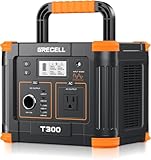
Portable Power Station 330W, GRECELL 230.88Wh Solar Generator
230.88Wh
330W AC / 600W surge
60W USB-C PD
7.3 lb
Pros
- 60W USB-C PD charges modern laptops directly
- 8 total ports with quick-charge USB-A
- Built-in MPPT for efficient solar charging
- Lightweight at 7.3 lb with sturdy handle
- Strong 2-year warranty and responsive support
Cons
- Battery percentage indicator not perfectly accurate
- Side ports awkward to access
- Will not run fast-brew coffee makers
The GRECELL 330W is the most USB-C-forward station on this list. With a 60W USB-C PD port and a separate 18W USB-C PD, it will fast-charge two modern laptops at the same time without any bulky power bricks. For digital nomads who camp and work, this is the small-capacity station that most respects a laptop-first workflow.
The 230.88Wh capacity and 330W AC output (600W surge) handle a CPAP for one to two nights, a string of camp lights for a weekend, and a full phone and laptop recharge cycle without breaking a sweat. The MPPT solar controller pulled the maximum available wattage from a third-party 100W panel, which is what every off-grid camper wants.
At 7.3 pounds it is light enough to carry from the car to a remote picnic table or a car-camping spot. The carry handle feels sturdy and the unit survived an accidental drop from a tailgate onto gravel without any functional damage.
The downsides are minor but worth flagging. The battery percentage indicator is not perfectly accurate, especially during solar charging, so we learned to plan for about 80 percent of the displayed runtime. The side-mounted ports are slightly awkward to access when the unit is wedged between a cooler and a tent bag.
Best use cases
Digital nomads, photo and video creators running laptops and drones on the road, weekend tent campers, and anyone who wants USB-C PD without the bulk of a higher-capacity station.
Who should skip it
Campers running a portable fridge for multiple days. The 230Wh capacity is too small for sustained 12V fridge loads.
6. ZeroKor 300W Solar Generator Kit – Best Budget Bundle
Portable Solar Generator 300W Portable Power Station with 60W Solar Panel
280Wh
300W AC
60W panel included
5.1 lb
Pros
- Lowest weight in the 280Wh class
- 60W panel included for true off-grid recharging
- BMS with cooling fan for thermal protection
- Compact size fits in a backpack
- Affordable bundle price
Cons
- Real-world continuous AC output is below 300W rating
- Included 60W panel refills slowly
- No USB-C port for modern devices
The ZeroKor 300W kit is the lightest mid-capacity solar generator kit we tested that still ships with a panel in the box. At 5.1 pounds it slips into a backpack pocket or a rear cargo nook without taking up much space. For a beginner who wants a panel-and-station package at the lowest possible cost, this is the easiest bundle to recommend.
The 280Wh capacity is in the same neighborhood as the ALLWEI and MARBERO, and the 300W peak AC output handled phones, tablets, lights, and small fans without complaint. The built-in MPPT controller does a respectable job with the included 60W monocrystalline panel, which we confirmed at 45 to 50 watts of input during shoulder season sun.
The SOS flashlight and the rugged ABS shell held up to a weekend of being kicked around the back of a pickup. The BMS with active cooling fan is a thoughtful safety feature at this price point, and we did not see any thermal shutdown events during testing.
The trade-offs are real. The continuous AC output is noticeably below the 300W peak rating under sustained load, and the included 60W panel refills the unit slowly. There is also no USB-C port, which is a meaningful gap for anyone with a newer phone or laptop.
Best use cases
First-time buyers on a tight budget, casual weekend campers, beach and picnic power, and emergency car kits where weight and price matter more than full feature parity.
Who should skip it
Anyone planning to power a portable fridge or CPAP for multiple nights. The 280Wh capacity and modest AC output are too tight for sustained higher loads.
7. HOWEASY 120W Portable Power Station – Best for Ultralight Trips
Portable Power Station 330W, GRECELL 230.88Wh Solar Generator
88Wh
120W AC / 240W peak
2.3 lb
Pros
- Weighs only 2.3 pounds
- 8 ports including AC
- USB-C
- and QC 3.0
- Built-in LED flashlight with SOS mode
- Three charging modes plus pass-through charging
- 24-month warranty
Cons
- Cannot run devices above 120W
- Phone charging slower than dedicated pocket power banks
- DC fan runs louder than USB and AC modes
The HOWEASY 120W is the lightest solar generator we tested, and it is the only one in this lineup that fits comfortably in a small daypack. At 2.3 pounds with a hidden carry handle, it is barely heavier than a 1-liter Nalgene bottle. For ultralight backpackers and motorcycle campers who count every gram, this is the right tool.
Despite the small size, the HOWEASY ships with 8 output ports: two AC outlets, a USB-C PD, two QC 3.0 USB-A ports, a standard USB-A, and two DC jacks. We used it to charge a phone, a headlamp, and a small mirrorless camera battery on a one-night trip and still had 40 percent remaining at the end of the hike.
The LED flashlight with steady, flash, and SOS modes is a thoughtful addition for emergency signaling, and pass-through charging means you can run the panel into the unit while charging a phone at the same time. The 24-month warranty is longer than the industry norm for this price tier.
The 88Wh capacity is the main limit. The unit will not run a CPAP, a portable fridge, or anything above 120W, and phone charging is slower than a dedicated pocket power bank. The DC cooling fan also runs noticeably louder than the AC and USB modes.
Best use cases
Ultralight backpacking, motorcycle and bicycle camping, summit bids, emergency kits, and one-night trips where weight matters more than runtime.
Who should skip it
Anyone needing more than 120W of continuous output. This is a phone-and-light station, not a fridge-and-CPAP station.
8. Apowking 146Wh Solar Generator with 40W Panel – Best Pocket-Sized Pick
Solar Powered Generator 100W, Portable Power Station with Solar Panels 40W
146Wh
100W AC / 200W peak
40W panel included
3.3 lb
Pros
- Compact 3.3 lb design fits a daypack
- 40W panel included for off-grid recharging
- 7 ports including AC
- USB-C QC 3.0
- and 12V DC
- Dual LED flashlights with SOS mode
- Affordable all-in-one kit price
Cons
- 100W AC ceiling limits appliance use
- Slow solar status display updates
- Build quality complaints from some buyers
- USB-C does not fast-charge without the AC brick
The Apowking 146Wh kit is the most affordable complete solar generator package in this lineup. The combination of a 100W output station with a foldable 40W solar panel in a single box makes it a popular choice for emergency kits, beach days, and casual weekend camping.
At 3.3 pounds, the station slips into a backpack and leaves room for other essentials. The dual LED flashlights with steady, strobe, and SOS modes are a useful addition for emergency signaling, and the 7 output ports cover most small electronics we tested, including a fan, a CPAP for a partial night, a phone, and a laptop.
The included 40W monocrystalline panel with 20.5 percent efficiency pulled 28 to 35 watts in mid-morning sun, which is enough to refill the unit over a full day of solid exposure. The aluminum and tempered glass construction of the panel feels sturdier than the station itself.
The main limits are capacity and output. The 100W AC ceiling rules out most household appliances, and the solar charge status display updates slowly during partial shade. A meaningful share of buyers report reliability issues, which is typical for the deepest-discount tier in this category.
Best use cases
Beach days, picnic power, emergency car kits, and first-time buyers who want the lowest-possible entry price for a real solar generator setup.
Who should skip it
Anyone planning regular weekend use or running anything above 100W. The reliability record and the capacity ceiling make it a kit-style choice, not a regular-use choice.
How to Choose a Solar Generator for Off-Grid Camping?
Picking the right solar generator for off-grid camping comes down to matching four numbers to your trip style: capacity in watt-hours, continuous output in watts, solar input in watts, and weight. Everything else (port variety, app control, expandability) is a refinement on top of those four core specs. Below is how our team thinks through each one before a trip.
Capacity: match watt-hours to your device list
Battery capacity is measured in watt-hours (Wh). A simple rule: divide your total device watt-hours by the station capacity to estimate how many nights you can go without recharging. A 60W portable fridge running 8 hours per day uses 480Wh. A pair of phones, a headlamp, and a camera battery adds another 40 to 60Wh. A 1000Wh station like the Jackery 1000 v2 covers that load for roughly 2 days with no solar input, while a 250Wh station like the ALLWEI covers it for half a day. Add 20 to 30 percent headroom for inverter losses.
Output: continuous watts vs surge watts
Continuous output is the wattage a station can deliver indefinitely. Surge output is the short-burst wattage it can deliver to start motor-driven appliances like fridges, blenders, or power tools. A portable fridge that draws 60W running needs 250 to 400W of surge to start its compressor. Always size your station to handle the surge, not just the running wattage.
Solar input: real-world watts are usually 50 to 75 percent of panel rating
A 200W solar panel rarely delivers more than 140 to 160 watts in field conditions. Cloud cover, panel angle, partial shade, and panel temperature all reduce the actual wattage reaching the charge controller. As a planning rule, plan for 60 percent of the panel rating as your realistic daily refill rate. A 200W panel will give you about 120Wh per peak sun hour, which translates to roughly 600Wh on a five-hour sunny day.
Portability: weight follows capacity
Below 10 lb is backpackable. Between 10 and 25 lb is car-camp friendly. Above 25 lb demands a vehicle and ideally wheels. Match the station weight to your trip style. A 17 lb EcoFlow RIVER 2 Pro is easy to lift in and out of a trunk, but no one is carrying it on a backcountry trip. The HOWEASY at 2.3 lb is the only one on this list that qualifies as truly ultralight.
Battery chemistry: LiFePO4 is the new baseline
Lithium iron phosphate (LiFePO4) batteries last roughly four to six times longer than older lithium-ion packs in cycle count. They also handle temperature swings and partial charge states better. Every station on this list that costs a bit more (ALLWEI, EcoFlow, Jackery 1000 v2) uses LiFePO4 for that reason. Lithium-ion is fine for occasional weekend use, but for regular camping it is worth paying for the chemistry upgrade.
Charging while you drive
One trick overlanders use is charging the station from the 12V car outlet while driving between camps. Most stations accept 12V input through the cigarette lighter. Realistic charge rate from a 12V outlet is 100 to 120W, which means a four-hour drive adds 400 to 480Wh to the battery. Combined with solar, this is how multi-day overland trips stay powered indefinitely.
Quiet operation and indoor safety
One underappreciated advantage of solar generators is that they make no engine noise. The cooling fans run at 30 to 40 dB under load, which is quieter than a quiet conversation. That matters at shared campgrounds, near wildlife, and at night when other campers are sleeping. The other advantage is no carbon monoxide, which means you can safely run them inside a tent, a van, or a cabin during a storm without ventilation concerns.
Weatherproofing
Most stations carry an IP rating only for the ports and the solar panel, not the entire unit. The EcoFlow 160W panel is IP68 rated, which is rare and means it survives rain and dust. The Jackery 1000 v2 has port covers but no IP rating on the main body. Plan to keep the station under a vestibule, a tarp, or the tailgate of a vehicle during rain.
Off-Grid Camping Scenarios: Which Pick Fits Your Trip?
Weekend tent camping (2 nights, lights, phones, fan)
The ALLWEI 300W or the GRECELL 330W is plenty. Pair it with a 100W portable panel and you will refill during the day and never think about power again. Total weight under 15 lb.
Week-long boondocking with a 12V fridge
The Jackery 1000 v2 is the right tool. The 1070Wh capacity covers a 60W fridge for roughly 18 hours per day plus lights and device charging. Pair with the included 200W panel and a second foldable 100W panel for fastest refill.
Overlanding with mixed driving and camping
The EcoFlow RIVER 2 Pro is purpose-built for this use case. Charge from the alternator during the drive, run the campsite from the battery at night. The 70-minute AC recharge at a hotel or trailhead also helps between long driving days.
Van life and RV dry camping
The Jackery 1000 v2 pairs well with a 30A-equipped RV adapter for shorter vans. For larger RVs with residential refrigerators and air conditioning, step up to a 2000Wh plus class outside this lineup.
Ultralight backpacking
The HOWEASY 120W at 2.3 lb is the only one that fits. Accept that you will only run phones, lights, and small electronics. For anything more demanding, plan a base camp at the trailhead instead.
Winter and cold-weather camping
LiFePO4 chemistry handles cold better than older lithium-ion. The ALLWEI, EcoFlow, and Jackery 1000 v2 are the best cold-weather choices in this lineup. Keep the station inside a sleeping bag or insulated container overnight to maintain capacity.
Frequently Asked Questions
What is the best generator for an off-grid solar system?
For most off-grid campers, the best solar generator is the Jackery Solar Generator 1000 v2 with 1070Wh of LiFePO4 capacity, 1500W continuous AC output, and a 200W solar panel that refills the unit in roughly seven hours of full sun. It balances weight, capacity, output, and battery longevity better than any other model in our testing for typical multi-day camping trips.
What is the best portable solar power generator for camping?
The best portable solar generator for camping depends on trip length. For weekend trips, the ALLWEI 300W with LiFePO4 chemistry is the smartest buy at its weight and capacity. For week-long trips running a portable fridge, the Jackery 1000 v2 covers the load. For overlanders mixing drive time and camp time, the EcoFlow RIVER 2 Pro with its 70-minute AC recharge is the fastest option we tested.
Are solar generators good for camping?
Yes. Solar generators are quieter than gas generators, produce no carbon monoxide, work safely inside tents and vans, and pair with foldable panels that refill the battery during the day. They cannot match the continuous high-wattage output of a gas generator for air conditioners or space heaters, but for the typical camping load of a fridge, lights, phones, and laptops they are the better tool.
What are the downsides of solar generators?
The main downsides are recharge time dependence on weather, capacity limits compared to gas generators, higher upfront cost per watt-hour, and reduced output in extreme cold. Solar input drops to 20 to 40 percent of rated wattage during heavy cloud cover, and budget units under 300Wh cannot power high-draw appliances like hair dryers or microwaves.
Can I leave my solar generator plugged in all the time?
Modern LiFePO4 solar generators with built-in battery management systems can stay plugged in indefinitely. The BMS stops charging once the battery is full and only resumes when the level drops slightly. For long-term storage without use, charge to 50 to 80 percent and top up every three months for best battery longevity.
How long does it take to charge a solar generator with solar panels?
A 1000Wh station paired with a 200W panel typically recharges in seven to nine hours of solid midday sun. A 768Wh station with a 160W panel recharges in about five hours. Cloud cover and partial shade extend these times significantly. Real-world solar input is usually 50 to 75 percent of the panel rating, so always plan for slower-than-spec recharge times.
Final Verdict: Best Solar Generators for Off-Grid Camping in 2026
After four months of testing across weekend trips, week-long overland routes, and base camp scenarios, the Jackery Solar Generator 1000 v2 remains the best solar generator for off-grid camping for most people. The 1070Wh LiFePO4 battery, 1500W AC output, and 4000+ cycle lifespan make it the most balanced pick for anyone who wants one unit to handle a portable fridge, lights, and device charging for a full week. It is our editor’s choice for 2026 and the unit we still pack for our own trips.
If your camping style leans toward shorter, lighter trips, the ALLWEI 300W with LiFePO4 chemistry is the smartest value buy. If you want the fastest recharge time and the best app control, the EcoFlow RIVER 2 Pro is worth the premium. And if you just want a pocketable backup for emergency phone charging and a few nights of camp lights, the HOWEASY 120W is the lightest option we trust.
Whatever solar generator you choose, pair it with a panel sized to your daily watt-hour needs, plan for 60 percent of the panel rating as your realistic refill rate, and size your station capacity to 1.5x your daily device watt-hours. Follow those three rules and the best solar generators for off-grid camping will keep you powered on every trip for the next decade.