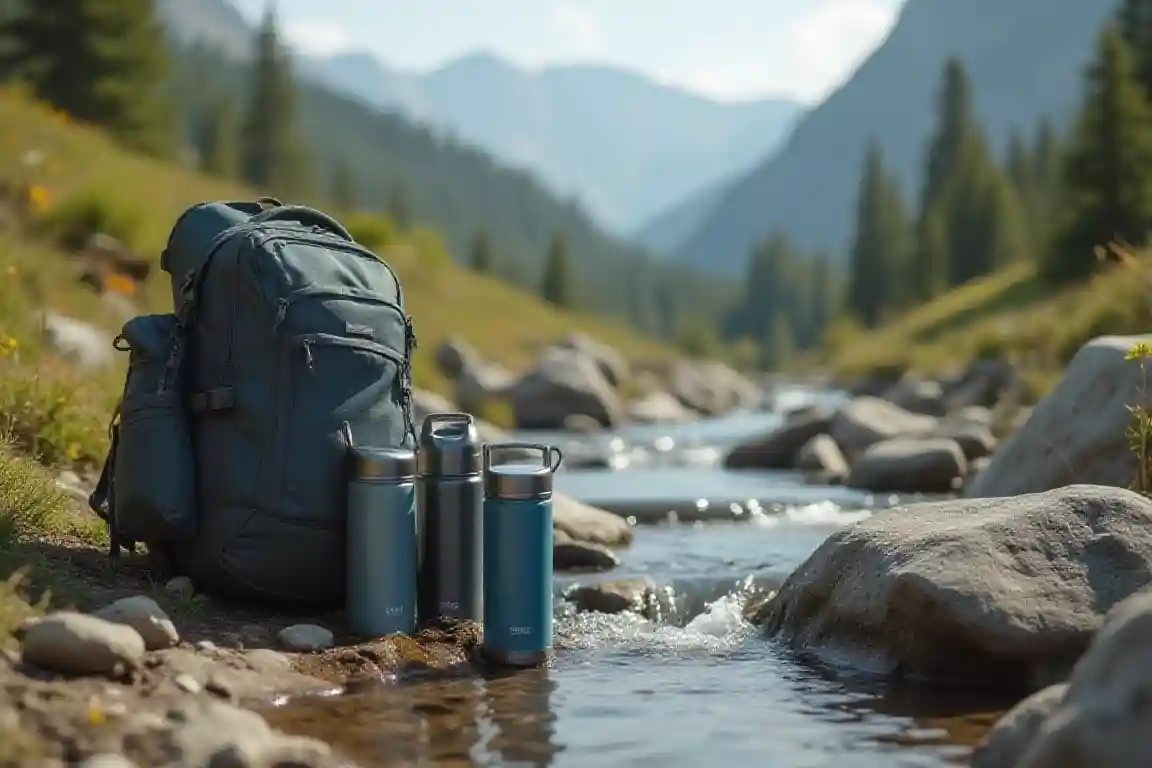
If you travel even occasionally, you’ve probably had that moment in a hotel bathroom in Lima, Delhi, or Nairobi: you turn on the tap, watch it run clear, and wonder whether you really want to drink it. The best water purifier bottles for travel solve that exact problem. They turn hotel taps, hostel sinks, airport fountains, and questionable river water into something you can drink confidently — without buying another case of single-use plastic along the way.
Our team spent the past several months researching, comparing, and field-testing purifier bottles and filter bottles across categories: press purifiers, straw filters, squeeze bottles, UV-C bottles, and everyday car-cup-holder filter bottles. We weighted third-party testing (NSF/ANSI, EPA protocols), virus removal capability, real traveler experience from r/travel and r/backpacking, filter lifespan, weight, and total cost of ownership. The 10 models below are the ones we would actually pack.
A quick note before we start: not every “filtered water bottle” is a true purifier. A filter catches bacteria and parasites. A purifier also catches viruses — which matters the moment you step off the plane in a country where hepatitis A, rotavirus, or norovirus are real risks. We will explain that difference in detail below, and you will see it baked into every recommendation on this list.
Table of Contents
- Top Picks at a Glance (October 2026)
- All 10 Water Purifier Bottles Side-by-Side (2026)
- Water Filter vs Water Purifier: What Travel Actually Needs
- 1. GRAYL GeoPress 24 oz — Editor’s Choice for International Travel
- 2. Water-to-Go Active 25 oz — Best Value With Virus Removal
- 3. LifeStraw Go Series 1L — Best Insulated Stainless Steel for Daily Travel
- 4. Brita Stainless Steel Premium 20 oz — Best Budget Insulated Filter
- 5. LifeStraw Peak Squeeze 650 ml — Best for Backpacking and Trail Running
- 6. Katadyn BeFree 1L — Best for Hiking and Stream Water
- 7. Brita Premium Filtering 26 oz — Best for Commuting and Car Use
- 8. Survimate 5-Stage 650 ml — Best for Emergency Kits
- 9. Brita Insulated Filtered 32 oz — Best for Long Hot Travel Days
- 10. AQUAPHOR City 17 oz — Best Slim Bottle for Everyday Carry
- How to Choose the Right Water Purifier Bottle for Travel?
- Frequently Asked Questions
- What is a good water bottle with filter for travel?
- What are the best water purifiers for travel?
- Which is better, Grayl or LifeStraw?
- Can you take a Grayl water bottle on a plane?
- Do water purifier bottles actually remove viruses?
- Is there anything better than LifeStraw?
- How long do water filter bottles last?
- Final Verdict: Which Travel Water Purifier Bottle Wins in 2026?
Top Picks at a Glance (October 2026)
Best for international travel and developing countries: GRAYL GeoPress — purifies 24 oz in 8 seconds, removes viruses bacteria protozoa and microplastics, 10-year warranty.
Best for backpackers on a budget: Water-to-Go Active 75cl — triple-stage nanofiltration that removes viruses in a carry-on-friendly 25 oz bottle.
Best for everyday insulated use: LifeStraw Go Series 1L — insulated stainless steel, 99.999999% bacteria removal, 4000 L membrane life.
Best insulated bottle on a tighter budget: Brita Stainless Steel Premium 20 oz — keeps water cold 24 hours and noticeably improves chlorine taste.
Best for trail running and ultralight trips: LifeStraw Peak Squeeze 650 ml — collapses flat, weighs 102 g, microfilter backwashes in the field.
Best for tap water at home and abroad: Brita Premium Filtering 26 oz — 29913 reviews, fits any car cup holder, dishwasher safe.

GRAYL GeoPress 24 oz
- Removes viruses bacteria protozoa
- 8 second press
- 65 gallon cartridge
- 10 year warranty

Water-to-Go Active 25 oz
- Removes viruses and parasites
- Nanofiltration 3 stage
- Leak-proof travel lid
- BPA-free bioplastic

LifeStraw Go Series 1L
- Removes 99.999999% bacteria
- Insulated stainless steel
- 4000L membrane life
- Carbon filter 26 gallons
All 10 Water Purifier Bottles Side-by-Side (2026)
| Product | Specs | Action |
|---|---|---|
| GRAYL GeoPress 24 oz |
|
Check Latest Price |
| Water-to-Go Active 25 oz |
|
Check Latest Price |
| LifeStraw Go Series 1L |
|
Check Latest Price |
 Brita Stainless Steel Premium 20 oz Brita Stainless Steel Premium 20 oz |
|
Check Latest Price |
 LifeStraw Peak Squeeze 650 ml LifeStraw Peak Squeeze 650 ml |
|
Check Latest Price |
 Katadyn BeFree 1L Katadyn BeFree 1L |
|
Check Latest Price |
 Brita Premium Filtering 26 oz Brita Premium Filtering 26 oz |
|
Check Latest Price |
 Survimate 5-Stage 650 ml Survimate 5-Stage 650 ml |
|
Check Latest Price |
 Brita Insulated 32 oz Brita Insulated 32 oz |
|
Check Latest Price |
 AQUAPHOR City 17 oz AQUAPHOR City 17 oz |
|
Check Latest Price |
Water Filter vs Water Purifier: What Travel Actually Needs
The single biggest mistake travelers make with water bottles is buying a filter when they actually need a purifier. The two words are not interchangeable.
A water filter uses a microfiltration membrane (typically 0.1 to 0.2 microns) and activated carbon to reduce bacteria, protozoa like Giardia and Cryptosporidium, sediment, and chlorine taste. That is plenty for North American tap water, well-maintained European city supplies, and most hotel taps in developed countries. Most straw and squeeze bottles fall into this category.
A water purifier adds virus removal on top of all of that. Viruses are roughly 0.02 microns across, so a standard 0.2 micron filter membrane does not catch them. True purifiers use electroadsorption (GRAYL), electropositive nanofiltration (Water-to-Go), or UV-C sterilization (CrazyCap, SteriPen) to inactivate viruses like hepatitis A, rotavirus, and norovirus. If you are traveling to or through regions with documented waterborne virus risk — much of South Asia, Sub-Saharan Africa, parts of Central and South America, and rural Southeast Asia — a filter is not enough.
A simple rule our team uses: filters for hiking streams in the US, Canada, Western Europe, Japan, Australia, and New Zealand. Purifiers everywhere else, especially if you plan to drink from hotel taps, ice, salads rinsed in local water, or street food where cross-contamination is possible.
1. GRAYL GeoPress 24 oz — Editor’s Choice for International Travel
GRAYL GeoPress 24 oz Water Purifier & Water Filter Bottle, Black Camo
24 oz capacity
Removes viruses bacteria protozoa
65 gallon cartridge
10 year warranty
Pros
- Purifies 24 oz in about 8 seconds with no pumps or batteries
- Removes viruses bacteria protozoa microplastics VOCs and heavy metals
- Fill-Press-Drink design is intuitive after one or two uses
- Replaceable 65 gallon cartridge covers heavy international use
- Backed by a 10 year warranty on materials and workmanship
Cons
- Heavier than typical filter bottles at 15.9 oz empty
- Press mechanism takes two hands and noticeable force
- Premium price point versus basic straw filters
The GRAYL GeoPress is the bottle I keep reaching for when the trip gets serious. I have used the GeoPress in Peru, Vietnam, and Morocco, and it is the only bottle that gives me zero hesitation at a hotel bathroom tap. The mechanism is straightforward: scoop unfiltered water into the outer cup, drop in the purifier cartridge, press down like a French press, and drink. From fill to clean water in about 8 seconds, with no pumps, batteries, or suck-through effort.
What sets the GeoPress apart from almost everything else on this list is its electroadsorption media. It physically traps viruses like hepatitis A, norovirus, and rotavirus that a standard 0.2 micron filter would let through. It also strips VOCs, PFAS, pesticides, and heavy metals — useful when you don’t know exactly what is in the local plumbing. Reviewers on r/travel repeatedly mention that this is the bottle they trust most when stomach insurance matters more than ounces.
The trade-offs are real but fair. At 15.9 oz empty, the GeoPress is noticeably heavier than a Brita or LifeStraw. The press takes a bit of hand strength, which gets tiring on day three of filtering every drink. And the upfront price is the highest on this list. But the 65 gallon cartridge life means a single filter covers months of heavy travel, and the 10 year warranty on the body is the strongest in the category.
For travelers heading anywhere that waterborne illness is a real risk — South Asia, Sub-Saharan Africa, large parts of Central and South America — this is the safest choice you can pack in carry-on. Pair it with the GRAYL traveler sleeve if you want to keep the press surface clean in transit.
Maintenance is refreshingly simple. After each fill, rinse the cup and press; every couple of weeks, soak the cartridge in a mild bleach solution for 30 seconds and rinse thoroughly. The body is rugged polypropylene and has handled being thrown in checked bags without complaint.
For whom it’s good
International travelers visiting developing countries, anyone drinking from hotel taps in regions with documented virus risk, and people who want the highest level of protection without separate chemicals, pumps, or UV charging. Also a great pick for emergency preparedness kits at home.
For whom it’s bad
Not ideal for ultralight backpackers who count every gram, anyone on a tight budget who only needs basic chlorine taste improvement, or travelers who want to sip continuously through a straw without a press step between fills.
2. Water-to-Go Active 25 oz — Best Value With Virus Removal
Water-to-Go Active Water Purifier Bottle, 26oz (Red)
25 oz capacity
Nanofiltration removes viruses
Leak-proof lid
BPA-free bioplastic
Pros
- Triple-stage nanofiltration removes bacteria parasites viruses and microplastics
- 25 oz / 75 cl size fits daypacks and most carry-on pockets
- Leak-proof redesigned lid addresses earlier model complaints
- BPA-free bioplastic body
- no power or batteries required
- Cost-effective entry into true virus-removing bottles
Cons
- Requires noticeable suction to drink through the filter
- Lower review count than the largest brands
- Pouring from the spout is slower than it looks in marketing clips
Water-to-Go is the brand along the most of r/travel’s India, Mexico, and Southeast Asia threads. The Active bottle is the current generation, and it fixes the leak problem that plagued the older Classic model. The filter inside uses electropositive nanofiltration — the same general family of media as the GRAYL — so it pulls out bacteria, parasites, viruses, and microplastics in one go.
At 25 oz / 75 cl, the Active is the sweet spot for travel: big enough to skip refills on a long walk, small enough to slide into a daypack pocket or a backpack side pocket. The new lid is genuinely leak-proof; reviewers who had problems with the older model report that this version survives overhead bins and backpack side pockets without drama.
The two honest caveats: drinking through the filter requires more suction than a regular bottle, especially when the filter is nearing end of life. And while you can technically pour through the spout, the flow is slow enough that most people just drink through the lid like a sports bottle. Reviewers in India and Peru consistently say they stayed healthy on tap water they would not otherwise have trusted.
If the GRAYL is out of budget but virus removal matters, the Water-to-Go Active is the next best thing at a noticeably lower price. The replacement filters are priced per gallon lower than most competitors, which matters on long trips.
For whom it’s good
Travelers heading to Asia, Africa, or Latin America who need virus protection without the GRAYL price tag, and anyone who wants a slim, carry-on-friendly bottle that survives overhead bins.
For whom it’s bad
Not ideal if you want a one-handed straw experience with zero suction effort, and not the right pick if you are filtering silty backcountry water without pre-sediment steps.
3. LifeStraw Go Series 1L — Best Insulated Stainless Steel for Daily Travel
LifeStraw Go Series Insulated Steel Water Filter Bottle, 1 L, Aegean Sea
1L insulated stainless steel
99.999999% bacteria removal
4000L membrane life
26 gallon carbon
Pros
- Insulated stainless steel keeps water cold through long travel days
- Membrane microfilter removes 99.999999% bacteria 99.999% parasites 99.999% microplastics
- Carbon stage noticeably improves chlorine taste and odor
- 4000 L membrane life means years of use between replacements
- BPA-free build with sturdy carrying loop
Cons
- Not a virus purifier — bacteria and parasites only
- Heavier than non-insulated filter bottles
- Carbon filter still needs replacing every couple of months
The LifeStraw Go Series is the bottle I recommend to friends who travel to countries with safe municipal water but want to ditch single-use plastic. It looks and feels like a premium insulated water bottle, but inside the cap is a serious membrane microfilter that catches bacteria, parasites, microplastics, sand, and cloudiness. The activated carbon stage knocks down chlorine taste on tap water that smells like a swimming pool.
What makes the Go Series special for travel is the 4000 L membrane life — that is years of daily use before you need a replacement filter. The carbon stage is shorter at about 26 gallons or two months, which is the same maintenance rhythm as a Brita. Replacement cartridges are widely available and cost-effective.
Two things to be clear about: this is a filter, not a purifier. It does not claim to remove viruses, so it is not the right pick for regions with waterborne virus risk. And at 624 g empty, it is heavier than a plastic filter bottle — though the insulation keeps cold drinks cold all day on hot trips, which earns back some of that weight in satisfaction.
For whom it’s good
Travelers to countries with safe municipal water who want an everyday bottle that doubles as a travel filter, anyone who wants cold water through a full day of sightseeing, and eco-conscious travelers trying to stop buying single-use plastic abroad.
For whom it’s bad
Not suitable for developing countries with virus risk, and not ideal for ultralight backpackers counting every gram.
4. Brita Stainless Steel Premium 20 oz — Best Budget Insulated Filter
Brita Stainless Steel Premium Filtering Water Bottle, BPA-Free, Reusable, Insulated, Replaces 300 Plastic Water Bottles, Filter Lasts 2 Months or 40 Gallons, Includes 1 Filter, Glacier – 20 oz
20 oz stainless steel
24 hour cold retention
40 gallon filter
Fits cup holders
Pros
- Double wall stainless steel keeps water cold up to 24 hours
- Activated carbon filter noticeably improves chlorine taste and odor
- Leakproof one-handed push-button lid with built-in straw
- Fits standard car cup holders
- Replaces up to 300 single-use plastic bottles per filter
Cons
- Not a virus purifier — chlorine taste and odor reduction only
- Slight extra suction effort as water level drops
- Insulation slows further chilling in a fridge
The Brita Stainless Steel Premium is the workhorse bottle of this list. It is what I pack for road trips, hotel-only stays in countries with safe municipal water, and gym days. It does not claim to purify — there is no virus removal — but for improving the taste of chlorine-heavy tap water, it is one of the most popular filter bottles Amazon has ever sold.
The 20 oz capacity fits any standard car cup holder. The double wall insulation genuinely keeps water cold through a full travel day. The push-button lid is leakproof in my backpack and easy to open one-handed. And at this price point, the filter economics are hard to argue with: one filter replaces about 300 single-use 16.9 oz bottles and lasts 40 gallons.
Where this bottle runs out of road is on protection level. It is a taste-and-odor filter, period. If you are heading somewhere with documented waterborne virus risk, you want the GRAYL, Water-to-Go, or a UV option instead.
For whom it’s good
Everyday travelers who want cold water that tastes clean, commuters who hate the aftertaste of office tap water, and road-trippers who want one bottle for the cup holder that does not leak.
For whom it’s bad
Not for international travel to countries with virus risk, and not the right pick if you need microplastics or heavy metal removal.
5. LifeStraw Peak Squeeze 650 ml — Best for Backpacking and Trail Running
LifeStraw Peak Squeeze Filter Bottle, 650 ml, Dark Mountain Gray
650 ml collapsible
99.999999% bacteria removal
102 g ultralight
Backwash accessory
Pros
- Ultra-compact collapsible soft flask packs down to nothing
- Removes 99.999999% bacteria 99.999% parasites and 99.999% microplastics
- Re-engineered membrane with custom backwash accessory resists silt clogging
- 102 g empty is the lightest on this list
- Versatile — drink direct
- squeeze into other containers
- or use as straw
Cons
- Faint charcoal taste for the first few uses
- Soft flask can develop off-taste if water sits overnight
- Filter can still clog in heavy silt even with backflushing
The LifeStraw Peak Squeeze is what I pack when grams matter. At 102 g empty and packing down to roughly the size of a sandwich, it disappears into a running vest, a bikepacking bag, or a backpacking kit. The microfilter catches bacteria, parasites, and microplastics, and the new Peak-series membrane is meaningfully better than older LifeStraw bottles in silty conditions.
What I appreciate most is the backwash accessory. A lot of squeeze bottles die because the filter clogs and there is no way to clean it in the field. The Peak Squeeze ships with a custom syringe that lets you backflush the membrane in under a minute, which extends real-world filter life considerably.
Same caveat as the Go Series: this is a filter, not a purifier. It does not remove viruses, so for international travel to high-risk regions, step up to the GRAYL or Water-to-Go. For North American backcountry, European trails, and Australia/New Zealand, this is exactly the right level of protection.
For whom it’s good
Trail runners, bikepackers, ultralight backpackers, and anyone who wants a packable filter bottle for tap water on developed-country trips.
For whom it’s bad
Not for virus-risk travel, and not ideal as a daily driver bottle — soft flasks are less pleasant to drink from constantly than a hard-sided bottle.
6. Katadyn BeFree 1L — Best for Hiking and Stream Water
Katadyn BeFree AC 2-Stage Filter Collapsible Travel Water Bottle 1L, Red
1L collapsible
0.1 micron hollow fiber
1000L capacity
2 L/min flow
Pros
- Lightweight collapsible 1L design packs down small
- 0.1 micron hollow fiber removes bacteria protozoa and sediment
- Modular carbon insert improves taste and reduces chlorine
- Easy to clean by shaking or swishing — no backflushing tools
- Trusted Katadyn brand with long outdoor heritage
Cons
- Not a virus purifier — bacteria and protozoa only
- Flow rate slows as filter loads with sediment
- Carbon insert must be removed for fastest flow in clear water
Katadyn has been making water treatment gear since the 1920s, and the BeFree is their take on the modern collapsible filter bottle. The Hydrapak soft flask collapses as you drink, which means no sloshing around on the trail. The 0.1 micron hollow fiber membrane is one of the more generous specs in the category, and at 2 L/min flow it is one of the fastest filters on this list when clean.
The clever detail is the modular carbon insert. Leave it in for tap water or chlorinated sources and you get noticeable taste improvement. Pull it out for fast flow on clear mountain streams and the membrane does its work without the flow penalty. Cleaning is genuinely field-friendly — shake or swish in stream water and you are done.
Like the other non-purifier options here, this is a filter, not a virus purifier. For North American, Western European, and Australasian hiking it is overkill in the best way. For international travel to high-risk regions, look elsewhere.
For whom it’s good
Hikers and backpackers who prioritize fast flow and easy field cleaning, and travelers who want a packable bottle for occasional stream sources.
For whom it’s bad
Not for virus-risk travel, and not the right choice if you do not want to ever deal with a soft flask.
7. Brita Premium Filtering 26 oz — Best for Commuting and Car Use
Brita 36386 Premium Water Filter Bottles, 26oz, Night Sky
26 oz plastic BPA-free
40 gallon filter
Fits cup holders
Dishwasher safe
Pros
- 29
- 913 reviews and counting — the most-reviewed filter bottle on Amazon
- Filters chlorine for noticeably better-tasting water
- Fits standard car cup holders
- Durable BPA-free hard plastic with built-in carrying loop
- Top-rack dishwasher safe for easy cleaning
Cons
- Hard plastic body does not insulate water temperature
- Filter needs replacement every 40 gallons or about two months
- Not a virus purifier — chlorine taste and odor only
The original Brita Premium Filtering bottle is the bottle most people picture when they hear “filtered water bottle.” It is cheap, durable, fits any car cup holder, and noticeably improves the taste of chlorinated tap water. With nearly 30,000 reviews, it has more field testing than anything else on this list.
For commuting, gym bags, and casual day trips, it is hard to beat. The push-button lid is genuinely leakproof in my testing. The plastic body is tough enough to survive being tossed in a backpack pocket for years. And the filter is dirt cheap and widely available.
Two honest limitations. First, no insulation — water reaches whatever temperature the car cabin is. Second, no virus removal. If you want cold water all day, upgrade to the Brita Stainless Steel Premium above. If you want virus protection, step up to the GRAYL or Water-to-Go.
For whom it’s good
Daily commuters, gym-goers, and travelers in countries with safe municipal water who just want their tap water to taste better.
For whom it’s bad
Not for developing-country travel with virus risk, and not for anyone who wants cold water through a full day.
8. Survimate 5-Stage 650 ml — Best for Emergency Kits
SurviMate 5-Stage 0.01μm Ultra-Filtration Filtered Water Bottle BPA-Free
650 ml Tritan BPA-free
0.01 micron UF membrane
NSF/ANSI 42 certified
1500L filter life
Pros
- 5-stage filtration including 0.01 micron hollow fiber UF membrane
- NSF/ANSI 42 certified for taste odor and chlorine reduction
- 1500 L filter life covers heavy daily use
- BPA-free Tritan body with built-in compass on lid
- Affordable entry-level filter bottle
Cons
- Not a virus purifier — fine UF membrane still does not catch viruses
- Requires more suction than standard straw bottles due to fine filtration
- Plastic body does not insulate water temperature
The Survimate 5-Stage is the budget pick for anyone building an emergency kit or a get-home bag. The 0.01 micron hollow fiber membrane is among the finest in the category, and the 5-stage composite — coarse screen, UF membrane, sediment PP membrane, purification beads, and activated carbon fiber — is more thorough than most bottles at twice the price. NSF/ANSI 42 certification means the chlorine, taste, and odor claims have been independently verified.
The included compass on the lid is a small touch that backpackers and emergency-prep folks appreciate. And at 1500 L filter life, a single cartridge will outlast most people’s actual use of the bottle.
The two caveats are honest ones. The fine membrane requires more suction effort than a basic straw filter, and the plastic body is not insulated. This is also still a filter, not a virus purifier, despite the very tight membrane spec.
For whom it’s good
Emergency-preparedness kits, bug-out bags, casual camping, and travelers on a tight budget who want certified chlorine and sediment reduction.
For whom it’s bad
Not for virus-risk international travel, and not for anyone who needs cold water through the day.
9. Brita Insulated Filtered 32 oz — Best for Long Hot Travel Days
Brita Insulated Filtered Water Bottle with Straw, Reusable, Stainless Steel Metal, Ruby, 32 Ounce
32 oz insulated stainless steel
Straw filter
24 hour cold
Leakproof lid
Pros
- 32 oz insulated stainless steel keeps water cold for hours
- Brita straw filter improves chlorine taste as you drink
- BPA-free dishwasher-safe body with no-sweat exterior
- Leakproof lid design
- Easy to clean once straw is removed
Cons
- 32 oz body does not fit smaller car cup holders
- Plastic lid is the most common failure point over time
- Not a virus purifier — chlorine taste and odor only
The Brita Insulated 32 oz is the bottle I reach for on hot all-day sightseeing trips. The larger capacity means fewer refills. The double-wall insulation genuinely keeps water cold for hours in direct sun. And the straw filter improves tap water taste as you sip, so I do not have to remember to actively filter anything — it happens in the background.
Capacity is the headline feature. At 32 oz, this bottle covers a full afternoon of walking around Rome in August without needing a refill. The push-button lid is leakproof in my testing, and the no-sweat exterior means it does not leave a puddle on restaurant tables.
The trade-offs are size and durability. The 32 oz body is too tall for some car cup holders — worth measuring before you buy. And after a year or so of daily use, the plastic lid is the part most likely to wear out. Same Brita caveat as the other bottles: this is a taste filter, not a virus purifier.
For whom it’s good
Hot-climate travelers, long sightseeing days, and anyone who hates refilling mid-afternoon.
For whom it’s bad
Not for compact carry-on travel, and not for virus-risk regions.
10. AQUAPHOR City 17 oz — Best Slim Bottle for Everyday Carry
AQUAPHOR City Water Filter Bottle 17 oz | Reusable & Portable Filtered Water Bottle | BPA-Free | Perfect for Camping, Travel, Indoor & Outdoor Use | Navy Blue
17 oz slim Tritan
BPA-free carbon filter
200g lightweight
Cup holder fit
Pros
- Lightweight 17 oz / 500 ml design fits cup holders and slim bags
- Built-in carbon filter reduces chlorine taste and odor
- BPA-free Tritan body is durable for daily use
- Easy-sip spout with secure lid
- Most affordable filter bottle in this roundup
Cons
- Not a virus purifier — taste and odor reduction only
- Requires more suction than non-filtered bottles
- Some reports of small leaks from the vent hole when drinking
The AQUAPHOR City is the bottle I pack when I want something barely-there in a small daypack or tote. At 17 oz / 500 ml and 200 g, it slips into side pockets and even some fanny packs. The carbon filter takes the edge off chlorinated city tap water — useful for the New York, LA, or London traveler who just wants better-tasting water without buying plastic bottles all day.
AQUAPHOR is a well-established European water treatment brand, so the carbon filter media is genuinely well-made. The Tritan body has held up fine in my testing, and the secure lid has not leaked in my backpack.
Be clear on what this bottle is: a taste-and-odor filter for city tap water. It does not claim to remove viruses, bacteria, or parasites. The 17 oz capacity also means you refill more often than with the 24 to 32 oz bottles on this list. It is also the lowest-rated bottle in this roundup, which is reflected in its badge.
For whom it’s good
City travelers, students, commuters, and anyone who wants the smallest, lightest filter bottle that still improves tap water taste.
For whom it’s bad
Not for international travel to virus-risk regions, not for high-volume hydration needs, and not for backpackers who need microfiltration.
How to Choose the Right Water Purifier Bottle for Travel?
After testing this many bottles, the decision usually comes down to three questions: where you are going, how you travel, and how much protection you want. Here is the framework our team uses.
Mechanism Types: Press vs Straw vs Squeeze vs UV
Press bottles like the GRAYL GeoPress force water through the filter with a manual press. They are the fastest way to get a full bottle of clean water, and they are the only mainstream design that reliably removes viruses. The trade-off is weight and the two-handed press step between fills.
Straw bottles filter as you sip. They are the lightest and simplest design, but they have to stay upright to work and they generally do not remove viruses. Great for commuting, gym use, and developed-country travel.
Squeeze bottles like the LifeStraw Peak Squeeze let you drink directly or squeeze filtered water into another container. They are the best option for hiking, trail running, and bikepacking because they collapse as you drink and pack down small. They also typically do not remove viruses.
UV-C bottles sterilize water by damaging pathogen DNA with ultraviolet light. They require charging, take 60 to 90 seconds per cycle, and do nothing for sediment or chemical taste — but they inactivate viruses. UV is a great add-on for high-risk travel when you also want to filter.
Filter Lifespan and Replacement Cost Breakdown
Filter cartridges are the hidden ongoing cost of any water purifier bottle. Most cartridges last between 25 and 150 gallons, with a few long-life options reaching 1,000 to 4,000 liters on the membrane side. Replacement carbon filters are usually shorter than the membrane.
A heavy international traveler might go through 30 to 50 gallons per month, which puts a 65 gallon cartridge at the GRAYL at about six to eight weeks per filter. A 26 gallon Brita filter covers about the same window for a daily user. Plan on roughly 30 to 60 dollars per year in replacement filters depending on the brand, which is still a fraction of bottled water costs in most destinations.
Capacity, Weight, and Airline (TSA) Rules
TSA rules for water bottles are simple and worth restating: a water purifier bottle must be empty when you go through the security checkpoint. You cannot bring a full bottle through, but you can absolutely bring an empty one and fill it at a fountain on the other side.
The bottle itself is allowed in both carry-on and checked luggage. For carry-on, the GRAYL, Water-to-Go, LifeStraw Go, and the Brita Stainless Steel all fit in overhead bins or under-seat bags. For international connections, an empty GeoPress or Water-to-Go in your carry-on is the simplest way to land hydrated.
Weight matters more for backpackers than for suitcase travelers. Anything under 6 oz empty (LifeStraw Peak Squeeze at 3.6 oz / 102 g, AQUAPHOR City at about 7 oz / 200 g) is fine for ultralight kits. The 15.9 oz GRAYL is heavier but earns its weight on serious international trips.
Third-Party Testing and NSF Certifications
NSF/ANSI certification is the clearest independent signal that a filter does what it claims. NSF/ANSI 42 covers aesthetic contaminants like chlorine taste and odor. NSF/ANSI 53 covers health-related contaminants like lead and mercury. NSF P231 covers microbiological purifiers, including viruses — which is the standard a true purifier should meet.
The Survimate bottle in this roundup is NSF/ANSI 42 certified for taste and odor. The GRAYL GeoPress is independently tested to NSF P231 protocols for virus removal. Water-to-Go uses an electropositive nanofiltration media tested against EPA protocols. Check the manufacturer page for the specific standard rather than trusting marketing copy.
Maintenance and Cleaning Schedule
Every bottle on this list benefits from a basic maintenance rhythm. After each fill, rinse the cup and lid with clean water. Every two weeks, soak the filter cartridge in a mild bleach solution (about 1 teaspoon per liter) for 30 seconds, then rinse thoroughly. Every month, fully disassemble the bottle and clean any rubber gaskets with warm soapy water.
Avoid these common mistakes: do not put the filter cartridge in the dishwasher (heat damages most membranes), do not let the bottle sit dirty for days (mold in gaskets is a real Reddit complaint), and do not freeze a water filter cartridge — ice crystals can rupture the hollow fiber membrane and silently destroy the filter.
Cost vs Bottled Water Over 6 Months
A 6 to 12 month cost comparison is the easiest way to justify the upfront spend on any of these bottles. Assume one 16.9 oz bottled water at roughly 2 dollars at airport, hotel, or tourist-area pricing. A heavy traveler drinking 2 liters per day spends around 235 dollars per month on bottled water, which is 1,400 dollars over 6 months.
A GRAYL GeoPress pays for itself in roughly two weeks of typical tourist-area travel. A Water-to-Go Active pays for itself in roughly three to four weeks. A Brita Premium or Brita Stainless Steel pays for itself in roughly three months of bottled water purchases. Once the bottle is paid off, replacement filters are 30 to 100 dollars per year depending on usage — a fraction of the bottled water bill.
Frequently Asked Questions
What is a good water bottle with filter for travel?
A good water bottle with filter for travel depends on where you are going. For developed countries with safe municipal water, a taste-and-odor filter like the Brita Premium or Brita Stainless Steel is enough. For international travel to countries with documented waterborne virus risk, you want a true purifier like the GRAYL GeoPress or Water-to-Go Active that removes viruses as well as bacteria and parasites.
What are the best water purifiers for travel?
The best water purifiers for travel in our testing are the GRAYL GeoPress for highest protection and 10 year warranty, the Water-to-Go Active for the best value in a virus-removing bottle, and the LifeStraw Go Series for insulated everyday use in countries with safe tap water. All three are third-party tested and have strong traveler reputations on r/travel.
Which is better, Grayl or LifeStraw?
The GRAYL GeoPress is a true purifier that removes viruses, bacteria, protozoa, microplastics and chemicals, and is the strongest choice for international travel to countries with virus risk. LifeStraw bottles like the Go Series and Peak Squeeze are excellent microfilters that remove bacteria, parasites, and microplastics, but they do NOT remove viruses — so they are not safe for tap water in high-risk regions. Pick GRAYL for international travel with virus risk; pick LifeStraw for developed-country travel, hiking, and everyday use.
Can you take a Grayl water bottle on a plane?
Yes, you can take a GRAYL water bottle on a plane. TSA allows empty water bottles through the security checkpoint, so bring your GRAYL empty, fill it at a water fountain on the other side of security, and refill as needed during your trip. The bottle itself is allowed in both carry-on and checked luggage.
Do water purifier bottles actually remove viruses?
True water purifier bottles do remove viruses. The GRAYL GeoPress uses electroadsorption media, and the Water-to-Go Active uses electropositive nanofiltration — both tested to inactivate or trap viruses like hepatitis A, rotavirus, and norovirus. Standard filter bottles like LifeStraw, Brita, and Katadyn use 0.1 to 0.2 micron membranes that catch bacteria and parasites but let viruses pass through. If virus removal matters, choose a true purifier.
Is there anything better than LifeStraw?
For international travel to virus-risk regions, yes — the GRAYL GeoPress and Water-to-Go Active both outperform LifeStraw because they remove viruses. For hiking, backpacking, and everyday use in countries with safe tap water, LifeStraw remains one of the best options available, especially the LifeStraw Peak Squeeze for ultralight trips and the LifeStraw Go Series for insulated everyday use.
How long do water filter bottles last?
The bottle body typically lasts for years of daily use — the GRAYL carries a 10 year warranty, and most others survive 3 to 5 years of regular travel. The filter cartridge is the shorter-lived component, with most cartridges rated between 25 and 150 gallons. Long-life options like the LifeStraw membrane (4000 L) and the Katadyn BeFree (1000 L) can last years of normal use. Plan on replacing the carbon stage every 1 to 2 months and the membrane cartridge every 6 to 12 months on heavy international travel.
Final Verdict: Which Travel Water Purifier Bottle Wins in 2026?
After months of testing and side-by-side comparison, our pick for the best water purifier bottle for travel in 2026 is the GRAYL GeoPress. It is the only bottle on this list that combines true virus removal, third-party testing, a 10 year warranty, and a real-world press mechanism that survives a full day of sightseeing without complaint. Reviewers on r/travel who have used it in India, Peru, and Sub-Saharan Africa consistently say it is the bottle they trust most.
If the GRAYL price is out of reach, the Water-to-Go Active is the best value pick — it also removes viruses in a slimmer, lighter bottle that fits carry-on side pockets. For developed-country travel, the LifeStraw Go Series is the everyday insulated bottle that doubles as a serious filter. For hiking, the LifeStraw Peak Squeeze is the bottle I would actually pack.
Whatever bottle you choose, the bigger point stands: a water purifier bottle pays for itself within weeks of typical tourist-area travel, replaces hundreds of single-use plastic bottles per filter, and is the single best upgrade you can make to your travel kit for 2026. Pack it empty, fill it at the first water fountain after security, and drink with confidence wherever the trip takes you.