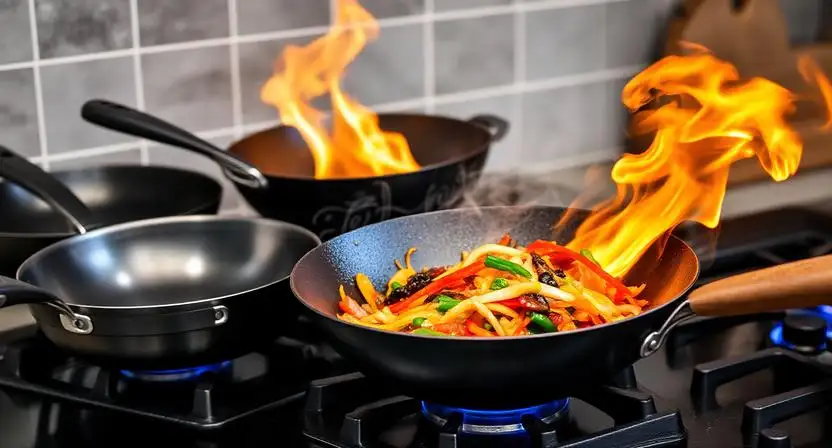
Wok hei is the smoky, charred flavor created when very hot oil, moisture, and ingredients meet in a wok. Rapid tossing carries those aromas back over the food, and carbon steel responds quickly enough to make this possible on a home range.
We tested and compared seven carbon steel pans for stir-fry, fried rice, searing, and everyday family meals. The result is a practical guide to the best carbon steel pans for wok hei, with clear notes on induction, gas, electric, and outdoor cooking.
Our comparison puts weight, gauge, diameter, handle design, compatibility, and seasoning needs side by side. We also explain why a round-bottom wok can feel more natural in motion while a flat bottom is often the better home-kitchen compromise.
Table of Contents
- Top 3 Picks for Wok Hei
- Best Carbon Steel Pans for Wok Hei in 2026
- 1. Craft Wok Traditional Hand Hammered Wok
- 2. Souped Up Recipes 12.5 Inch Carbon Steel Wok
- 3. YOSUKATA 13.5-Inch Pre-Seasoned Flat Bottom Wok
- 4. kaqinu 14-Piece Carbon Steel Wok Set
- 5. Leidawn 12.8-Inch Carbon Steel Wok
- 6. Babish 14-Inch Flat Bottom Carbon Steel Wok
- 7. Teewe 13-Inch Carbon Steel Wok
- How to Choose the Right Carbon Steel Wok?
- Wok hei comes from heat, airflow, and speed
- Round bottom gives the most natural tossing motion
- Flat bottom is the best home-stove compromise
- Weight changes how a wok feels
- Thin or heavy gauge depends on your burner
- Handle and helper handle affect control
- Pre-seasoned still needs your care
- Seasoning is a process, not a single wash
- Common mistakes can flatten the flavor
- Carbon steel versus stainless steel and cast iron
- Frequently Asked Questions
- What is wok hei?
- Is carbon steel good for a wok pan?
- Are carbon steel woks good on induction?
- What are the downsides of carbon steel pans?
- What are the common mistakes to avoid when cooking with wok hei?
- Why is food sticking to my carbon steel wok?
- What should not I cook in carbon steel?
- How is wok hei achieved in home kitchens?
- Final Verdict
Top 3 Picks for Wok Hei
The Craft Wok leads for traditional gas or open-flame cooking, while the Souped Up Recipes wok is the easiest all-stove choice. The Babish wok earns the best rating in the group and is a strong pick for cooks who value heat retention and stability.
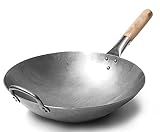
Craft Wok 14-Inch Tradition…
- Round 14-inch bottom
- 15-gauge carbon steel
- Wooden main handle

Best Carbon Steel Pans for Wok Hei in 2026
This quick overview puts the seven products in one place. The right choice depends less on brand than on your burner, preferred tossing style, and willingness to maintain a seasoning patina.
| Product | Specs | Action |
|---|---|---|
| Craft Wok 14-Inch Traditional |
|
Check Latest Price |
| Souped Up Recipes 12.5-Inch |
|
Check Latest Price |
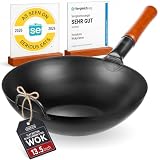 YOSUKATA 13.5-Inch YOSUKATA 13.5-Inch |
|
Check Latest Price |
 kaqinu 12.6-Inch 14-Piece kaqinu 12.6-Inch 14-Piece |
|
Check Latest Price |
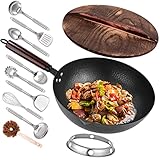 Leidawn 12.8-Inch 11-Piece Leidawn 12.8-Inch 11-Piece |
|
Check Latest Price |
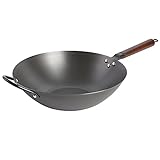 Babish 14-Inch Babish 14-Inch |
|
Check Latest Price |
 Teewe 13-Inch Teewe 13-Inch |
|
Check Latest Price |
1. Craft Wok Traditional Hand Hammered Wok
Craft Wok Traditional Hand Hammered Chinese Carbon Steel Wok with Wooden and Steel Helper Handle (14 Inch, Round Bottom Pow Wok Pan) / 731W88
Round bottom
14 inch
15-gauge carbon steel
4.6 pounds
Pros
- Authentic curved shape
- Durable hand-hammered steel
- Wooden main handle
- Strong customer service
Cons
- Heavy for smaller users
- Not induction or flat electric compatible
- Metal helper handle gets hot
I would use this wok when the burner can deliver concentrated heat and the cook wants the traditional restaurant motion. Its 14-inch bowl gives ingredients room to tumble toward the center, while the 15-gauge steel feels substantial during a fast toss.
The product data lists a maximum temperature of 1,200°F and compatibility with BBQ and gas. I would still use a wok ring or open-flame burner because the round base cannot sit securely on a flat electric or induction surface.
The tradeoff is weight. At 4.6 pounds, it is not the easiest pan for a small cook to lift repeatedly, but the heavier body can feel reassuring when cooking a large batch of vegetables or fried rice.
Reviewers praise the hammered finish, cool wooden main handle, and ability to develop a natural nonstick patina. The most useful practical note is to plan the initial bluing and seasoning work before expecting the wok to release food cleanly.
Who benefits most from this wok
Choose this model for gas, a wok burner, BBQ, or open-fire cooking. It is best for someone who values a traditional bowl and does not mind a 4.6-pound pan.
Skip it if you have an induction or smooth electric range, limited wrist strength, or a kitchen where a round base would be inconvenient.
What to check before buying
Confirm your burner and hood can support high heat. The steel helper handle can become hot, so keep a dry cloth nearby and check the handle before lifting.
For seasoning, follow the included instructions and repeat thin oil layers until the surface develops an even dark finish. That care matters more than the factory finish alone.
2. Souped Up Recipes 12.5 Inch Carbon Steel Wok
Souped Up Recipes 12.5 Inch Carbon Steel Wok For Electric, Induction and Gas Stoves (Lid, Spatula and User Guide Video Included)
Flat bottom
12.5 inch
5 pounds
Pre-seasoned
Pros
- Works on induction
- gas and electric
- Heats quickly
- Includes lid and spatula
- Useful guide video
Cons
- Heavier than expected
- Factory seasoning may peel
- Included spatula has rough edges
- Needs rust prevention
This is the most versatile model in the lineup for a cook who changes burners or wants a single wok for stir-fry, soup, searing, and deep-frying. Its flat base sits where a round wok cannot, and the product is designed for electric, induction, and gas stoves.
The 12.5-inch size is compact enough for a two-person meal, while the included wooden lid and stainless steel spatula reduce the need to buy separate accessories. The pre-seasoned surface gets cooking started, but I would clean and reseason it after the first few uses if the factory layer looks uneven.
At 5 pounds, it is not the lightest option. The weight helps with heat retention, yet repeated one-handed tossing can fatigue a cook who prefers a nimble pan.
Reviewers report strong performance after proper seasoning and value the guide video. The main complaints are peeling factory seasoning, a rough shaft on the included spatula, and the need to dry the wok promptly after washing.
Who benefits most from this wok
Choose it for induction, electric, or gas cooking when you want accessories and clear beginner instructions. It is a good fit for a small household or a cook who values a flat base over traditional tossing.
Skip it if low weight is your first priority or you want a wok that looks untouched after several months. Carbon steel still needs a maintained patina.
What to check before buying
Inspect the seasoning before the first meal and smooth the spatula shaft if it feels abrasive. Use a burner that gives the flat base enough contact to heat evenly.
For induction, preheat gradually and add oil before the pan gets fully hot. That protects the seasoning and gives you better control over food release.
3. YOSUKATA 13.5-Inch Pre-Seasoned Flat Bottom Wok
YOSUKATA 13.5″ Pre-Seasoned Flat Bottom Black Carbon Steel Wok for Stir Fry
Flat bottom
13.5 inch
3.6 pounds
Pre-seasoned
Pros
- Welded wood handle
- Broad stove compatibility
- Good heat distribution
- No synthetic coating
Cons
- Rust spots can appear
- Large handle affects balance
- Edges may need sanding
- Seasoning can peel
YOSUKATA is a sensible middle ground: its 13.5-inch bowl offers more cooking area than a 12.5-inch pan, while the 3.6-pound listed weight remains manageable. The welded New Zealand beech handle is a useful detail because it removes rivets from the interior, where food can collect.
The flat base is compatible with gas, electric, smooth-surface induction, glass cooktops, BBQ grills, camping stoves, and open fire according to the product data. That makes this a strong choice for a cook who wants one pan for the kitchen and outdoor cooking.
It arrives pre-seasoned and is free from PTFE and PFOA coatings. Still, a factory layer is not a lifetime guarantee; inspect the surface, oil it after cleaning, and expect several seasoning cycles before the patina is fully established.
Some reviewers report rust spots or a heavy wooden handle that changes balance when the wok is empty. A light sanding of the rim can improve comfort if the edge feels sharp, but avoid aggressive scraping that could damage the finish.
Who benefits most from this wok
Choose it for a household of two to five people and for cooks who want a flat base without giving up a large bowl. It is especially useful when the same pan must move between indoor and outdoor heat sources.
Skip it if you want the lightest model or a completely bare, traditional finish. This wok is intentionally pre-seasoned and requires ongoing care.
What to check before buying
Look closely at the factory seasoning around the base and sidewalls. Wipe the wok clean, apply a very thin oil coat, and heat it gently to create a dependable base layer.
Use the wide cooking area for fried rice and vegetables, but keep the batch moving. A large pan still needs room around each ingredient to generate the hot, dry contact that supports wok hei.
4. kaqinu 14-Piece Carbon Steel Wok Set
kaqinu 14 Piece Carbon Steel Wok Pan, Woks & Stir-Fry Pans Set with Wooden Lid Cookwares, No Chemical Coated Flat Bottom Chinese Pan for Induction, Electric, Gas, Halogen All Stoves – 12.6”
12.6 inch flat bottom
3.7 inches deep
4 pounds
14-piece set
Pros
- Many included accessories
- Detachable wooden handle
- Works on induction
- Family-sized bowl
Cons
- Some utensils feel flimsy
- Bottom may warp at high heat
- Sticking follows poor seasoning
- Lid may feel loose
The kaqinu set is built for someone who wants a complete starter station rather than one pan. It includes a 12.6-inch wok, wooden lid, spatula, brush, ring, drain rack, chopsticks, slotted utensils, rice spoon, ladle, carving fork, and apron.
Its flat carbon steel base works with gas, electric, halogen, and induction stoves. The detachable wooden handle also lets the wok go into the oven for seasoning, which is useful when you want to oil the entire interior.
The included pieces are the main value, not necessarily their durability. Some reviewers describe the utensils as inexpensive, and a loose wooden lid or warped base can be distracting during a fast cooking session.
The honeycomb surface and nitriding treatment are designed to reduce sticking and improve rust resistance. They do not replace correct seasoning, so I would treat the factory finish as a starting point and add thin oil layers after use.
Who benefits most from this wok
Choose it for a new cook who wants accessories in one purchase or for a family that needs a 3-to-5-person serving size. The induction compatibility is a major practical advantage.
Skip it if you want premium utensils, the most refined finish, or the lightest pan in the group. Four pounds is workable, but it is not especially nimble.
What to check before buying
Test the detachable handle before cooking and confirm it is secure. Keep the included wok ring available if you want the pan to sit more naturally over a gas flame.
Heat the pan gradually on induction and avoid an empty preheat. That habit protects both the base and the seasoning from unnecessary stress.
5. Leidawn 12.8-Inch Carbon Steel Wok
Leidawn 12.8″ Carbon Steel Wok,11 Pcs Woks & Stir Fry Pans Wok Pan with Lid
12.8 inch flat bottom
5 pounds
Pre-seasoned
Detachable handle
Pros
- Pre-seasoned
- Easy to handle
- Wide family size
- Includes lid and accessories
- Induction compatible
Cons
- Accessories can feel flimsy
- Rust may appear
- Handle may need tightening
- Smaller than expected
The Leidawn is a practical flat-bottom wok for a beginner who wants guidance and accessories. The product data describes a 12.8-inch pre-seasoned carbon steel pan with a detachable wood handle and ten cooking accessories.
It is compatible with electric, gas, and induction stoves, and the nitriding and honeycomb surface are intended to make early food release easier. I would still use the first cook as a seasoning test rather than assume the factory layer will last.
The pan is listed at 5 pounds, which is not especially light, but the broad flat base feels stable. The detachable handle is a nice feature for oven seasoning and storage, provided it is tightened securely before each use.
Reviewers like the pre-seasoned start, but some report rust after a single use or find the included utensils flimsy. Drying the pan immediately and applying a light oil coat addresses the first issue; replacing weak accessories addresses the second.
Who benefits most from this wok
Choose it for a beginner with an induction or electric range who wants a lid, spatula, brush, ring, and other tools together. The 12.8-inch bowl is a practical size for everyday meals.
Skip it if you want a long, traditional bowl for dramatic tossing or the lightest possible pan. This design prioritizes stability and convenience.
What to check before buying
Check the handle fitting and seasoning before the first meal. Keep the pan fully dry after washing, then warm it and wipe a thin film of oil over the cooking surface.
For better stir-fry, use smaller batches. The flat base is stable, but a crowded pan traps moisture and prevents the hot, dry browning that gives stir-fried food its character.
6. Babish 14-Inch Flat Bottom Carbon Steel Wok
Babish 14 Inch Carbon Steel Wok Pan, Flat Bottom Stir Fry Pan, Induction
14 inch
6-inch flat base
5 pounds
Heavy-gauge carbon steel
Pros
- Excellent heat retention
- Wide stable base
- Removable handles
- Works on induction and grill
- Natural seasoning
Cons
- Heavy at 5 pounds
- May need more oil when sticking
- Helper handle warms
- Less traditional shape
The Babish wok has the highest listed rating in this group at 4.5, supported by 1,402 reviews. Its heavy-gauge steel and 6-inch flat base favor heat retention and stable contact, especially on electric, ceramic, glass, and induction cooktops.
The 14-inch diameter gives it more room than the 12.5- and 12.8-inch models, and the removable handles allow full interior access during oven seasoning. Riveted wooden handles remain cool enough to grip during normal cooking.
This is not a traditional lightweight Cantonese bowl. The cylindrical shape and 5-pound weight make it better for stirring, searing, and broad cooking than for a fast one-handed toss.
Reviewers praise even heating and heat retention, while common complaints concern weight, sticking, and a helper handle that warms during long sessions. I would preheat with a small amount of oil and adjust the batch size before judging the seasoning.
Who benefits most from this wok
Choose it for a powerful electric or induction range, for searing, or for cooks who prefer a wide stable surface over a deeply curved bowl. It is a strong fit for larger meals.
Skip it if wrist comfort or tossing technique comes first. The extra mass is the trade-off for its strong heat retention.
What to check before buying
Measure your burner before choosing the 14-inch size; a small burner can leave the outer walls underused. Check both wooden handles before lifting a full pan.
Use the removable handle to season the entire surface when needed. Keep the cooking surface smooth with a suitable spatula and avoid knocking the patina with harsh tools.
7. Teewe 13-Inch Carbon Steel Wok
Teewe Carbon Steel Wok, 13″ Woks & Stir-fry Pans Nonstick with Lid
13 inch
3.9 inches deep
4.2 pounds
Pre-seasoned flat bottom
Pros
- Strong initial nonstick release
- Quick heating
- Detachable wood handle
- Includes lid spatula and brush
- Works on induction
Cons
- Layer can peel over time
- Heavier than some users expect
- No helper handle
- Keep below 572°F
The Teewe uses nitriding and a pre-seasoned surface to offer easy food release from the first few cooks. Its 13-inch width and 3.9-inch depth are a comfortable family size, and the flat base works with induction, gas, and electric stoves.
At approximately 4.2 pounds, it sits between the lighter YOSUKATA and heavier Babish. The detachable wooden handle is useful for storage and oven seasoning, while the lid, silicone spatula, and dish brush make it a friendly starter set.
The product instructions warn against empty heating and temperatures above 572°F. That is especially important on induction, where rapid heating can be harder to judge from the pan’s surface.
Reviewers report very good nonstick behavior initially and some peeling after extended use. I would keep the surface lightly oiled and avoid metal tools that could lift the treated layer.
Who benefits most from this wok
Choose it for a cook who wants less sticking from day one, a flat base, and a complete accessory set. It suits family portions and everyday stir-fry.
Skip it if you want a completely traditional carbon steel surface or plan to use an outdoor flame at maximum intensity. The treatment requires careful temperature control.
What to check before buying
Inspect the granular surface before use and do not scrub it aggressively. The rough texture is part of the treated nonstick layer, not a defect to sand away.
Add oil before preheating and keep food moving. With that care, the pan can deliver quick, responsive cooking without making seasoning feel like a second recipe.
How to Choose the Right Carbon Steel Wok?
Choose a carbon steel wok by matching the bowl, base, weight, and handle to your burner and cooking style. Wok hei is possible at home, but the pan cannot create smoky aroma by itself; the burner, batch size, and timing do the work.
Wok hei comes from heat, airflow, and speed
Wok hei is produced when oil and moisture vaporize at extreme heat and the food passes repeatedly through that hot zone. A responsive pan helps, but a powerful flame or properly sized induction zone matters just as much.
Heat the wok until a bead of water skates across the surface, add a small amount of oil, and cook ingredients in batches. Keep the food moving and leave open space so moisture can escape instead of steaming.
Round bottom gives the most natural tossing motion
A round bottom channels food toward the center, which is ideal for wok hei technique. It needs a gas ring, wok ring, or dedicated burner; a flat glass or induction surface will not support it securely.
The Craft Wok is the clearest traditional choice in this group. Its curved 14-inch bowl and 15-gauge steel create a stable, deliberate feel, although the 4.6-pound weight is worth considering.
Flat bottom is the best home-stove compromise
A flat bottom sacrifices some of the dramatic bowl shape for stability and broad burner contact. It is the practical choice for induction, electric, ceramic, and glass cooktops.
The Souped Up Recipes, YOSUKATA, kaqinu, Leidawn, Babish, and Teewe models all use flat-bottom designs. Choose the bowl size and weight that let you control the pan rather than the one with the most accessories.
Weight changes how a wok feels
Forum cooks generally favor a pan under 4 pounds for one-handed tossing, but lighter steel can heat faster and move more easily. Heavy steel retains heat better and can suit searing or electric cooking.
Our group ranges from the 3.6-pound YOSUKATA to the 5-pound Souped Up Recipes, Leidawn, and Babish models. Pick the lightest pan you can control comfortably through a full batch, not the lightest number on a list.
Thin or heavy gauge depends on your burner
A 15-gauge wok like the Craft Wok is substantial and stores heat well. A lighter pan responds quickly to heat changes, which can help when ingredients enter and leave the wok in quick succession.
For a home gas range, a medium-weight wok is often the most forgiving compromise. On induction, use a flat base and a burner that matches the pan so the center does not heat while the sides barely warm.
Handle and helper handle affect control
A wooden main handle gives a secure, cooler grip but can eventually loosen or scorch if mistreated. A welded handle, like the YOSUKATA design, reduces interior hardware, while removable handles help with oven seasoning and storage.
Metal helper handles may become hot, especially on round-bottom or heavy pans. Keep a dry towel available and remember that a full wok is heavier than its listed empty weight.
Pre-seasoned still needs your care
Pre-seasoned means the maker applies an initial oil or nitriding treatment; it does not mean the pan is maintenance-free. Wash, dry, and apply a very thin oil coat after cooking, then build additional layers as the patina develops.
Use a small amount of oil at medium heat and let the pan cool before cleaning. Avoid leaving water in the wok, soaking it overnight, or using harsh detergent and steel wool unless you intentionally need to rebuild the seasoning.
Seasoning is a process, not a single wash
Start with a clean surface, spread a thin film of high-heat cooking oil over the inside, and heat the pan until it just begins to smoke. Let it cool, wipe away excess oil, and repeat the process.
Over several weeks, regular cooking will darken the surface and make food release easier. If food sticks, the pan may be too cold, too crowded, or in need of another thin seasoning layer.
Common mistakes can flatten the flavor
Do not start with a cold wok, a full pan, or wet ingredients. Those habits lower the surface temperature and create steam instead of a quick sear.
Do not chase the maximum heat setting on every model. The Teewe instructions specifically call for keeping it below 572°F, and induction users should avoid dry heating because the pan can climb quickly.
For a stronger home-style result, preheat the pan, cook one small batch at a time, and toss or stir continuously. A little open space around each piece is more useful than a crowded wok that cools as soon as food lands.
Carbon steel versus stainless steel and cast iron
Carbon steel is lighter and more responsive than cast iron, while stainless steel is nonreactive and easy to care for but offers less natural food release at very high heat. Carbon steel also develops the patina that many wok cooks prefer.
Cast iron can be excellent for heat retention and outdoor cooking, but its weight makes repeated tossing harder. Stainless steel can still stir-fry, though it generally needs more oil and careful temperature control to prevent sticking.
Frequently Asked Questions
What is wok hei?
Wok hei is the smoky, charred flavor created when very hot oil, moisture, and ingredients meet in a wok, then the food is tossed rapidly through that hot zone.
Is carbon steel good for a wok pan?
Yes. Carbon steel is responsive, durable, and develops a natural nonstick patina, making it well suited to high-heat stir-fry.
Are carbon steel woks good on induction?
Carbon steel can work on induction when the wok has a flat, magnetic base and the burner is sized appropriately.
What are the downsides of carbon steel pans?
Carbon steel requires seasoning, can rust if left wet, and often sticks until its patina develops. It can also become heavy in larger sizes.
What are the common mistakes to avoid when cooking with wok hei?
Avoid a cold wok, wet ingredients, overcrowded batches, and cooking at low heat. Preheat properly, dry food, and cook in smaller batches.
Why is food sticking to my carbon steel wok?
Food may stick because the wok is not hot enough, the seasoning is thin, or the pan is crowded. Preheat with a small amount of oil and use smaller batches.
What should not I cook in carbon steel?
Avoid leaving acidic foods or water in the pan for long periods, and do not soak carbon steel. Those habits can damage the seasoning or encourage rust.
How is wok hei achieved in home kitchens?
Heat the wok intensely, use a small amount of oil, cook dry ingredients in batches, and toss or stir rapidly so the food passes through the hot zone before moisture builds.
Final Verdict
The Craft Wok is our Editor’s Choice for cooks with a gas range, wok ring, or open flame who want the most traditional path to wok hei. Its 14-inch curved bowl, 15-gauge steel, and strong review history make it the best overall carbon steel wok in this comparison.
Choose the Souped Up Recipes model if induction or electric compatibility matters, or the YOSUKATA for a broad family-size pan with a welded handle. The Babish wok is the top-rated choice for heat retention, while the Teewe is worth considering when easy initial food release is the priority.
Whichever pan you choose, remember that the best carbon steel pans for wok hei need a hot burner, dry ingredients, small batches, and a seasoning routine. Start with the pan that matches your stove, then build the patina through regular cooking.